
To properly use estradiol transdermal gel, you must apply a precise, prescribed dose to clean, dry skin on your upper arm. The key is to spread it thinly from the wrist to the shoulder, allow it to dry completely for at least five minutes before dressing, and take specific precautions to prevent the medication from transferring to others through skin contact.
The core principle of using transdermal gel effectively is consistency and safety. Correct application ensures you receive a stable dose, while strict post-application protocols are essential to protect children, partners, and pets from accidental exposure.

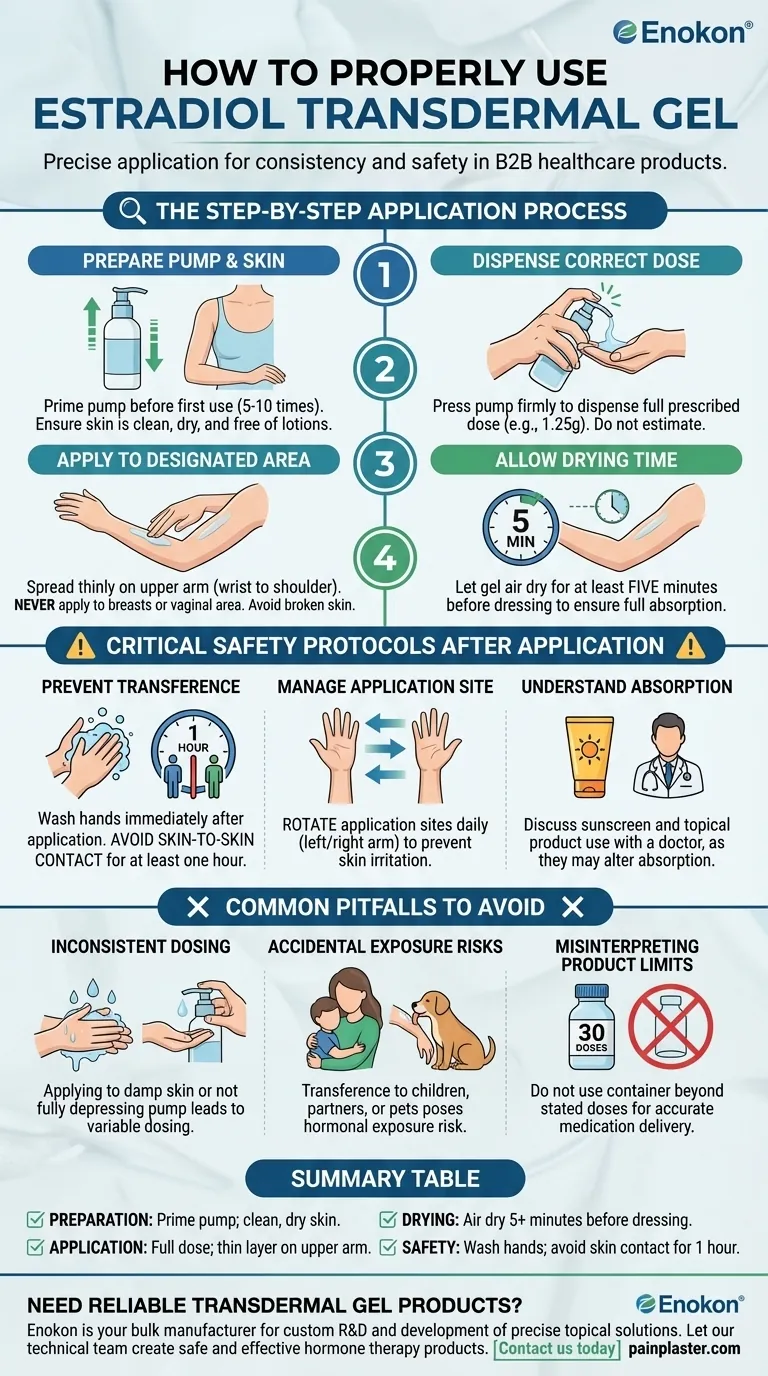
The Step-by-Step Application Process
Following a precise method for applying estradiol gel is critical for ensuring the medication is absorbed correctly and delivers its intended therapeutic effect. Each step is designed to maximize absorption and minimize variability.
Step 1: Prepare the Pump and Your Skin
Before your first use, you must prime the pump. This involves depressing the pump 5 to 10 times to ensure it is ready to deliver a full, accurate dose. For every subsequent application, your skin must be completely clean and dry, free of any lotions, sunscreens, or moisture that could interfere with absorption.
Step 2: Dispense the Correct Dose
Press the pump firmly and fully to dispense the prescribed amount of gel. Doses are specific (e.g., 1.25g for EstroGel) and determined by your doctor. Do not estimate the amount; a full pump depression is calibrated to release the correct dose.
Step 3: Apply to the Designated Area
The standard application site is the upper arm. Spread the gel in a thin layer over the entire area from your wrist to your shoulder.
Crucially, never apply the gel to your breasts or around the vaginal area. Avoid applying it to any skin that is broken, irritated, or has been recently shaved.
Step 4: Allow for Proper Drying Time
Let the gel air dry for at least five minutes before covering the area with clothing. Rushing this step can cause the medication to rub off onto your clothes instead of being absorbed into your skin, reducing the dose you receive.
Critical Safety Protocols After Application
Once the gel is applied, your responsibility shifts to ensuring it doesn't affect anyone else. Estradiol can be transferred through skin-to-skin contact, posing a risk to others.
Preventing Transference to Others
Wash your hands thoroughly with soap and water immediately after application. You must avoid skin-to-skin contact between the application site and another person for at least one hour. This is especially important for protecting children and partners.
Managing the Application Site
To prevent potential skin irritation, it is wise to rotate application sites. Alternate between your left and right arms each day. This gives your skin 24 hours to recover before the next dose.
Understanding Absorption Factors
Factors like sunscreen can potentially alter how the gel is absorbed through your skin. It is important to discuss your use of sunscreen or any other topical products with your doctor.
Common Pitfalls to Avoid
Understanding potential mistakes can help you use your medication more safely and effectively. Awareness is the first step in prevention.
Inconsistent Dosing
Applying the gel to damp skin or not allowing it to dry fully can lead to incomplete absorption and an inconsistent dose. Likewise, not depressing the pump fully will result in a partial dose.
Accidental Exposure Risks
The most significant risk is accidental transference. Hugging a child or partner or allowing a pet to lick the application area before the one-hour safety window has passed can lead to unintended hormonal exposure for them.
Misinterpreting Product Limits
Most containers are designed to deliver a specific number of doses, often around 30. Do not attempt to use a container beyond its stated limit, as the final pumps may not deliver an accurate dose.
Making the Right Choice for Your Goal
Your daily routine should be built around ensuring your treatment is both effective for you and safe for those around you.
- If your primary focus is effectiveness: Always apply the gel to clean, completely dry skin and allow the full five minutes for absorption before dressing.
- If your primary focus is safety for others: Make washing your hands immediately after application and waiting at least one hour before skin-to-skin contact a non-negotiable rule.
- If your primary focus is avoiding skin irritation: Get into the habit of alternating which arm you use for application each day.
Consistent and mindful application is the key to successful and safe hormone therapy.
Summary Table:
| Step | Key Action | Purpose |
|---|---|---|
| 1. Preparation | Prime pump; apply to clean, dry skin | Ensures accurate dose and proper absorption |
| 2. Application | Dispense full dose; spread thinly on upper arm | Delivers consistent therapeutic effect |
| 3. Drying | Allow gel to air dry for 5+ minutes | Prevents rub-off and ensures full absorption |
| 4. Safety | Wash hands; avoid skin contact for 1 hour | Protects others from accidental exposure |
Need a reliable, high-quality transdermal gel for your product line? As Enokon, a bulk manufacturer of reliable transdermal patches and pain plasters for healthcare and pharma distributors and brands, we offer custom R&D and development expertise to create the precise topical solutions you need. Let our technical team help you deliver safe and effective hormone therapy products. Contact us today to discuss your project requirements.
Visual Guide
Related Products
- Menthol Gel Pain Relief Patch
- Icy Hot Menthol Medicine Pain Relief Patch
- Far Infrared Heat Pain Relief Patches Transdermal Patches
- Mugwort Wormwood Pain Relief Patch for Neck Pain
- Herbal Pain Relief Cream Pain Relieving Creams
People Also Ask
- How do pain relief patches compare to other pain relief methods? Discover Targeted, Long-Lasting Relief
- How effective are pain relief patches for muscle pain? Target Localized Pain with Transdermal Delivery
- Who should consult a healthcare professional before using pain relief patches? Ensure Your Safety with Medical Advice
- What are some common applications of pain relief patches? Effective Relief for Muscle & Joint Pain
- What are pain relief patches and how do they work? Discover Non-Invasive Pain Management







