
In short, methylphenidate patches must be stored at room temperature in their original sealed packaging. Keep them in a secure location away from heat, moisture, and direct light, and never place them in a refrigerator or freezer. This protects the medication's integrity and prevents accidental exposure.
The core principle is that proper handling of a methylphenidate patch—from storage to application and final disposal—is a critical safety protocol, not just a matter of convenience or preserving the drug's effectiveness.
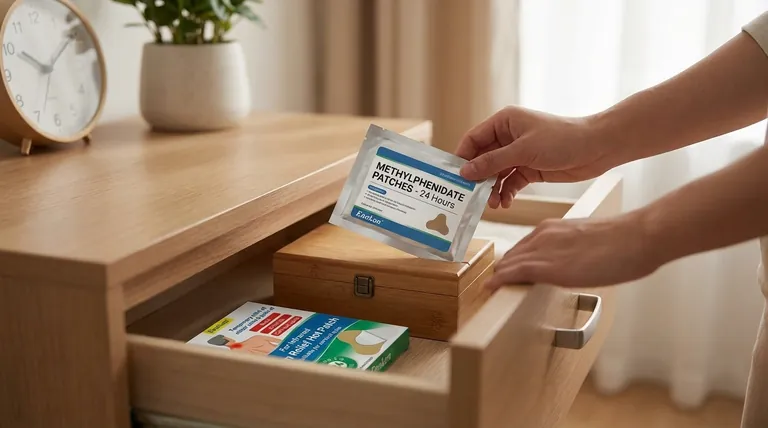
The Core Principles of Safe Storage
Storing your medication correctly is the first step in ensuring it works as intended and poses no risk to others in your household.
Temperature and Environment
Methylphenidate patches are designed to be stable at room temperature, typically between 59°F and 86°F (15°C to 30°C).
Storing them in an environment that is too hot or too cold can degrade the medication and the adhesive, making the patch less effective or causing it to deliver an inconsistent dose.
Crucially, you should never refrigerate or freeze the patches. Keep them away from sources of heat, moisture, and direct light, such as a bathroom medicine cabinet or a sunlit windowsill.
The Importance of Original Packaging
Always keep each patch inside its sealed pouch until you are ready to apply it.
This packaging is designed to protect the patch from air and moisture, which can compromise the medication's stability and effectiveness.
Securing the Medication
Methylphenidate is a controlled substance. It is vital to store the patches in a location that is out of reach of children and pets to prevent accidental ingestion or application, which can be extremely dangerous.
Beyond Storage: Application and Disposal
Safe handling extends well beyond simple storage. Proper application and disposal are equally important for safety and efficacy.
Correct Application Technique
Apply the patch to a clean, dry, and smooth area of skin on the hip. Alternate hips each day to reduce the risk of skin irritation.
Avoid applying patches to skin that is oily, injured, or irritated. Also, do not place it on the waistline, where tight clothing might rub it off.
Wash your hands thoroughly after applying the patch.
The Risk of Heat Exposure
Do not expose the patch area to direct heat sources. This includes heating pads, electric blankets, hot tubs, or prolonged direct sunlight.
Heat can accelerate the release of methylphenidate from the patch into your bloodstream, potentially causing an overdose.
Understanding the Disposal Protocol
Because of its potency, methylphenidate requires a strict disposal process to prevent accidental exposure or environmental contamination.
Disposing of Used Patches
After removing a used patch, immediately fold it in half so the sticky sides press together. This seals the remaining medication inside.
Some guidelines recommend flushing the folded patch down the toilet. Others suggest disposing of it in a trash can with a secure lid. Follow the specific instructions provided by your pharmacist or doctor.
The original pouch and protective liner should be thrown away in the trash, not flushed.
Disposing of Unused or Expired Patches
Do not simply throw away unused or expired patches. The best method is to take them to a medication take-back program.
If a take-back program is not available, you can mix the unused patches with an undesirable substance like coffee grounds or cat litter, seal it in a plastic bag, and then place it in your household trash.
Making the Right Choice for Your Goal
- If your primary focus is medication effectiveness: Store patches correctly at room temperature in their sealed pouches and apply them exactly as directed to ensure a consistent, therapeutic dose.
- If your primary focus is safety for others: Securely store all new patches out of reach and meticulously follow the disposal instructions for used and expired medication to prevent accidental exposure.
- If your primary focus is your personal health: Adhere strictly to all application guidelines, avoid applying external heat to the patch, and maintain open communication with your doctor about your health history and any side effects.
Responsible medication management is a key part of achieving your therapeutic goals safely.
Summary Table:
| Key Storage Guideline | Why It's Important |
|---|---|
| Room Temperature (59°F-86°F / 15°C-30°C) | Prevents degradation of the medication and adhesive. |
| Keep in Original Sealed Pouch | Protects from air and moisture to ensure stability. |
| Never Refrigerate or Freeze | Extreme cold can damage the patch's structure. |
| Store Securely, Away from Children/Pets | Prevents accidental ingestion or application. |
| Avoid Heat, Moisture, and Direct Light | Maintains consistent dose delivery and effectiveness. |
Need a reliable supplier for transdermal patches like methylphenidate?
As Enokon, a bulk manufacturer of high-quality transdermal patches and pain plasters, we provide healthcare and pharmaceutical distributors and brands with reliable, consistent products. Our technical expertise ensures rigorous quality control and supports custom R&D for your specific needs.
Let us help you deliver safe and effective transdermal solutions to your customers. Contact our team today to discuss your requirements.
Visual Guide

Related Products
- Menthol Gel Pain Relief Patch
- Herbal Medicated Anti Diarrhea Patch for Digestive Relief
- Asthma Cough and Pain Relief Patch for Adults and Kids
- Icy Hot Menthol Medicine Pain Relief Patch
- Cooling Fever Patches Color Change Cold Fever Patch
People Also Ask
- How do pain relief patches compare to other pain relief methods? Discover Targeted, Long-Lasting Relief
- How effective are pain relief patches for muscle pain? Target Localized Pain with Transdermal Delivery
- Who should consult a healthcare professional before using pain relief patches? Ensure Your Safety with Medical Advice
- What are some common applications of pain relief patches? Effective Relief for Muscle & Joint Pain
- What are pain relief patches and how do they work? Discover Non-Invasive Pain Management



















