
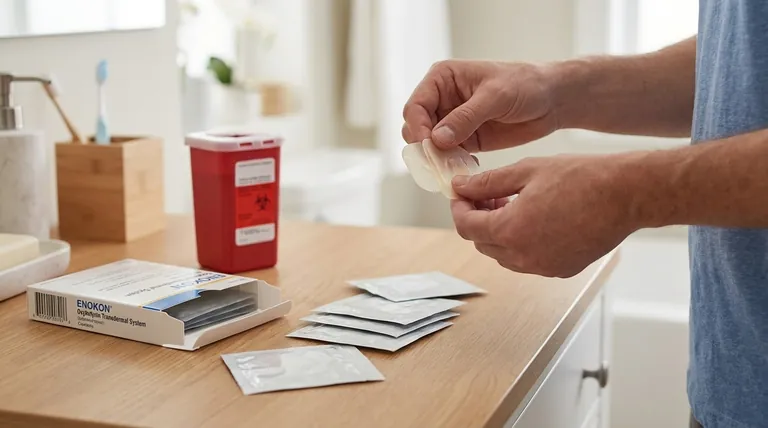
To ensure safety and effectiveness, oxybutynin patches must be stored in their original sealed pouches at room temperature, away from heat and moisture. After use, they should be folded sticky-side in and disposed of through a medicine take-back program, never flushed down the toilet.
The central takeaway is that even a used oxybutynin patch contains a significant amount of active medication. Therefore, proper storage and disposal are not just about maintaining the drug's efficacy but are critical safety measures to prevent accidental exposure to children, pets, and the environment.
Proper Storage: Preserving Effectiveness and Safety
How you store the patches before use is just as important as how you handle them afterward. The goal is to protect the medication's integrity and prevent unintended access.
Keep Patches in Their Original Pouch
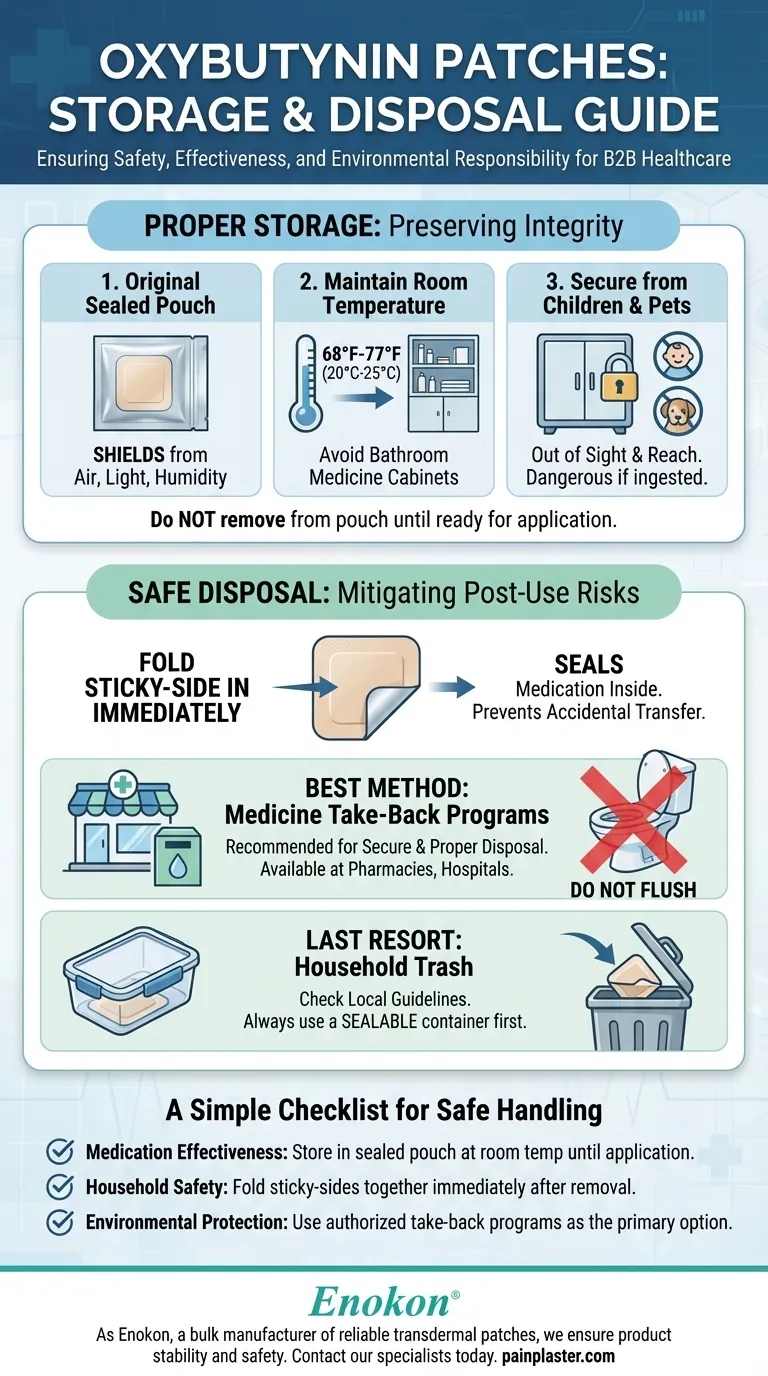
Each patch is sealed in a protective pouch for a reason. This pouch shields it from air, light, and humidity, all of which can degrade the medication and its adhesive backing.
Do not remove the patch from its pouch until you are ready to apply it.
Maintain Room Temperature
Store the pouches in a controlled, room-temperature environment (typically between 68°F to 77°F or 20°C to 25°C).
Avoid storing them in places with fluctuating temperatures and high humidity, such as a bathroom medicine cabinet. A bedroom closet or a kitchen cabinet away from the stove are better options.
Secure from Children and Pets
Store both new and used patches in a location that is securely out of sight and reach of children and pets. Accidental ingestion or application of a patch can be extremely dangerous.
Safe Disposal: Mitigating Post-Use Risks
A significant amount of oxybutynin remains in the patch even after it has been worn for the prescribed duration. This makes careful disposal an essential safety step.
The Hazard of a "Used" Patch
Treating a used patch as simple trash is a mistake. The remaining medication is still potent and can cause serious harm if a child or pet chews on, swallows, or applies the patch to their skin.
Fold the Patch Securely
Immediately after removing the patch from your skin, fold it in half with the sticky sides firmly pressed together.
This simple action seals the medication inside, making it much more difficult for the remaining drug to be accidentally transferred.
Understanding Disposal Options and What to Avoid
Your disposal method has a direct impact on community and environmental safety. There is a clear hierarchy of best practices.
The Best Method: Medicine Take-Back Programs
The safest and most recommended way to dispose of used oxybutynin patches is through an official medicine take-back program.
These programs are often available at local pharmacies, hospitals, or police departments and ensure the medication is disposed of properly and securely.
Why You Should Never Flush Patches
Flushing patches down the toilet introduces medication into the water supply. Wastewater treatment facilities are not designed to filter out these complex chemicals, which can harm wildlife and the ecosystem.
If a Take-Back Program Isn't Available
If you cannot access a take-back program, check local guidelines. After folding the patch securely, you may be instructed to place it in a durable, sealable container before putting it in the household trash. This should always be a last resort.
A Simple Checklist for Safe Handling
Use these key principles to guide your actions when storing and disposing of your oxybutynin patches.
- If your primary focus is medication effectiveness: Always store new patches in their sealed pouches at room temperature until the moment of application.
- If your primary focus is household safety: Immediately after removal, fold the used patch in half with the sticky sides together and keep it away from children and pets until final disposal.
- If your primary focus is environmental protection: Use an authorized medicine take-back program as the first and best choice for disposing of used patches.
Properly managing your medication from start to finish ensures it works effectively for you while protecting those around you.
Summary Table:
| Action | Key Guideline | Why It's Important |
|---|---|---|
| Storage | Keep in original pouch at room temperature. | Protects medication integrity and effectiveness. |
| Disposal | Fold sticky-side in; use a take-back program. | Prevents accidental exposure to children/pets and environmental contamination. |
| Avoid | Never flush down the toilet. | Stops pharmaceuticals from entering the water supply. |
Ensure the safety and quality of your transdermal products. As Enokon, a bulk manufacturer of reliable transdermal patches and pain plasters, we provide healthcare and pharma brands with expert custom R&D and development. Our technical expertise ensures your products meet the highest standards for stability, safety, and patient compliance. Contact our specialists today to discuss your manufacturing needs.
Visual Guide
Related Products
- Menthol Gel Pain Relief Patch
- Lidocaine Hydrogel Pain Relief Patch for Pain Relief
- Icy Hot Menthol Medicine Pain Relief Patch
- Herbal Medicated Anti Diarrhea Patch for Digestive Relief
- Asthma Cough and Pain Relief Patch for Adults and Kids
People Also Ask
- How do pain relief patches compare to other pain relief methods? Discover Targeted, Long-Lasting Relief
- How effective are pain relief patches for muscle pain? Target Localized Pain with Transdermal Delivery
- Who should consult a healthcare professional before using pain relief patches? Ensure Your Safety with Medical Advice
- What are some common applications of pain relief patches? Effective Relief for Muscle & Joint Pain
- What are pain relief patches and how do they work? Discover Non-Invasive Pain Management



















