
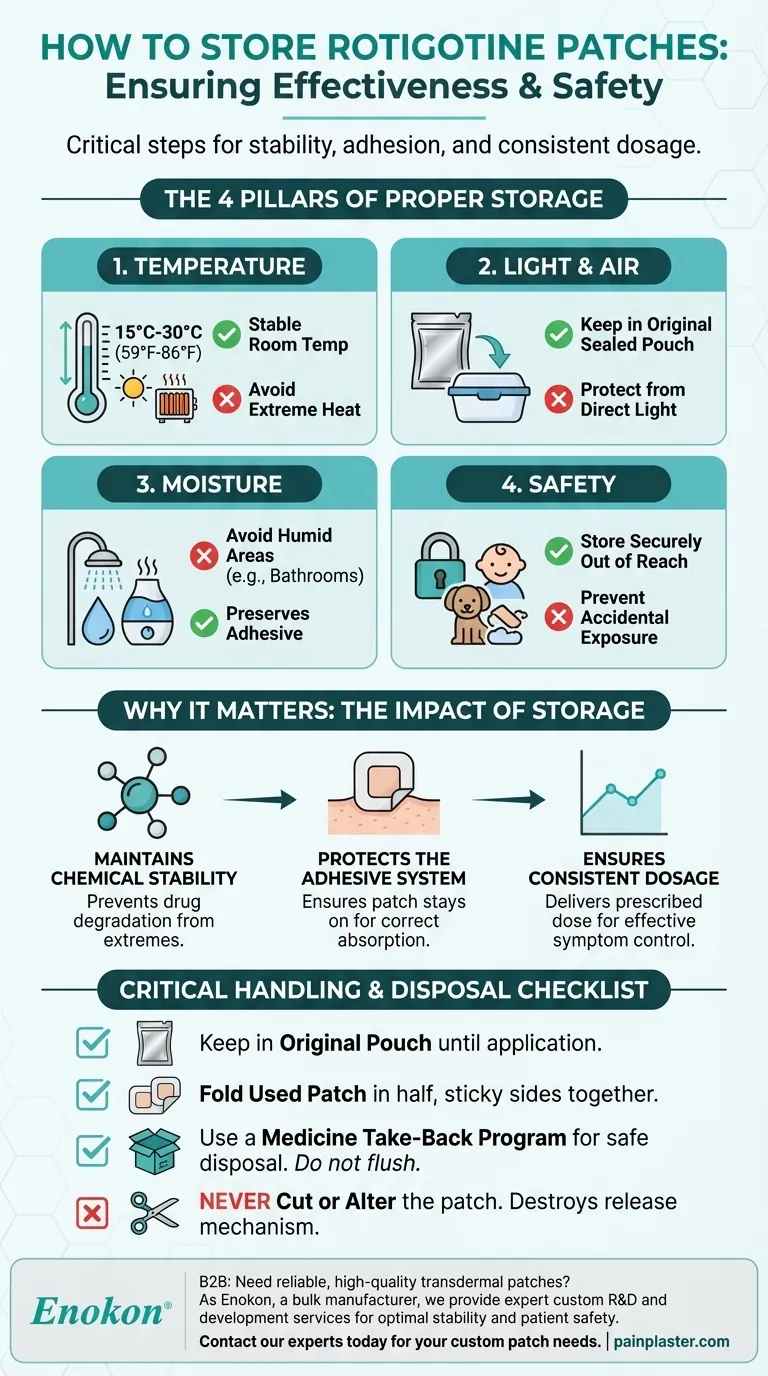
To ensure its effectiveness and safety, a rotigotine patch must be stored at a stable room temperature inside its original sealed pouch. It should be kept in a closed container away from direct light, heat, and moisture, and always stored securely out of the reach of children and pets.
The way you store your rotigotine patch is not just a suggestion—it is a critical step that directly impacts the medication's stability, its ability to adhere to your skin, and its capacity to deliver a consistent, correct dose.
Why Proper Storage is Non-Negotiable
A transdermal patch is a complex drug delivery system. Its effectiveness relies on two main components working perfectly: the medication itself and the adhesive that keeps it attached to your skin. Improper storage can compromise both.
Maintaining Chemical Stability
The active ingredient in the patch, rotigotine, can degrade if exposed to environmental extremes.
Storing the patch at a stable room temperature, generally between 15°C and 30°C (59°F and 86°F), is essential. Extreme heat can accelerate the breakdown of the drug, potentially reducing its therapeutic effect.
Likewise, exposure to direct light can also cause chemical changes in the medication over time, which is why keeping it in its original packaging and a closed container is vital.
Protecting the Adhesive System
The adhesive is just as important as the medication. If it fails, the patch won't stay on, and the drug cannot be absorbed correctly.
High moisture and humidity are the primary enemies of the adhesive. This is why you should never store patches in a bathroom, where steam from showers creates a constantly humid environment.
Keeping the patch in its sealed pouch until the moment of application protects the adhesive from air and moisture, ensuring it works as intended.
Ensuring Consistent Dosage
The ultimate goal of proper storage is to guarantee you receive the correct, prescribed dose of medication.
A compromised patch—whether from a degraded drug or a failing adhesive—will not deliver the medication consistently. This can lead to fluctuations in symptom control and undermine the effectiveness of your treatment.
Critical Handling and Disposal Practices
Beyond storage, proper handling and disposal are essential for safety. A used patch is not empty; it still contains a significant amount of active medication.
The Importance of the Original Pouch
Never remove the patch from its protective pouch until you are ready to apply it. The pouch is designed to be a barrier against light, moisture, and air, all of which can degrade the patch before it's even used.
Safe Disposal is Essential
Once you remove a used patch, fold it in half with the sticky sides together. This helps prevent accidental exposure to any remaining medication.
Do not simply throw it in the household trash where a child or pet could find it. The safest method is to use a medicine take-back program. Never flush patches down the toilet, as this can introduce potent drugs into the water supply.
Avoid Damaging the Patch
Never cut or alter a rotigotine patch. The patch is designed with a specific membrane that controls the rate at which the drug is released. Cutting it destroys this system, which can lead to an unpredictable and potentially dangerous dose of medication.
A Simple Checklist for Safe Handling
Follow these guidelines to ensure your medication is both safe and effective.
- If your primary focus is medication effectiveness: Store patches at a stable room temperature in their original, sealed pouch until the moment of use.
- If your primary focus is safety: Always keep new and used patches out of the sight and reach of children and pets, and dispose of used patches through a designated take-back program.
Properly managing your medication is a key part of managing your health.
Summary Table:
| Storage Factor | Key Guideline | Why It Matters |
|---|---|---|
| Temperature | Store at stable room temperature (15°C-30°C / 59°F-86°F). | Prevents chemical degradation of the active drug. |
| Light & Air | Keep in the original sealed pouch inside a closed container. | Protects the medication from light and air exposure. |
| Moisture | Avoid humid areas (e.g., bathrooms). | Preserves the adhesive to ensure the patch stays on. |
| Safety | Store securely out of reach of children and pets. | Prevents accidental ingestion or exposure. |
Need reliable, high-quality transdermal patches? As Enokon, a bulk manufacturer of reliable transdermal patches and pain plasters, we provide pharmaceutical distributors and brands with expert custom R&D and development services. Our technical expertise ensures your products are designed for optimal stability and patient safety from the start.
Contact our experts today to discuss your custom patch development needs.
Visual Guide
Related Products
- Lidocaine Hydrogel Pain Relief Patch for Pain Relief
- Menthol Gel Pain Relief Patch
- Mugwort Wormwood Pain Relief Patch for Neck Pain
- Cooling Fever Patches Color Change Cold Fever Patch
- Far Infrared Deep Heat Relief Patches Medicated Pain Relief Patches
People Also Ask
- How does the aqueous base in a lidocaine patch contribute to drug delivery? Unlocking Sustained Pain Relief Technology
- What are the advantages of topical anesthetics over invasive Lidocaine infiltration? Discover Safer, Scalable Relief
- Which pain patch is most effective for arthritis? Find the Best Relief for Your Joint Pain
- Will a GP routinely continue prescribing lidocaine patches after the initial period? Understanding Short-Term Pain Relief
- How should lidocaine patches be applied for optimal use? Maximize Pain Relief with Proper Application

















