
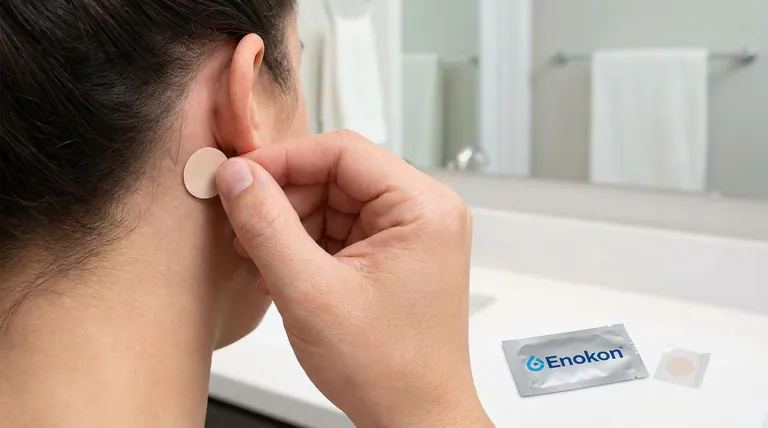
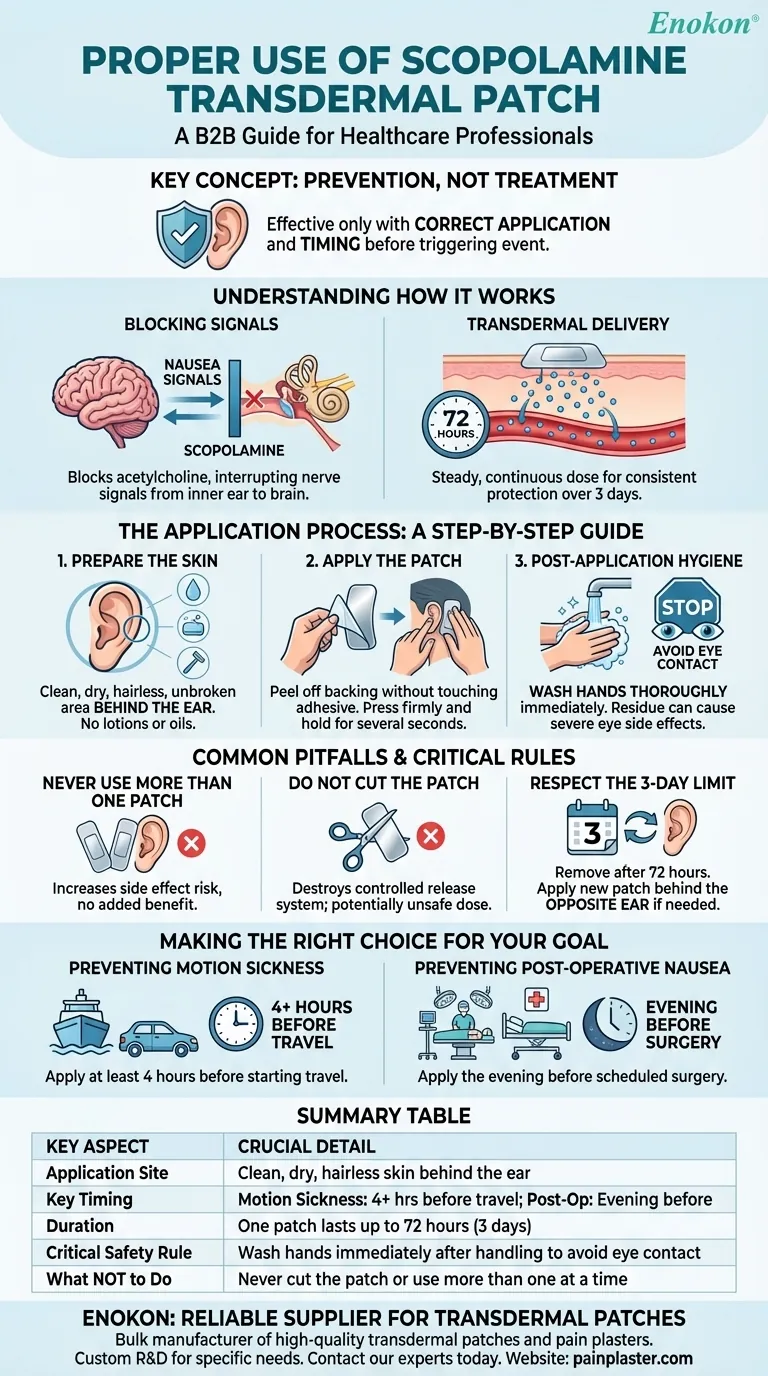
To use the scopolamine transdermal patch correctly, you must apply a single, intact patch to a clean, dry, hairless, and unbroken area of skin behind your ear. For motion sickness, this should be done at least four hours before you need it; for post-operative nausea, it's typically applied the evening before surgery. Always wash your hands thoroughly after handling the patch to avoid contact with your eyes.
The scopolamine patch is a powerful preventative tool, not a treatment for existing nausea. Its effectiveness depends entirely on correct application and, most critically, proper timing before the triggering event occurs.
Understanding How Scopolamine Works
Scopolamine is designed to intercept nausea signals before they start. The patch delivery system is key to its function, providing a steady, controlled dose over a long period.
Blocking Nausea Signals at the Source
Scopolamine belongs to a class of drugs called antimuscarinics. It works by blocking the effects of a neurotransmitter called acetylcholine in the brain.
This action effectively interrupts the nerve signals from your inner ear to your brain that are responsible for the sensation of nausea caused by motion or anesthesia.
The Transdermal System
The patch is not just a sticker; it's a sophisticated transdermal delivery system. It is engineered to release a slow, continuous dose of scopolamine through your skin and into your bloodstream over 72 hours.
This steady release provides consistent protection without the peaks and valleys of taking a pill, making it ideal for long journeys or recovery periods.
The Application Process: A Step-by-Step Guide
Precision in application is non-negotiable for the patch to work correctly and safely.
Step 1: Prepare the Skin
Choose an application site on the intact skin behind one of your ears. The area must be completely clean, dry, and free of hair, lotions, or oils.
Step 2: Apply the Patch
Tear open the protective pouch and remove the patch. Peel off the clear plastic backing without touching the sticky, silver-colored adhesive side.
Press the adhesive side firmly onto the prepared skin site behind your ear. Hold it in place for several seconds to ensure it is securely attached.
Step 3: Post-Application Hygiene
This is a critical step. Immediately after applying the patch, wash your hands thoroughly with soap and water.
Any scopolamine residue on your fingers that comes into contact with your eyes can cause significant side effects, such as blurred vision and pupil dilation.
Common Pitfalls and Critical Rules
Deviating from the prescribed usage can render the patch ineffective or, worse, increase your risk of adverse effects.
Never Use More Than One Patch
Applying more than one patch at a time will not increase the benefit but will significantly raise your risk of side effects. Stick to a single patch.
Do Not Cut the Patch
The patch is designed with a specific membrane that controls the rate of medication release. Cutting the patch destroys this system, which can lead to an unpredictable and potentially unsafe dose of scopolamine.
Respect the 3-Day Limit
Each patch is formulated to work for up to 3 days (72 hours). If your treatment needs to continue beyond this period, remove the old patch and apply a new one behind the opposite ear.
Know When to Apply It
Timing is everything. For preventing motion sickness, apply the patch at least 4 hours before you begin your travel.
For preventing post-operative nausea and vomiting, the standard instruction is to apply it the evening before your surgery.
Use With Caution
The use of scopolamine patches is not recommended for children. You must discuss your full medical history, allergies, and current medications with your healthcare professional before using this product to avoid dangerous interactions or complications.
Making the Right Choice for Your Goal
Your specific reason for using the patch dictates the timing.
- If your primary focus is preventing motion sickness: Apply one patch behind your ear at least 4 hours before starting your travel for up to 3 days of protection.
- If your primary focus is preventing post-operative nausea: Apply one patch behind your ear the evening before your scheduled surgery as directed by your doctor.
Following these guidelines ensures you receive the intended benefit of the medication safely and effectively.
Summary Table:
| Key Aspect | Crucial Detail |
|---|---|
| Application Site | Clean, dry, hairless skin behind the ear |
| Key Timing | Motion Sickness: 4+ hours before travel Post-Op Nausea: Evening before surgery |
| Duration | One patch lasts up to 72 hours (3 days) |
| Critical Safety Rule | Wash hands immediately after handling to avoid eye contact |
| What NOT to Do | Never cut the patch or use more than one at a time |
Need a reliable supplier for transdermal patches like scopolamine?
As Enokon, a bulk manufacturer of high-quality transdermal patches and pain plasters, we provide healthcare distributors and pharmaceutical brands with dependable products backed by deep technical expertise. Our team excels in custom R&D and development to meet your specific formulation and delivery system needs.
Contact our experts today to discuss how we can support your product line with reliable, effective transdermal solutions.
Visual Guide
Related Products
- Far Infrared Heat Pain Relief Patches Transdermal Patches
- Silicone Scar Sheets Patch Transdermal Drug Patch
- Icy Hot Menthol Medicine Pain Relief Patch
- Menthol Gel Pain Relief Patch
- Mugwort Wormwood Pain Relief Patch for Neck Pain
People Also Ask
- Why is the selection of matrix materials critical when developing customized transdermal patches? Optimize Efficacy
- What are the clinical advantages of local transdermal delivery systems? Unlock Safer, More Effective Pain Relief Solutions
- What are the physical impacts of external heat exposure on the performance and safety of transdermal patches? - Guide
- What role does a skin tolerance scoring system play in the safety evaluation of transdermal patches? Key Safety Metrics
- How does high-purity far-infrared ceramic powder contribute to the efficacy of far-infrared physical therapy patches?












