
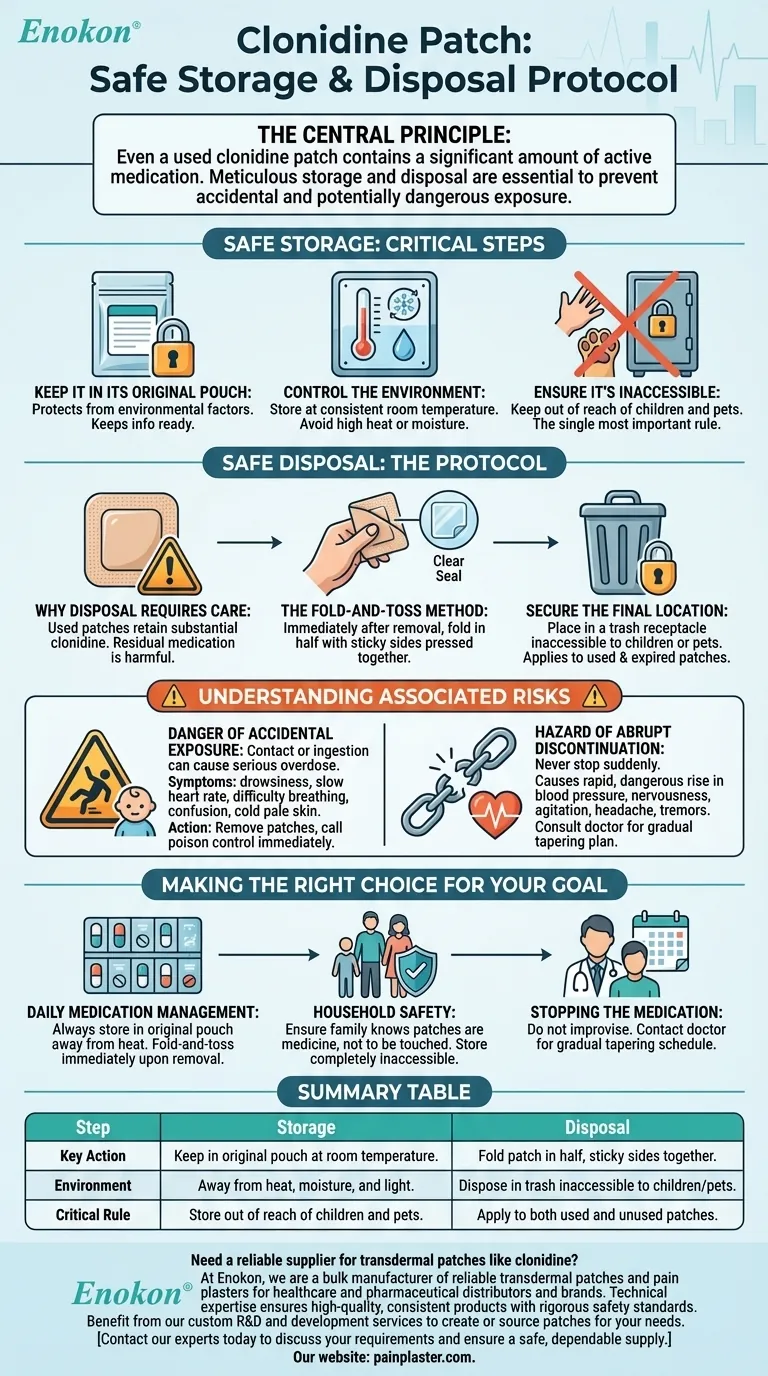
To properly handle a clonidine patch, it must be stored in its original, tightly closed pouch at room temperature, away from heat and moisture. For disposal, any used or unused patch should be folded in half with the sticky sides firmly pressed together and thrown away in a location inaccessible to children and pets.
The central principle for managing clonidine patches is recognizing that even a used patch contains a significant amount of active medication. Therefore, both storage and disposal must be meticulously handled to prevent accidental and potentially dangerous exposure.
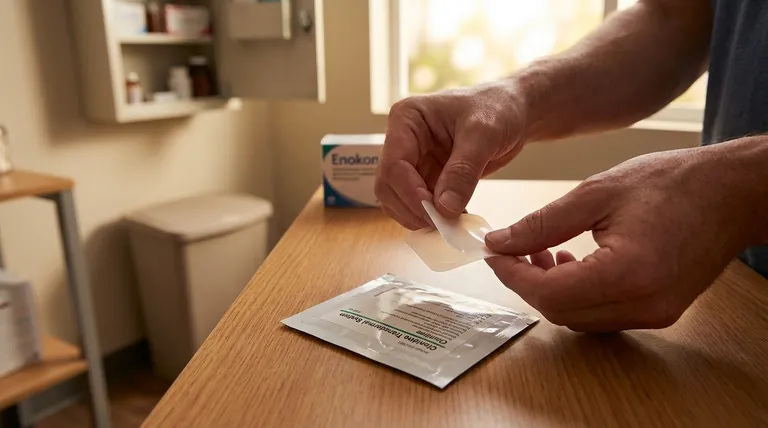
The Critical Steps for Safe Storage
Proper storage is the first line of defense in preventing accidental contact with the medication. It ensures the patch remains effective and safe until it is ready for use.
Keep It in Its Original Pouch
Each patch should remain sealed in its original container until the moment of application. This protects it from environmental factors and keeps important information readily available.
Control the Environment
Store the patches at a consistent room temperature. Avoid locations with high heat or moisture, such as a bathroom medicine cabinet, as these conditions can compromise the medication's integrity.
Ensure It's Inaccessible
The single most important storage rule is to keep the patches out of reach of children and pets. Accidental contact or ingestion can lead to a serious medical emergency.
The Protocol for Safe Disposal
A used clonidine patch is not inert. It still contains enough medication to be harmful if touched or ingested by another person, especially a child.
Why Disposal Requires Care
After its intended use period, a patch can still retain a substantial portion of its original clonidine dose. This residual medication is the reason for the specific disposal protocol.
The Fold-and-Toss Method
Immediately after removing a patch from your skin, fold it in half with the sticky sides pressed together. This seals the medicated surface and minimizes the risk of the drug transferring to someone else.
Secure the Final Location
Place the folded patch in a trash receptacle that cannot be accessed by children or pets. This ensures it is safely contained until final disposal. This procedure applies to both used and expired patches.
Understanding the Associated Risks
Handling clonidine requires diligence because of the potent effects of the medication. Understanding the potential dangers underscores the importance of proper storage and disposal.
The Danger of Accidental Exposure
If someone, particularly a child, comes into contact with a patch, it can cause a serious overdose.
Symptoms of clonidine overdose include drowsiness, weakness, a slow heart rate, difficulty breathing, confusion, and cold, pale skin. If you suspect an overdose, remove any patches from the skin immediately and call your local poison control center.
The Hazard of Abrupt Discontinuation
Never stop using clonidine suddenly or without your doctor's guidance.
Sudden withdrawal can cause a rapid and dangerous rise in blood pressure, along with symptoms like nervousness, agitation, headache, and tremors. Your doctor will provide a plan to taper off the medication gradually over 2-4 days to avoid these effects.
Making the Right Choice for Your Goal
Adhering to safety protocols is non-negotiable when handling this medication. Your specific focus determines which precautions are most relevant to you.
- If your primary focus is daily medication management: Always store patches in their original pouch away from heat and make the fold-and-toss disposal method an immediate habit upon removal.
- If your primary focus is household safety: Ensure all family members understand that the patches are medicine and must not be touched, and always store them in a location completely inaccessible to children and pets.
- If your primary focus is stopping the medication: Do not improvise. Contact your doctor to create a gradual tapering schedule to prevent severe withdrawal symptoms.
Ultimately, treating this medication with consistent care is the key to using it safely and effectively.
Summary Table:
| Step | Storage | Disposal |
|---|---|---|
| Key Action | Keep in original pouch at room temperature. | Fold patch in half, sticky sides together. |
| Environment | Away from heat, moisture, and light. | Dispose in trash inaccessible to children/pets. |
| Critical Rule | Store out of reach of children and pets. | Apply to both used and unused patches. |
Need a reliable supplier for transdermal patches like clonidine?
At Enokon, we are a bulk manufacturer of reliable transdermal patches and pain plasters for healthcare and pharmaceutical distributors and brands. Our technical expertise ensures high-quality, consistent products with rigorous safety standards.
Benefit from our custom R&D and development services to create or source patches that meet your specific needs, including those requiring precise handling and safety protocols.
Contact our experts today to discuss your requirements and ensure a safe, dependable supply.
Visual Guide
Related Products
- Lidocaine Hydrogel Pain Relief Patch for Pain Relief
- Herbal Medicated Anti Diarrhea Patch for Digestive Relief
- Menthol Gel Pain Relief Patch
- Asthma Cough and Pain Relief Patch for Adults and Kids
- Capsaicin Chili Medicated Pain Relief Patches
People Also Ask
- How does the aqueous base in a lidocaine patch contribute to drug delivery? Unlocking Sustained Pain Relief Technology
- What are the advantages of topical anesthetics over invasive Lidocaine infiltration? Discover Safer, Scalable Relief
- Which pain patch is most effective for arthritis? Find the Best Relief for Your Joint Pain
- Will a GP routinely continue prescribing lidocaine patches after the initial period? Understanding Short-Term Pain Relief
- Why are lidocaine patches preferred over oral medications? Targeted Relief & Scale Your Brand with OEM R&D Solutions



















