
Using the contraceptive patch correctly is a straightforward process based on a consistent weekly schedule. You apply the small, adhesive patch to clean, dry, hairless skin on your upper arm, back, buttocks, or abdomen. The patch is worn for three consecutive weeks—changing it for a new one on the same day each week—followed by one full week without a patch, during which you will have a withdrawal bleed.
The patch's effectiveness is not just in its hormones, but in its simplicity. It works by creating a steady hormonal state, and its success hinges entirely on adhering to the simple but strict weekly application schedule to ensure consistent hormone absorption.
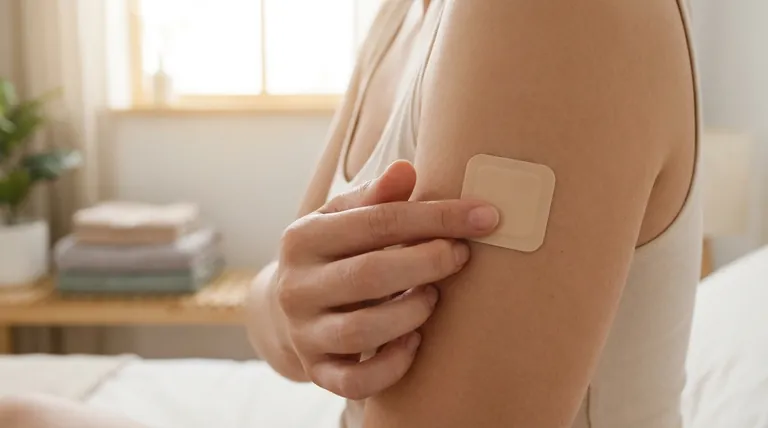
The Application Process: A Step-by-Step Guide
Proper application is the first and most critical step to ensuring the patch works as intended. It must make full, uninterrupted contact with the skin to deliver the hormones correctly.
Choosing the Right Location
The patch should be applied to clean, dry, non-hairy skin. Ideal locations include the upper outer arm, upper back, buttocks, or lower abdomen.
Rotate the application site with each new patch to avoid skin irritation.
How to Apply the Patch
First, carefully open the foil pouch and peel the patch away from its clear plastic liner.
Press the patch firmly onto your skin with the palm of your hand for at least 10 seconds, ensuring the edges stick well.
What to Avoid
Do not apply the patch to irritated, injured, or broken skin. Avoid using any lotions, creams, oils, or powders on the area where you are about to apply the patch, as this can prevent it from sticking properly.
The 4-Week Cycle Explained
The patch operates on a 28-day (4-week) cycle. Understanding this rhythm is key to using it effectively.
The "Patch Weeks" (Weeks 1, 2, and 3)
You will wear one patch for 7 full days. On day 8, which will become your designated "patch change day," you remove the old patch and immediately apply a new one.
You repeat this process for a total of three consecutive weeks.
The "Patch-Free Week" (Week 4)
After 21 days (3 weeks) of wearing a patch, you will have a 7-day patch-free interval. During this week, you will likely experience a withdrawal bleed, which is similar to a period.
Starting a New Cycle
After exactly 7 patch-free days, you must apply a new patch to begin the next 4-week cycle. You should do this even if you are still bleeding.
When Does Protection Begin?
If you apply your first patch on the first day of your period, you are protected from pregnancy immediately. If you start on any other day, you must use a backup method of contraception, like condoms, for the first 7 days.
The Benefits and Trade-offs
Like any medical choice, the patch has a distinct profile of advantages and considerations. An objective view is necessary to determine if it aligns with your health and lifestyle.
Key Advantages of the Patch
The primary benefit is convenience; it only requires attention once a week, not daily. It does not interrupt sex, and its hormones are absorbed through the skin, bypassing the stomach.
Many users report lighter, more regular, and less painful periods. The patch is also discreet and water-resistant, staying on during showering, swimming, and exercising.
Common Side Effects
The hormonal profile is similar to oral contraceptives. The most common adverse effects reported are headache and nausea.
Approximately 20% of users report application site reactions, such as redness or itching where the patch is worn.
Important Considerations and Limitations
The patch may be less effective for individuals who weigh more than 198 pounds (90kg).
It is not recommended for those with a history of blood clotting issues or for smokers, as the combination of hormones and smoking significantly increases cardiovascular risks.
Making the Right Choice for Your Goal
Selecting a contraceptive method is a personal decision based on your health profile, habits, and priorities.
- If your primary focus is convenience: The patch is an excellent option that eliminates the need for a daily pill, requiring only a simple weekly change.
- If your primary focus is predictable periods: The patch's regulated cycle often leads to lighter, more regular, and less painful withdrawal bleeds.
- If your primary focus is discretion and an active lifestyle: The small, discreet patch adheres well to the skin and is designed to withstand activities like swimming and exercise.
Ultimately, the contraceptive patch is a highly effective birth control method when used with a clear understanding of its simple, consistent schedule.
Summary Table:
| Topic | Key Information |
|---|---|
| Application Sites | Clean, dry skin on upper arm, back, buttocks, or abdomen. Rotate sites. |
| Weekly Schedule | Wear one patch for 7 days. Change on the same day each week for 3 weeks. |
| Patch-Free Week | 7-day break after 3 weeks of use. Withdrawal bleed occurs. |
| When Protection Starts | Immediate if started on day 1 of period; otherwise, use backup for 7 days. |
| Key Advantage | High convenience with only a weekly change required. |
| Common Side Effects | Headache, nausea, skin irritation at the application site. |
Partner with Enokon for Your Transdermal Contraceptive Needs
As a bulk manufacturer of reliable transdermal patches and pain plasters, Enokon provides the technical expertise and custom R&D necessary for healthcare and pharmaceutical distributors and brands. Whether you are developing a contraceptive patch or another transdermal solution, we ensure consistent hormone delivery and user-friendly design.
Benefit from our expertise to:
- Develop effective and convenient transdermal products.
- Leverage our experience in custom formulation and manufacturing.
- Ensure high-quality, reliable patches for your customers.
Contact our team today to discuss your custom transdermal patch development project.
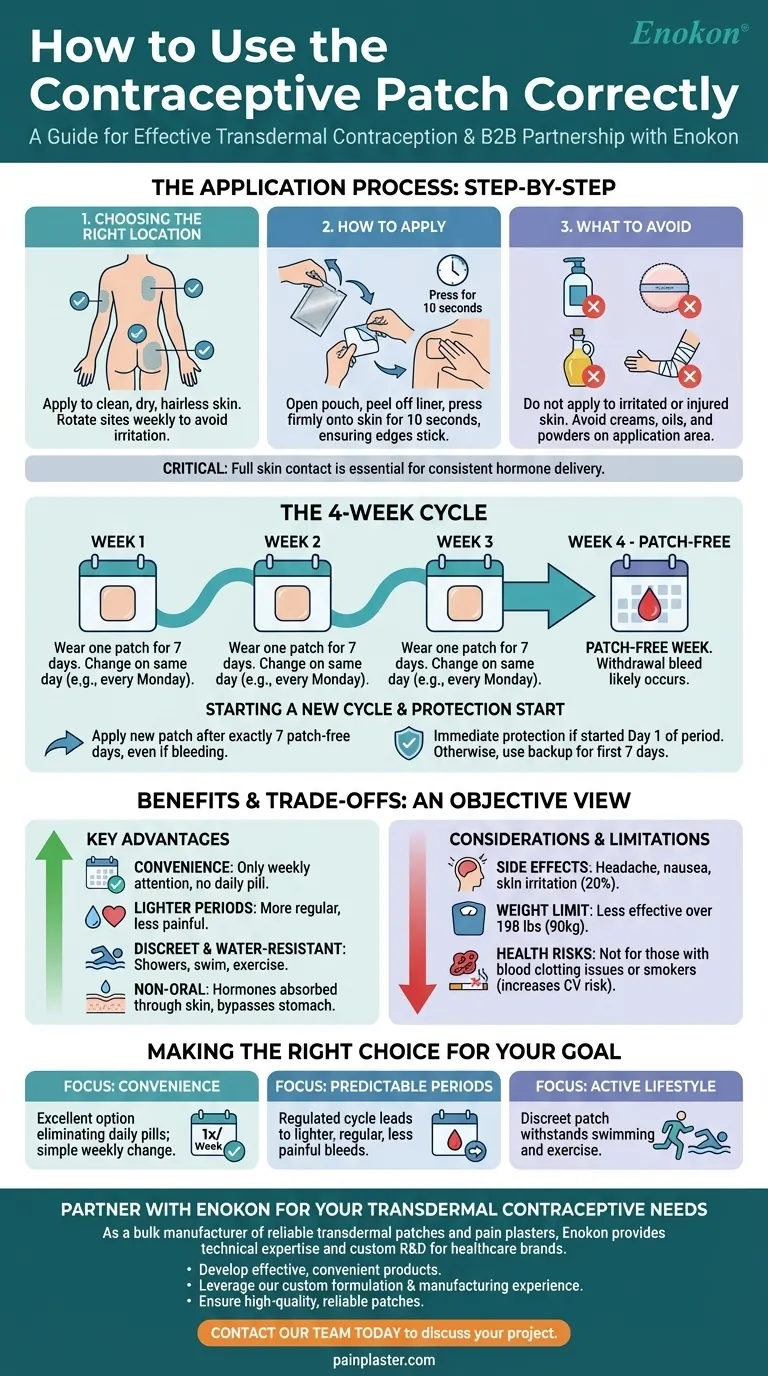
Visual Guide
Related Products
- Heating Pain Relief Patches for Menstrual Cramps
- Prostate Pain Kidney Health Care Patch for Men
- Silicone Scar Sheets Patch Transdermal Drug Patch
- Lidocaine Hydrogel Pain Relief Patch for Pain Relief
- Menthol Gel Pain Relief Patch
People Also Ask
- What are the benefits of Period Pain Heat Patches? Drug-Free, On-the-Go Relief
- What are the key benefits of heating patches for elderly individuals? Relieve Pain & Improve Mobility
- What percentage of people with back pain use heat patches for relief? Discover the Popular Choice for Pain Management
- What are the common uses of heat patches? Soothe Muscle Pain, Joint Stiffness & More
- Can heat patches be used for fresh injuries? Avoid This Common Mistake for Faster Recovery












