
To properly store an oxybutynin patch, you must keep it at room temperature, between 59-86°F (15-30°C), away from direct light, heat, and moisture. The patch should remain in its sealed, original pouch until the moment you are ready to apply it. This protects the medication from environmental factors that could reduce its effectiveness.
The core principle is simple: an oxybutynin patch's integrity depends on a controlled environment. Proper storage is not just about preserving the medication's potency but also about ensuring safety from the moment you receive it to the moment you dispose of it.
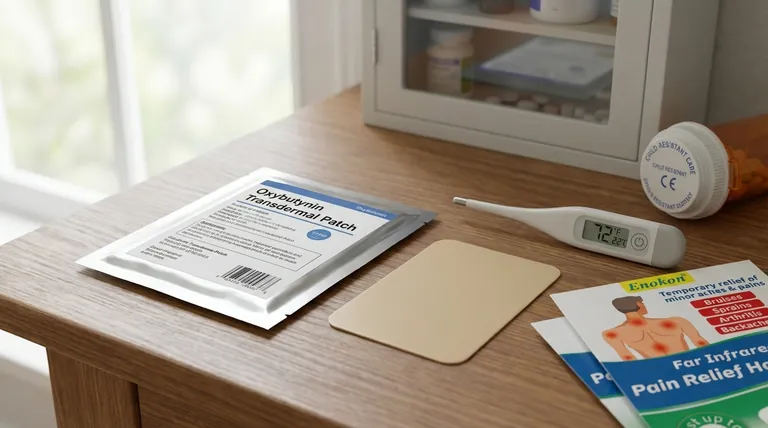
The Principles of Proper Patch Storage
Storing your medication correctly is a critical part of your treatment plan. The packaging and storage guidelines exist to ensure you receive the full, intended dose with every patch.
Why Temperature is Critical
The specified room temperature range (59-86°F or 15-30°C) is essential for maintaining the stability of the oxybutynin within the patch.
Extreme heat can degrade the active ingredient and damage the patch's adhesive. Conversely, extreme cold can also alter the medication's consistency. Avoid storing patches in a car or a bathroom, where temperatures and humidity fluctuate significantly.
The Role of the Sealed Pouch
Each patch is sealed in a protective pouch for a reason. This pouch acts as a barrier against the two biggest threats to the medication's stability: moisture and light.
Moisture can compromise the adhesive, preventing the patch from sticking to your skin properly and delivering the medication correctly. Both light and humidity can accelerate the breakdown of the drug itself. Always leave the patch sealed until you are ready to use it.
Safe Handling and Disposal: A Critical Responsibility
Your responsibility for the medication extends beyond proper storage. Safe handling and disposal are crucial to prevent accidental exposure and environmental harm.
Keep Out of Reach of Children and Pets
Like all medications, oxybutynin patches must be stored in a place inaccessible to children and pets. Accidental contact with or ingestion of a patch, whether new or used, can be extremely dangerous.
The Correct Disposal Method
A used patch still contains a significant amount of residual medication. When you remove a patch, immediately fold it in half with the sticky sides together. This seals the remaining drug inside.
Dispose of the folded patch in a trash can with a lid, ensuring it is out of reach of children or pets.
Do Not Flush Used Patches
Never flush used patches down the toilet unless specifically instructed to do so by a pharmacist. Medications can pass through water treatment systems and contaminate waterways, harming the environment.
Managing Expired Medication
Check the expiration date on your medication. Expired patches may have lost their potency and should not be used. Dispose of any unused, expired patches using the same "fold-and-throw" method. For larger quantities, consider a local medicine take-back program for the safest disposal.
The Risks of Improper Storage
Failing to follow storage guidelines can lead to significant consequences, undermining your treatment and creating safety hazards.
Loss of Efficacy
If the patch is exposed to heat, light, or moisture, the oxybutynin can degrade. This means you may not receive the correct dose, making your treatment less effective.
Adhesive Failure
The patch's adhesive is designed to work at body temperature but can be weakened by improper storage in humid or hot conditions. A patch that doesn't stick securely cannot deliver the medication consistently.
Risk of Accidental Exposure
Leaving patches out of their pouch or disposing of them improperly creates a serious risk. A child or pet finding a patch could lead to accidental poisoning.
Making the Right Choice for Your Goal
Your approach to handling your oxybutynin patches should be guided by a commitment to safety and effectiveness.
- If your primary focus is treatment effectiveness: Always store patches in their sealed pouch at room temperature and apply them immediately after opening.
- If your primary focus is household safety: Store all medication in a high or locked cabinet and dispose of used patches immediately by folding them and placing them in a secure trash can.
- If your primary focus is environmental responsibility: Never flush patches and use a medicine take-back program for unused or expired medication whenever possible.
Ultimately, managing your medication responsibly ensures you get the benefit you need while protecting those around you.
Summary Table:
| Storage Factor | Key Guideline | Why It Matters |
|---|---|---|
| Temperature | 59-86°F (15-30°C) | Maintains drug stability and adhesive integrity. |
| Pouch | Keep sealed until use | Protects from light and moisture. |
| Disposal | Fold sticky sides together, trash securely | Prevents accidental exposure and environmental harm. |
Ensure the quality and reliability of your transdermal medication supply. As Enokon, a bulk manufacturer of reliable transdermal patches and pain plasters, we provide healthcare and pharma distributors and brands with products developed under stringent quality controls. Our technical expertise ensures optimal stability and performance. Contact us today to discuss your custom R&D and development needs for safe, effective patch solutions.
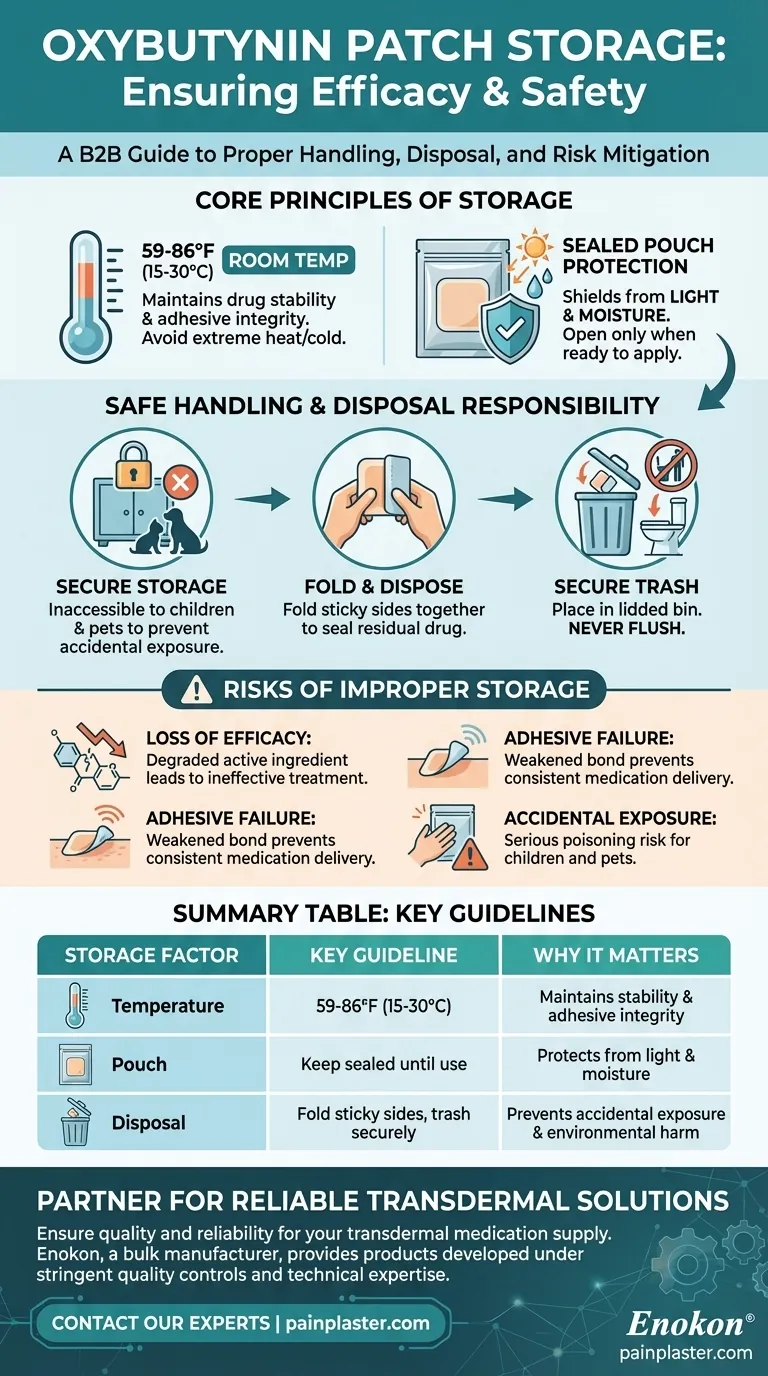
Visual Guide
Related Products
- Menthol Gel Pain Relief Patch
- Asthma Cough and Pain Relief Patch for Adults and Kids
- Herbal Medicated Anti Diarrhea Patch for Digestive Relief
- Lidocaine Hydrogel Pain Relief Patch for Pain Relief
- Icy Hot Menthol Medicine Pain Relief Patch
People Also Ask
- How do pain relief patches compare to other pain relief methods? Discover Targeted, Long-Lasting Relief
- How effective are pain relief patches for muscle pain? Target Localized Pain with Transdermal Delivery
- Who should consult a healthcare professional before using pain relief patches? Ensure Your Safety with Medical Advice
- What are some common applications of pain relief patches? Effective Relief for Muscle & Joint Pain
- What are pain relief patches and how do they work? Discover Non-Invasive Pain Management



















