
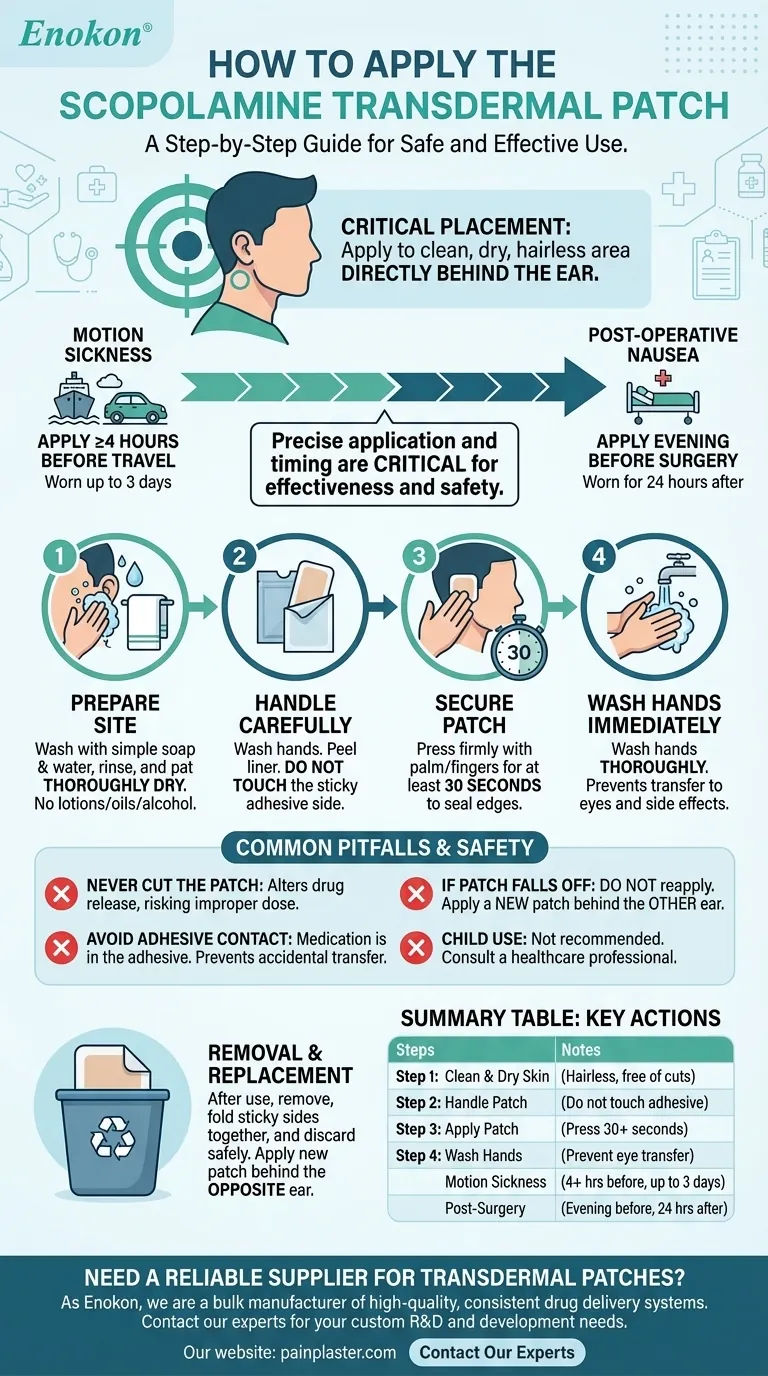
To apply a scopolamine patch correctly, it must be placed on a clean, dry, and hairless area of skin directly behind one of your ears. For preventing motion sickness, this should be done at least four hours before you travel. To prevent nausea and vomiting after surgery, the patch is typically applied the evening before the procedure.
The effectiveness of a transdermal patch hinges on precise application. Proper skin preparation, careful handling, and correct timing are not just suggestions—they are critical requirements for ensuring the medication is delivered safely and works as intended.

The Step-by-Step Application Process
Following a precise method ensures the patch adheres correctly and delivers a steady, consistent dose of medication through the skin.
Step 1: Prepare the Site
The skin behind your ear must be clean, completely dry, and free of any hair, cuts, or irritation. Wash the area with simple soap and water, rinse, and pat it thoroughly dry before proceeding. Do not use soaps with lotions, or any other oils or alcohols on the skin.
Step 2: Handle the Patch Carefully
First, wash and dry your hands. When you are ready to apply the patch, tear open the protective pouch and remove it. Peel off the clear plastic protective liner, taking extreme care not to touch the sticky, adhesive side of the patch.
Step 3: Secure the Patch to Your Skin
Place the adhesive side (often silver or metallic in appearance) firmly onto the prepared skin site behind your ear. Press down with your palm or fingers for at least 30 seconds to make sure the edges are sealed and the patch is fully attached.
Step 4: Wash Your Hands Immediately
Once the patch is secure, you must wash your hands thoroughly with soap and water. This removes any medication residue from your fingers and prevents you from accidentally transferring it to your eyes, which can cause significant side effects like blurred vision.
Critical Timing and Duration
The reason for using the patch dictates when it should be applied and for how long it should be worn.
For Preventing Motion Sickness
Apply a single patch at least four hours before the start of your travel. This lead time is essential for the medication to be absorbed and become effective. The patch can be left in place for up to three days.
For Post-Operative Nausea
Your doctor will provide specific instructions, but the patch is commonly applied the evening before your surgery. It is typically worn for 24 hours after the procedure is complete before being removed and discarded.
Removing and Replacing a Patch
After the prescribed time (e.g., three days), remove the patch and fold it in half with the sticky sides together before discarding it safely. If another patch is needed, apply the new one behind the other ear.
Common Pitfalls and How to Avoid Them
Mistakes in application can lead to an incorrect dose or unnecessary side effects. Understanding these common errors is key to safe usage.
Never Cut the Patch
A transdermal patch is an engineered drug delivery system. Cutting it destroys this system, which can cause the medication to be released too quickly or unpredictably, resulting in an improper dose.
The Importance of Not Touching the Adhesive
The medication is located in the adhesive layer. Touching it can transfer the drug to your fingers, reducing the dose you receive and creating a risk of transferring it elsewhere, especially to your eyes.
If the Patch Falls Off
If the patch comes loose or falls off, do not try to reapply it. Discard it properly and apply a brand new patch to a fresh, clean site behind the other ear.
Use in Children is Not Recommended
The scopolamine transdermal patch is generally not recommended for use in children. Always follow the guidance of a healthcare professional regarding pediatric use.
Making the Right Choice for Your Goal
Your goal determines the critical timing of the application.
- If your primary focus is preventing motion sickness: Your main priority is timing. Apply the patch a minimum of four hours before you travel to allow the medication to reach effective levels in your system.
- If your primary focus is preventing post-operative nausea: Follow your doctor's instructions precisely, typically applying the patch the evening before surgery to ensure it is working when you awaken from anesthesia.
- If you are wearing the patch for multiple days: Remember to apply a new patch to the opposite ear after removing the old one to avoid skin irritation.
Following these procedures ensures you receive the intended, steady benefit from your medication safely and effectively.
Summary Table:
| Application Step | Key Action | Important Note |
|---|---|---|
| Step 1: Prepare Site | Clean & dry skin behind the ear. | Must be hairless and free of cuts/irritation. |
| Step 2: Handle Patch | Remove from pouch; peel off liner. | Do not touch the sticky adhesive side. |
| Step 3: Apply Patch | Press firmly for 30+ seconds. | Ensures edges are sealed for consistent dosing. |
| Step 4: Wash Hands | Wash hands thoroughly with soap. | Prevents accidental transfer to eyes. |
| Timing: Motion Sickness | Apply at least 4 hours before travel. | Worn for up to 3 days. |
| Timing: Post-Surgery | Apply the evening before procedure. | Typically worn for 24 hours after surgery. |
Need a reliable supplier for transdermal patches?
As Enokon, a bulk manufacturer of reliable transdermal patches and pain plasters, we provide healthcare and pharmaceutical distributors and brands with high-quality, consistent drug delivery systems. Our technical expertise ensures your product's success, from custom R&D to development.
Let us help you deliver safe and effective medication to your customers.
Contact our experts today to discuss your project needs
Visual Guide
Related Products
- Silicone Scar Sheets Patch Transdermal Drug Patch
- Far Infrared Heat Pain Relief Patches Transdermal Patches
- Menthol Gel Pain Relief Patch
- Icy Hot Menthol Medicine Pain Relief Patch
- Mugwort Wormwood Pain Relief Patch for Neck Pain
People Also Ask
- What role does a silicone-based transdermal delivery system play in Parkinson's? Enhancing Early-Stage Patient Care
- How is the long-term skin tolerance of silicone-based transdermal patches evaluated in clinical settings? R&D and Safety
- Why is a polarizing microscope used to evaluate the long-term stability of transdermal drug patches? Ensure Efficacy.
- What are common adverse effects of transdermal drug delivery? Risks & Prevention Tips
- What are the advantages of transdermal drug patches? Optimize Medication Delivery with Patches
















