
Proper skin preparation before applying a transdermal patch is crucial for ensuring effective adhesion, optimal drug delivery, and minimizing skin irritation. The process involves cleaning the skin, selecting an appropriate application site, and avoiding common pitfalls that could compromise the patch's performance.
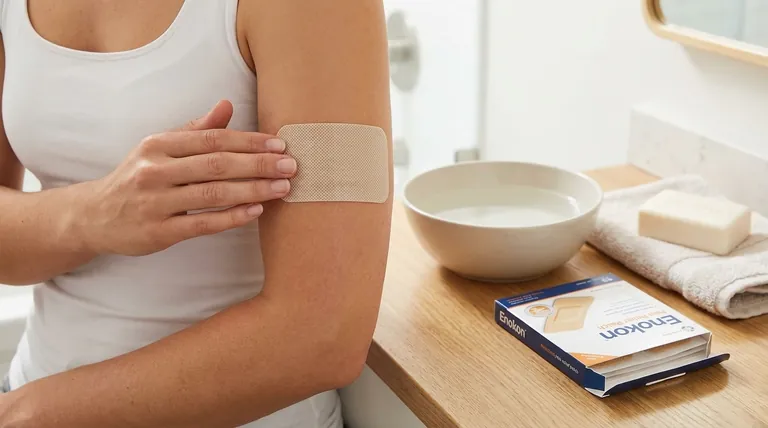
Key Points Explained:
-
Cleaning the Skin
- Use warm water and non-perfumed soap to remove lotions, oils, and perfumes.
- If needed, rubbing alcohol can be used, but only with approval from a healthcare professional.
- Ensure the skin is thoroughly dried before application to enhance adhesion.
-
Choosing the Right Application Site
- Avoid areas with:
- Oily skin or heavy perspiration.
- Excessive hair, scars, cuts, burns, or irritation.
- Open wounds, creases, or areas prone to friction (e.g., under belts or clothing seams).
- Rotate application sites (e.g., hip, upper arm) to prevent skin irritation.
- Wait at least three days after shaving before applying a patch to a shaved area.
- Avoid areas with:
-
Patch Handling and Application
- Remove the patch from its pouch without touching the adhesive side.
- Press firmly for 30 seconds to ensure full contact with the skin.
- Use medical tape (not bandages) if additional adhesion is needed.
-
Post-Application Care
- Wash hands immediately after application to avoid accidental drug transfer.
- Dispose of used patches by folding adhesive sides together to prevent exposure.
-
Medical Considerations
- Inform your doctor about allergies, medical history (e.g., cancers, heart disease), or medications.
- Avoid smoking, as it can increase side effects.
- Notify medical personnel before MRIs or surgeries, as some patches contain metals.
-
Timing and Duration
- Apply the patch 2 hours before the desired effect (e.g., on the hip for hormonal patches).
- Remove after the recommended duration (e.g., 9 hours) to prevent overdose or skin reactions.
By following these steps, users can maximize the efficacy and safety of transdermal patches while minimizing skin irritation and adhesion issues.
Summary Table:
| Step | Key Actions |
|---|---|
| Cleaning | Wash with warm water & mild soap; avoid oils/perfumes; dry thoroughly. |
| Site Selection | Avoid hairy, oily, or irritated areas; rotate sites to prevent skin reactions. |
| Application | Handle adhesive side carefully; press firmly for 30 seconds; use tape if needed. |
| Post-Care | Wash hands; dispose of patches folded to prevent exposure. |
| Medical Precautions | Inform doctors of allergies/medications; avoid smoking near patches. |
Need high-quality transdermal patches tailored to your needs?
As a trusted bulk manufacturer of transdermal patches and pain plasters, Enokon offers:
- Custom formulations for pharmaceuticals, wellness brands, and distributors.
- Expert R&D support to optimize adhesion, drug delivery, and patient compliance.
- Reliable OEM/ODM production with stringent quality controls.
Contact us today to discuss your project requirements!
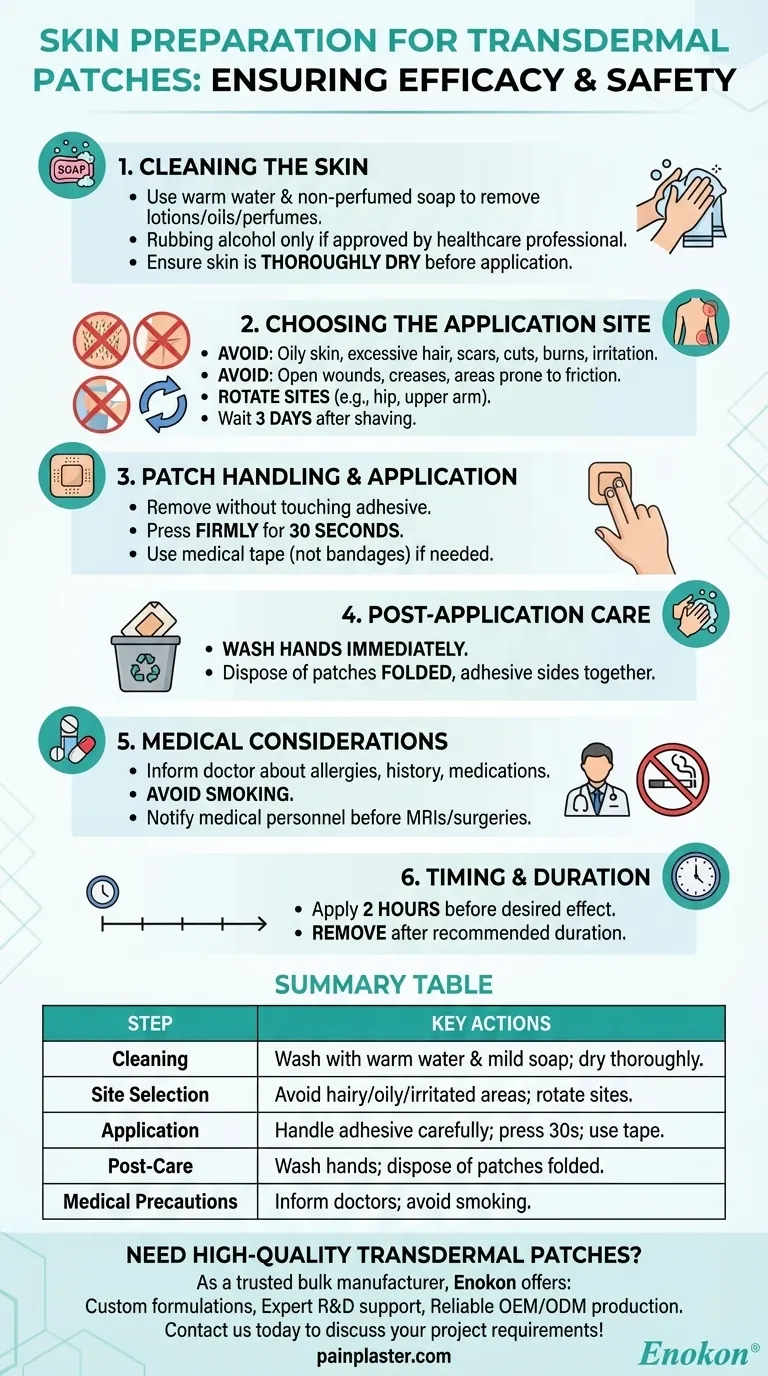
Visual Guide
Related Products
- Far Infrared Heat Pain Relief Patches Transdermal Patches
- Silicone Scar Sheets Patch Transdermal Drug Patch
- Icy Hot Menthol Medicine Pain Relief Patch
- Menthol Gel Pain Relief Patch
- Mugwort Wormwood Pain Relief Patch for Neck Pain
People Also Ask
- Why is the selection of matrix materials critical when developing customized transdermal patches? Optimize Efficacy
- What role does a skin tolerance scoring system play in the safety evaluation of transdermal patches? Key Safety Metrics
- What are the physical impacts of external heat exposure on the performance and safety of transdermal patches? - Guide
- What are the clinical advantages of local transdermal delivery systems? Unlock Safer, More Effective Pain Relief Solutions
- How does high-purity far-infrared ceramic powder contribute to the efficacy of far-infrared physical therapy patches?



















