
Based on current medical evidence, there is no established link showing the contraceptive patch causes significant weight gain or changes in sex drive. While these are common concerns with hormonal contraception, large-scale studies have not found the patch to be a direct cause of these specific effects.
The core takeaway is that while your concerns about weight and libido are valid, scientific evidence points to other potential side effects—such as skin irritation and temporary mood changes—as more common experiences when using the contraceptive patch.
Separating Myth from Reality: Weight and Libido
When considering any hormonal contraceptive, understanding the true side effects versus common myths is crucial for making an informed decision.
The Evidence on Weight Gain
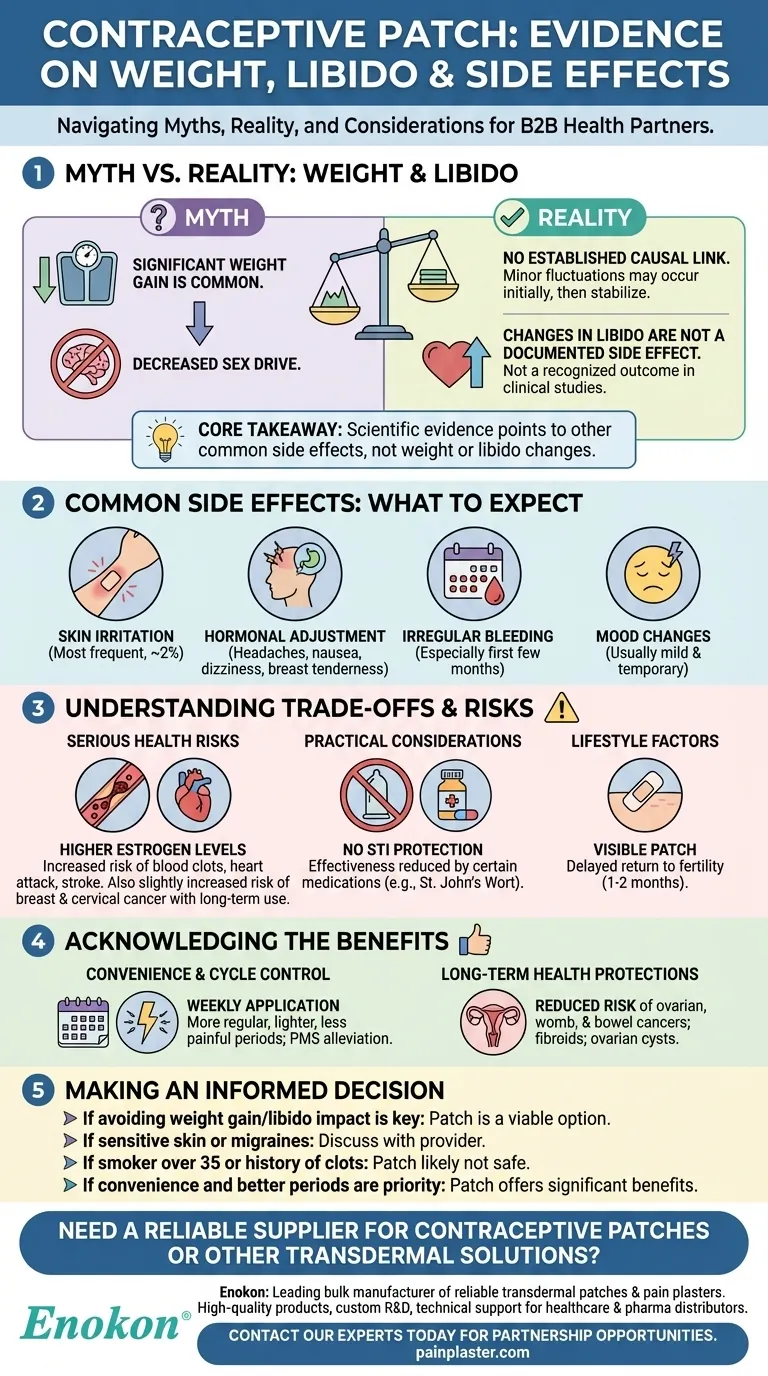
Current medical consensus shows no direct causal link between using the contraceptive patch and significant weight gain.
Some users may report slight weight fluctuations, particularly in the first few months. However, these changes are typically minor and often stabilize as the body adjusts to the hormones.
The Impact on Sex Drive
Similarly, a change in libido or sex drive is not a documented side effect supported by clinical evidence. Hormonal changes affect everyone differently, but a drop in libido is not a recognized outcome of patch use.
What to Actually Expect: Common Side Effects
While weight gain isn't a proven side effect, there are other common experiences you should be aware of, most of which are mild and temporary.
Skin Irritation
The most frequent side effect is irritation at the application site. This can include redness, itching, or soreness and is the primary reason some users (about 2 in 100) decide to stop using the patch.
Hormonal Adjustment Symptoms
During the first few cycles, you might experience symptoms as your body adjusts. These can include headaches, nausea, dizziness, or breast tenderness.
Changes in Menstrual Bleeding
It is common to have irregular bleeding or spotting between periods, especially within the first few months. Over time, many users find their periods become lighter and more regular.
Mood Changes
Some individuals report mood changes after starting the patch. These effects are usually mild and tend to diminish after the initial adjustment period.
Understanding the Trade-offs and Risks
Choosing a contraceptive method involves weighing its effectiveness and benefits against potential risks and practical considerations.
Serious Health Risks
The patch contains higher levels of estrogen compared to some other methods. This contributes to a small but serious risk of thromboembolic events, such as blood clots, heart attack, or stroke.
Long-term use may also be associated with a slightly increased risk of breast and cervical cancer.
Practical Considerations
The patch does not protect against sexually transmitted infections (STIs), so barrier methods like condoms are still necessary for STI prevention.
Its effectiveness can also be reduced by certain medications, including some anticonvulsants and the herbal supplement St. John's Wort.
Lifestyle Factors
The patch is visible on the skin, which may be a concern for some users. After stopping use, a return to normal fertility may be delayed by one to two months.
Acknowledging the Benefits
The contraceptive patch also offers significant non-contraceptive benefits that make it an excellent choice for many individuals.
Convenience and Cycle Control
The patch is applied once a week, which many find more convenient than a daily pill. It typically leads to more regular, lighter, and less painful periods and can also alleviate premenstrual symptoms (PMS).
Long-Term Health Protections
Using the patch can reduce your long-term risk of developing ovarian, womb, and bowel cancers. It also lowers the risk of fibroids, ovarian cysts, and non-cancerous breast disease.
Making an Informed Decision
Choosing the right contraception depends on your individual health profile, priorities, and lifestyle.
- If your primary focus is avoiding weight gain and impacts on libido: The contraceptive patch is a viable option, as evidence does not support these specific side effects.
- If you have sensitive skin or a history of migraines: Discuss the potential for skin irritation and headaches with your healthcare provider before choosing the patch.
- If you are a smoker over 35 or have a history of blood clots: The patch is likely not a safe option due to its estrogen content and associated risks.
- If your priority is convenience and better periods: The patch offers significant benefits, including weekly application and the likelihood of lighter, more predictable cycles.
Ultimately, the best path forward is a thorough discussion with your healthcare provider to weigh these factors against your personal health needs.
Summary Table:
| Potential Concern | Evidence-Based Conclusion |
|---|---|
| Weight Gain | No established causal link; minor fluctuations may occur initially. |
| Changes in Sex Drive | Not a documented side effect in clinical studies. |
| Common Side Effects | Skin irritation, temporary mood changes, headaches, irregular bleeding. |
| Serious Risks | Small increased risk of blood clots; not suitable for smokers over 35. |
Need a reliable supplier for contraceptive patches or other transdermal solutions?
As Enokon, a leading bulk manufacturer of reliable transdermal patches and pain plasters, we provide healthcare and pharmaceutical distributors and brands with high-quality, consistent products. Our technical expertise supports custom R&D and development to meet your specific market needs.
Let's discuss how we can support your product line. Contact our experts today to explore partnership opportunities.
Visual Guide
Related Products
- Heating Pain Relief Patches for Menstrual Cramps
- Prostate Pain Kidney Health Care Patch for Men
- Silicone Scar Sheets Patch Transdermal Drug Patch
- Lidocaine Hydrogel Pain Relief Patch for Pain Relief
- Menthol Gel Pain Relief Patch
People Also Ask
- What are the benefits of Period Pain Heat Patches? Drug-Free, On-the-Go Relief
- What are the key benefits of heating patches for elderly individuals? Relieve Pain & Improve Mobility
- What percentage of people with back pain use heat patches for relief? Discover the Popular Choice for Pain Management
- What are the common uses of heat patches? Soothe Muscle Pain, Joint Stiffness & More
- Can heat patches be used for fresh injuries? Avoid This Common Mistake for Faster Recovery












