
Beyond the prescription label, transdermal selegiline requires your active participation in your own safety. The most critical information involves understanding how the rules change dramatically with your dosage, the serious risk of interactions with other medications, and the need for vigilant monitoring of your mental health.
Transdermal selegiline is a powerful and effective medication, but its safety hinges on your strict adherence to dose-specific guidelines. Your core responsibilities are managing potential drug interactions and closely monitoring for any changes in your mood, especially when starting treatment or changing your dose.
The Critical Role of Dosage
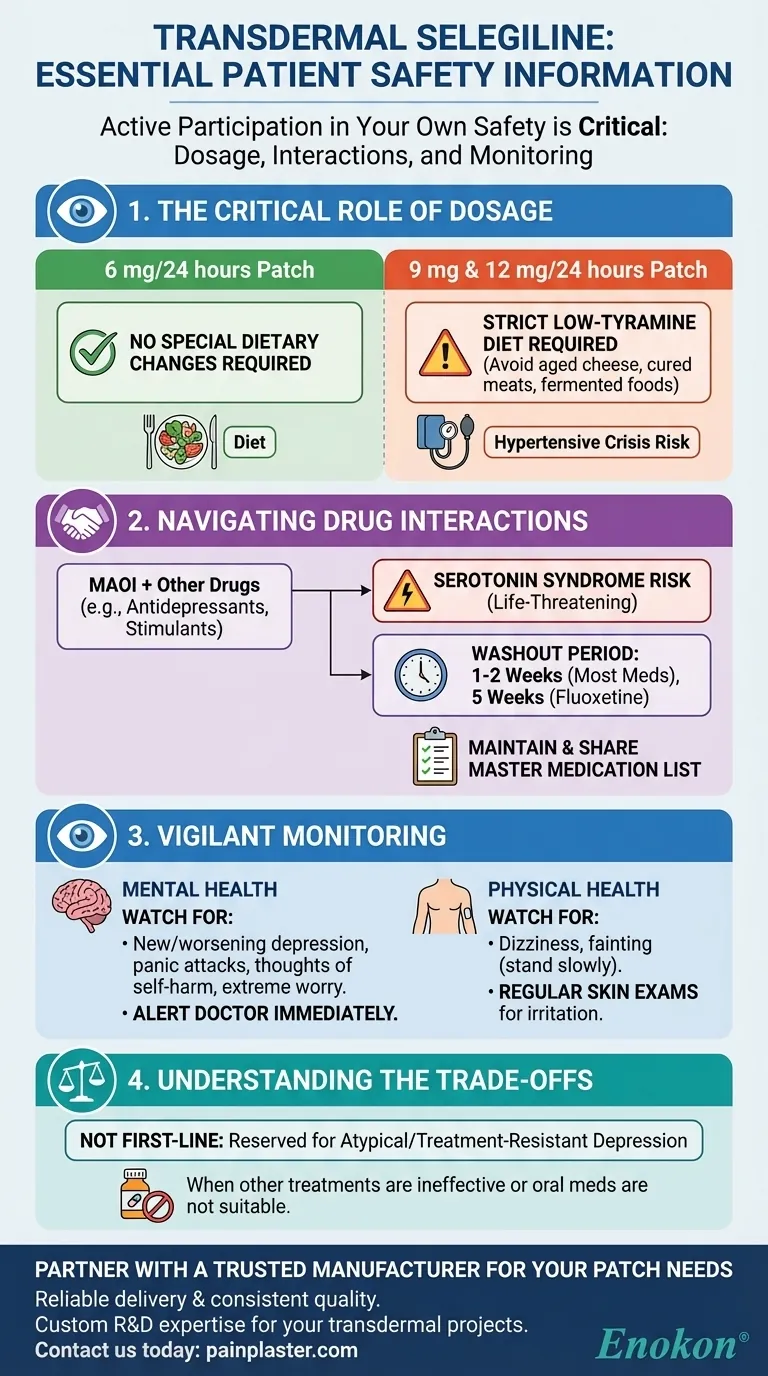
The precautions you must take depend entirely on the strength of the patch you are prescribed. The difference between the 6 mg patch and higher doses is not just a matter of degree—it involves a completely different set of lifestyle rules.
The 6 mg/24 hours Dose
This is the typical starting dose. At this strength, a major advantage is that no special dietary changes are required. The transdermal delivery system is designed to minimize the drug's impact on your digestive system.
The 9 mg and 12 mg/24 hours Doses
At these higher doses, you must follow a strict diet low in tyramine. Tyramine is an amino acid that can build up to dangerous levels when taking a higher-dose MAO inhibitor, potentially causing a sudden, severe spike in blood pressure known as a hypertensive crisis.
This diet involves avoiding foods like aged cheeses, cured or smoked meats, fermented products like sauerkraut, and certain beers and wines. Your doctor will provide a complete list. This restriction must be followed during treatment and for two weeks after stopping the patch.
Navigating Drug and Supplement Interactions
Selegiline is a monoamine oxidase inhibitor (MAOI), a class of drugs known for serious interactions. Combining it with the wrong substance can lead to life-threatening conditions.
The Risk of Serotonin Syndrome
Combining selegiline with other medications that affect serotonin, such as most antidepressants, certain stimulants, and even herbal supplements like St. John's Wort, can cause a dangerous condition called serotonin syndrome.
Understanding the "Washout" Period
You cannot simply stop one antidepressant and start selegiline the next day. A "washout" period is required to completely clear the previous medication from your system. This is typically 1-2 weeks for most medications, but can be as long as 5 weeks after discontinuing fluoxetine (Prozac).
Your Master Medication List
It is absolutely essential to maintain a complete, written list of every medication, vitamin, and supplement you take. Share this list with every doctor you see and carry it with you in case of an emergency.
Vigilant Monitoring: What You and Your Family Must Watch For
Your treatment's success and safety depend on continuous observation, both by you and those around you.
Unexpected Changes in Mental Health
Pay close attention to your mood and behavior. Family or caregivers should be alerted to watch for symptoms such as new or worsening depression, thoughts of self-harm, extreme worry, panic attacks, or severe restlessness and irritability.
These changes are most likely to occur at the beginning of treatment or after a dose adjustment. Contact your doctor immediately if any of these symptoms appear.
Physical Side Effects and Precautions
Selegiline may cause drowsiness, dizziness, or fainting, especially when standing up too quickly. Use caution when driving or operating machinery until you know how the medication affects you.
Regular Skin Examinations
Because the medication is delivered through a patch, your doctor will need to perform periodic skin examinations to check for irritation or other issues at the application site.
Understanding the Trade-offs
Transdermal selegiline is a specialized tool in medicine, and it's important to understand why it was chosen for you.
Not a First-Line Treatment
Guidelines typically reserve MAOIs like selegiline for cases of atypical or treatment-resistant depression. It is often prescribed when other antidepressants have not been effective or if a patient cannot take oral medications.
Important Patient Considerations
Certain individuals must use extra caution. Inform your doctor if you have a history of pheochromocytoma (a type of tumor), heart disease, or seizures. The recommended dose for patients over 65 is the lowest strength, 6 mg/24 hours.
Key Actions for Safe and Effective Treatment
Your path to success with this medication involves being an informed and proactive partner in your care.
- If you are on the 6 mg/24 hour patch: Your main focus should be preventing drug interactions and carefully monitoring your mood, without the need for dietary restrictions.
- If you are on the 9 mg or 12 mg/24 hour patch: Strict adherence to the low-tyramine diet is non-negotiable to prevent a hypertensive crisis, in addition to all other precautions.
- For all patients and caregivers: Proactive communication with your doctor about all medications and any mood changes is your most important safety tool.
Ultimately, understanding these responsibilities empowers you to use this medication safely and effectively.
Summary Table:
| Key Consideration | Details for Patients |
|---|---|
| Dosage Rules | 6 mg patch: No diet changes. 9 mg/12 mg: Must follow a strict low-tyramine diet. |
| Drug Interactions | High risk of serotonin syndrome. Requires a "washout" period (1-5 weeks) when switching antidepressants. |
| Mental Health Monitoring | Watch for new/worsening depression, panic, or thoughts of self-harm, especially when starting or changing dose. |
| General Precautions | May cause dizziness. Regular skin checks at patch site are needed. Not a first-line treatment. |
Partner with a Trusted Manufacturer for Your Transdermal Patch Needs
As a patient, you rely on the precise delivery and consistent quality of your transdermal selegiline patch. For healthcare distributors and pharmaceutical brands, that reliability starts with the manufacturer.
Enokon is a bulk manufacturer of reliable transdermal patches and pain plasters. We understand the critical importance of dosage accuracy and safety in drug delivery systems.
Benefit from our technical expertise for your custom R&D and development projects. Whether you are developing a new transdermal product or require a trusted manufacturing partner for an existing one, our team can help ensure quality and efficacy from the ground up.
Contact our experts today to discuss how we can support your transdermal patch development and manufacturing requirements.
Visual Guide
Related Products
- Silicone Scar Sheets Patch Transdermal Drug Patch
- Menthol Gel Pain Relief Patch
- Far Infrared Heat Pain Relief Patches Transdermal Patches
- Icy Hot Menthol Medicine Pain Relief Patch
- Mugwort Wormwood Pain Relief Patch for Neck Pain
People Also Ask
- What role does a silicone-based transdermal delivery system play in Parkinson's? Enhancing Early-Stage Patient Care
- How is the long-term skin tolerance of silicone-based transdermal patches evaluated in clinical settings? R&D and Safety
- Why is a polarizing microscope used to evaluate the long-term stability of transdermal drug patches? Ensure Efficacy.
- What are common adverse effects of transdermal drug delivery? Risks & Prevention Tips
- What are the advantages of transdermal drug patches? Optimize Medication Delivery with Patches




