
In simple terms, an HRT patch is a medicated adhesive patch that delivers hormones, most commonly estrogen, directly through the skin into the bloodstream. It functions as a key tool in hormone replacement therapy (HRT) to steadily alleviate symptoms associated with menopause, prevent postmenopausal bone disease, or supplement estrogen in those with insufficient natural production.
The primary advantage of an HRT patch lies in its delivery method. By bypassing the digestive system, it provides a consistent dose of hormones and may reduce certain health risks, such as blood clots, that are associated with oral HRT tablets.

How Transdermal Hormone Delivery Works
Understanding how a patch works reveals why it's a distinct and often preferred method for hormone replacement. The technology is designed for steady, controlled release.
The Core Mechanism
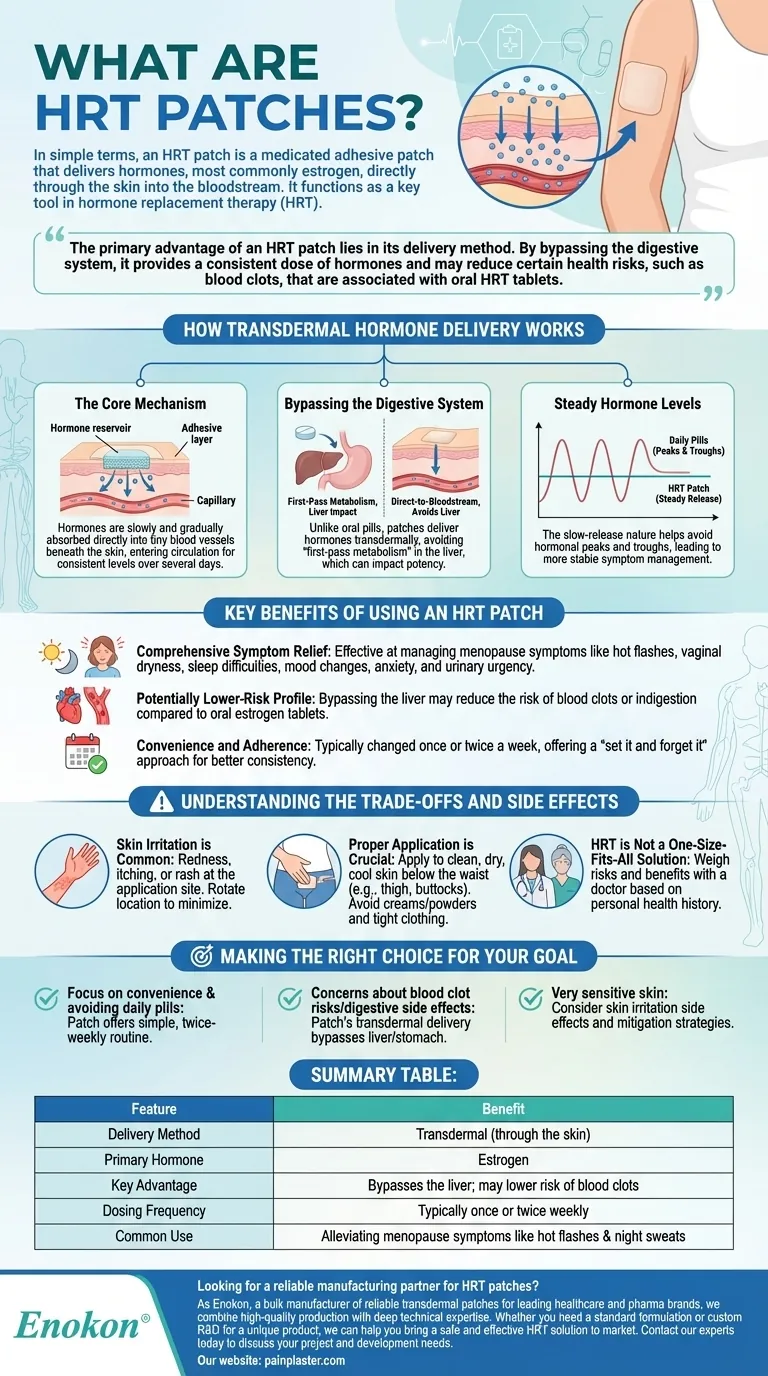
An HRT patch contains a supply of hormones within its adhesive layer. When applied to the skin, these hormones are slowly and gradually absorbed directly into the tiny blood vessels (capillaries) beneath, entering your general circulation. This process ensures a consistent level of hormones in your body over several days.
Bypassing the Digestive System
Unlike oral pills that must be processed by the stomach and liver first, a patch delivers hormones transdermally (through the skin). This direct-to-bloodstream route avoids the "first-pass metabolism" in the liver, which can impact potency and produce different byproducts.
Steady Hormone Levels
The slow-release nature of the patch helps to avoid the hormonal peaks and troughs that can sometimes occur with daily pills. This consistency can lead to more stable symptom management for many individuals.
Key Benefits of Using an HRT Patch
The choice of an HRT patch over other forms is often driven by a combination of safety, efficacy, and convenience.
Comprehensive Symptom Relief
Patches are effective at managing a wide range of menopause symptoms. These include hot flashes, vaginal dryness, sleep difficulties, mood changes, anxiety, and urinary urgency.
A Potentially Lower-Risk Profile
For many individuals, the transdermal route is considered safer. Because it bypasses the liver, it may not carry the same risk of blood clots or indigestion that can be associated with oral estrogen tablets.
Convenience and Adherence
A patch typically only needs to be changed once or twice a week. This "set it and forget it" approach can be much easier to manage than a daily pill, improving adherence and ensuring you get the full, consistent benefit of the therapy.
Understanding the Trade-offs and Side Effects
While effective, HRT patches are not without potential downsides. Understanding these is critical for making an informed decision with your healthcare provider.
Skin Irritation is Common
The most frequent side effect is irritation at the application site. This can manifest as redness, itching, or a rash. Rotating the location of the patch with each new application can help minimize this.
Proper Application is Crucial
For the patch to work correctly, it must be applied to clean, dry, and cool skin. It should be placed below the waist, typically on the thigh or buttocks, and you should avoid using creams or powders on the area beforehand. Tight clothing that might rub the patch off should also be avoided.
HRT is Not a One-Size-Fits-All Solution
Every form of HRT has a unique profile of risks and benefits that must be weighed against your personal health history. A thorough discussion with your doctor is essential to determine if a patch is the most suitable option for your specific circumstances.
Making the Right Choice for Your Goal
Your personal priorities and health profile will determine if an HRT patch is the best fit for your treatment plan.
- If your primary focus is convenience and avoiding daily pills: The patch offers a simple, twice-weekly routine that is easy to maintain.
- If you have concerns about blood clot risks or digestive side effects: The patch's transdermal delivery avoids the liver and stomach, making it a potentially safer alternative to oral tablets.
- If you have very sensitive skin: You must consider the common side effect of skin irritation and discuss mitigation strategies with your healthcare provider.
Ultimately, understanding how HRT patches work empowers you to have a more productive conversation with your doctor about managing your health.
Summary Table:
| Feature | Benefit |
|---|---|
| Delivery Method | Transdermal (through the skin) |
| Primary Hormone | Estrogen |
| Key Advantage | Bypasses the liver; may lower risk of blood clots |
| Dosing Frequency | Typically once or twice weekly |
| Common Use | Alleviating menopause symptoms like hot flashes & night sweats |
Looking for a reliable manufacturing partner for HRT patches?
As Enokon, a bulk manufacturer of reliable transdermal patches for leading healthcare and pharma brands, we combine high-quality production with deep technical expertise. Whether you need a standard formulation or custom R&D for a unique product, we can help you bring a safe and effective HRT solution to market.
Contact our experts today to discuss your project and development needs.
Visual Guide
Related Products
- Far Infrared Heat Pain Relief Patches Transdermal Patches
- Far Infrared Deep Heat Relief Patches Medicated Pain Relief Patches
- Far Infrared Pain Patch Relief Pain Reliever for Back
- Far Infrared Knee Pain Patch Heat Patches for Pain Relief
- Icy Hot Menthol Medicine Pain Relief Patch
People Also Ask
- Why is the selection of matrix materials critical when developing customized transdermal patches? Optimize Efficacy
- What are the physical impacts of external heat exposure on the performance and safety of transdermal patches? - Guide
- What role does a skin tolerance scoring system play in the safety evaluation of transdermal patches? Key Safety Metrics
- What are the clinical advantages of local transdermal delivery systems? Unlock Safer, More Effective Pain Relief Solutions
- How does high-purity far-infrared ceramic powder contribute to the efficacy of far-infrared physical therapy patches?



















