
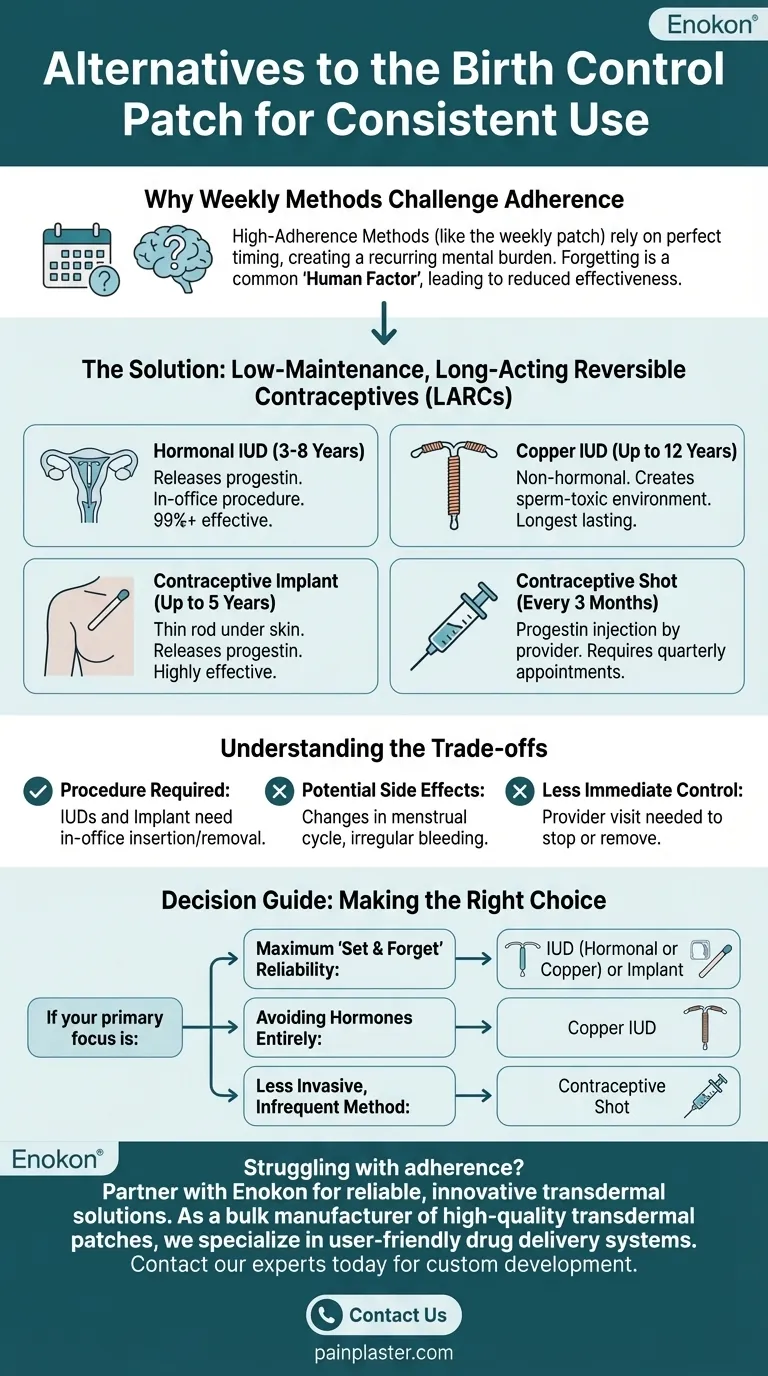
For those who find a weekly schedule demanding, the most effective alternatives to the birth control patch are long-acting, low-maintenance methods. Options like the Intrauterine Device (IUD), the contraceptive implant, or the contraceptive shot remove the need for weekly remembering, significantly reducing the chance of user error and increasing reliability.
The core issue isn't a failure to remember; it's a mismatch between your lifestyle and the demands of your contraceptive method. The solution is to switch from a high-adherence method (like the weekly patch) to one that requires minimal to no regular action on your part.

Why Weekly Methods Pose a Challenge
Methods that require frequent user action, like the patch or the pill, depend entirely on perfect adherence for maximum effectiveness. This creates a recurring mental burden and a significant opportunity for error.
The "Human Factor" in Contraception
Forgetting is a common and predictable part of human behavior, not a personal failing. Life gets busy, and remembering to perform a task on the exact same day every week can be difficult.
A contraceptive method should reduce stress, not add to it. Acknowledging this "human factor" is the first step toward finding a method that truly fits your life.
The Consequence of a Missed Change
Forgetting to change the patch for more than 48 hours can compromise its effectiveness. This forces you to use a backup method, like condoms, for at least a week to prevent pregnancy, defeating the primary purpose of a reliable contraceptive.
Low-Maintenance Contraceptive Alternatives
The best alternatives are often called Long-Acting Reversible Contraceptives (LARCs). These methods are highly effective precisely because they remove the possibility of user error.
The Hormonal IUD (3-8 Years)
An IUD is a small, T-shaped device inserted into the uterus by a healthcare provider. Hormonal IUDs release a low dose of progestin to prevent pregnancy and can remain effective for three to eight years, depending on the brand.
The Copper IUD (Up to 12 Years)
The copper IUD is a highly effective, non-hormonal option. It works by creating an environment toxic to sperm and can prevent pregnancy for up to 12 years. It is a true "set it and forget it" method.
The Contraceptive Implant (Up to 5 Years)
The implant is a thin, flexible rod the size of a matchstick that is inserted under the skin of your upper arm. It releases progestin to prevent pregnancy and is effective for up to five years.
The Contraceptive Shot (Every 3 Months)
The contraceptive shot is an injection of progestin administered by a healthcare provider every 12 to 13 weeks. While it still requires a recurring appointment, the three-month interval is far more forgiving than a weekly schedule.
Understanding the Trade-offs
While highly effective, these low-maintenance methods come with their own set of considerations that are important to discuss with your provider.
The Need for a Procedure
Both IUDs and the implant require a minor in-office procedure for insertion and removal. This is a key difference from methods like the patch, which you control completely.
Potential Side Effects
Long-acting methods can cause changes in your menstrual cycle. Some users experience lighter or absent periods, while others may have irregular bleeding, especially in the first few months.
Less Immediate User Control
The primary benefit of these methods—not having to think about them—is also a trade-off. If you decide you want to become pregnant or wish to stop for any reason, you must schedule a visit with a healthcare provider to have the device removed.
Making the Right Choice for Your Goal
Consulting with a healthcare provider is essential to discuss your personal health history and find the perfect fit. But you can go into that conversation with a clear understanding of your priorities.
- If your primary focus is maximum "set and forget" reliability: The IUD (hormonal or copper) or the implant are your most effective options.
- If your primary focus is avoiding hormones entirely: The copper IUD is the only long-acting, reversible method that is 100% hormone-free.
- If your primary focus is a less invasive but still infrequent method: The contraceptive shot, requiring only four appointments per year, is an excellent choice.
The goal is to find a birth control method that works with your life, not against it.
Summary Table:
| Alternative Method | How It Works | Duration of Effectiveness | Key Consideration |
|---|---|---|---|
| Hormonal IUD | T-shaped device inserted into uterus; releases progestin. | 3 to 8 years | Requires a minor in-office procedure for insertion/removal. |
| Copper IUD | Non-hormonal device that creates a sperm-toxic environment. | Up to 12 years | Can cause heavier periods for some users. |
| Contraceptive Implant | Thin rod inserted under the skin of the arm; releases progestin. | Up to 5 years | May cause irregular bleeding, especially initially. |
| Contraceptive Shot | Progestin injection administered by a provider. | Every 3 months | Requires quarterly appointments for continued effectiveness. |
Struggling with adherence to weekly patches? Partner with Enokon for reliable, innovative transdermal solutions.
As a bulk manufacturer of high-quality transdermal patches and pain plasters, we understand the critical need for user-friendly and effective drug delivery systems. Our technical expertise in custom R&D and development ensures that healthcare and pharmaceutical distributors and brands can deliver products that patients can trust and adhere to.
Let us help you develop a product that fits seamlessly into your customers' lives. Contact our experts today to discuss your custom patch development needs.
Visual Guide
Related Products
- Prostate Pain Kidney Health Care Patch for Men
- Heating Pain Relief Patches for Menstrual Cramps
- Silicone Scar Sheets Patch Transdermal Drug Patch
- Menthol Gel Pain Relief Patch
- Icy Hot Menthol Medicine Pain Relief Patch
People Also Ask
- What are the key components of Chinese herbal pain patches? Discover the Science Behind Natural Pain Relief
- What are Chinese pain patches used for? Natural Relief for Joint & Muscle Pain
- What role do Chinese pain patches play in arthritis relief? Discover Natural Pain Management Solutions
- What complementary practices enhance the effectiveness of Chinese pain patches? Boost Relief with Holistic Care
- What should be avoided when using Chinese pain patches? Key Safety Tips for Effective Relief








