
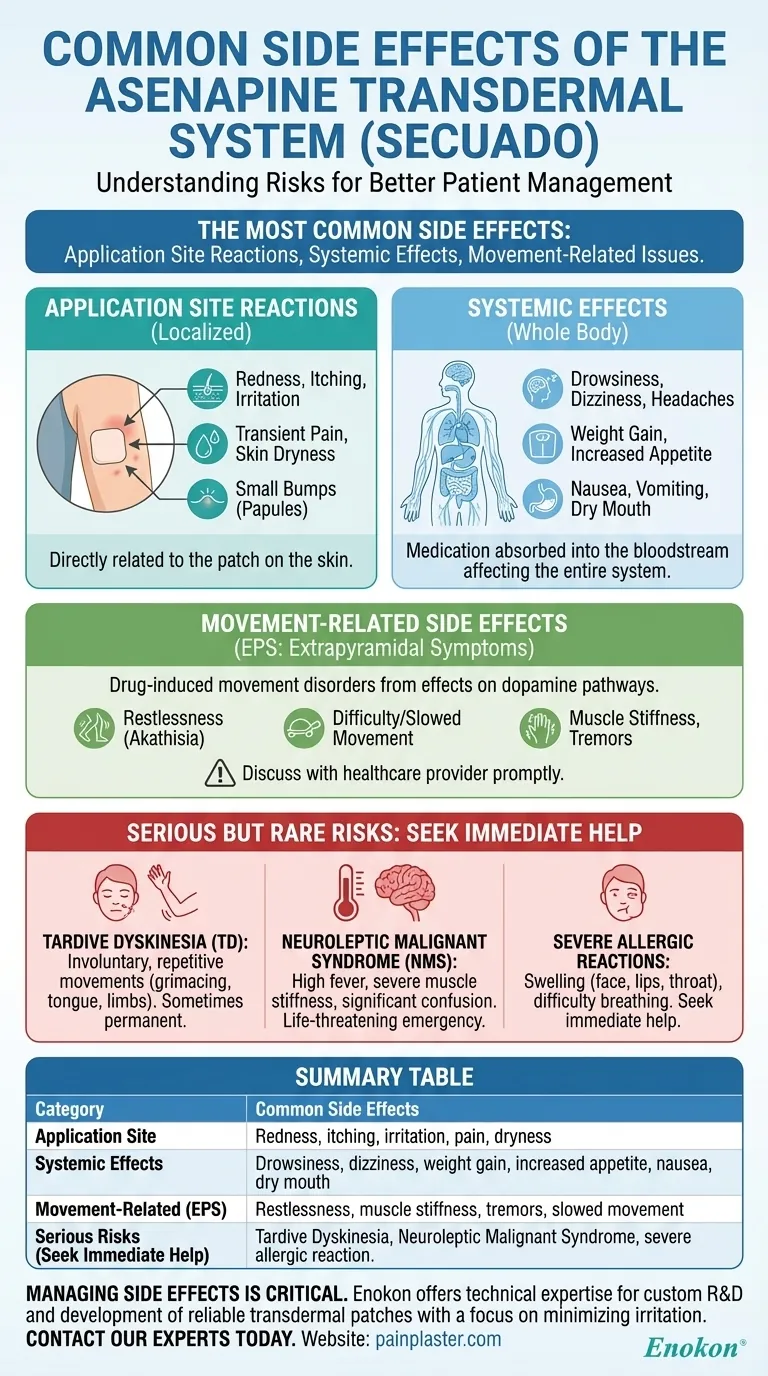
The most common side effects of the Asenapine transdermal system (brand name Secuado) are reactions at the application site, such as redness and itching, along with systemic effects like drowsiness and weight gain. Patients may also experience movement-related side effects, including restlessness or muscle stiffness.
While many side effects are manageable, the core challenge is balancing the medication's benefits against a spectrum of potential reactions, ranging from localized skin irritation to rare but life-threatening conditions that demand immediate medical attention.

The Two Primary Categories of Side Effects
Understanding the side effects of the Asenapine patch involves separating them into two distinct groups: those that occur where the patch is applied and those that affect your entire system.
Application Site Reactions
The most frequently reported issues are directly related to the patch on the skin.
These reactions are typically localized and may include redness, itching, or general irritation. Some individuals may also experience transient pain, skin dryness, or the formation of small bumps (papules) at the application site.
Systemic Effects on the Body
Systemic side effects are those that affect the whole body, as the medication is absorbed into the bloodstream.
Common neurological effects include significant drowsiness or sedation, dizziness, and headaches. These can impact daily activities and require careful management.
Metabolic changes are also a key consideration, with weight gain and an increased appetite being commonly reported. Other potential side effects include gastrointestinal issues like nausea, vomiting, and dry mouth.
Understanding Movement-Related Side Effects (EPS)
A critical category of side effects for Asenapine and similar medications involves changes to motor control, known as extrapyramidal symptoms.
What is Extrapyramidal Syndrome (EPS)?
EPS refers to a group of drug-induced movement disorders that can be distressing. They are caused by the medication's effect on the dopamine pathways in the brain that control motor function.
Common EPS Symptoms
Patients should be aware of symptoms such as a feeling of restlessness (akathisia), difficulty moving or slowed movement, muscle stiffness, and tremors. Any of these symptoms should be discussed with a healthcare provider promptly.
Serious but Rare Risks: When to Seek Immediate Help
While most side effects are mild to moderate, Asenapine carries a risk of severe adverse reactions. Recognizing these is crucial for your safety.
Tardive Dyskinesia (TD)
This is a serious condition characterized by involuntary, repetitive body movements, which can sometimes be permanent. It may manifest as grimacing, tongue movements, or rapid movements of the arms and legs.
Neuroleptic Malignant Syndrome (NMS)
NMS is a rare but life-threatening emergency. Its key signs include a high fever, severe muscle stiffness or rigidity, and significant confusion or altered mental state. NMS requires immediate emergency medical care.
Severe Allergic Reactions
An allergic reaction to Asenapine can be severe. Seek immediate medical help if you experience swelling of the face, lips, or throat, or have difficulty breathing.
How to Apply This to Your Health
Proactive communication with your healthcare provider is the most effective tool for managing any side effects that arise from using the Asenapine transdermal system.
- If your primary concern is mild skin irritation: Discuss rotating the patch application site with your doctor and ask about appropriate skin care to minimize reactions.
- If you are experiencing systemic effects like drowsiness or weight gain: Report these to your provider, as they can discuss strategies for management or determine if an adjustment is needed.
- If you observe any signs of movement issues, high fever, or severe swelling: Consider this a medical emergency and seek immediate professional help.
Ultimately, your experience with this medication is unique, and keeping your healthcare team informed is the key to ensuring your treatment is both safe and effective.
Summary Table:
| Category | Common Side Effects |
|---|---|
| Application Site | Redness, itching, irritation, pain, dryness |
| Systemic Effects | Drowsiness, dizziness, weight gain, increased appetite, nausea, dry mouth |
| Movement-Related (EPS) | Restlessness, muscle stiffness, tremors, slowed movement |
| Serious Risks (Seek Immediate Help) | Tardive Dyskinesia (involuntary movements), Neuroleptic Malignant Syndrome (high fever, confusion), severe allergic reaction |
Managing side effects is critical for patient safety and treatment adherence. As a bulk manufacturer of reliable transdermal patches for healthcare and pharma brands, Enokon offers technical expertise for custom R&D and development. If you are a distributor or brand looking for a partner to develop a transdermal system with a focus on minimizing irritation and ensuring consistent delivery, contact our experts today to discuss how we can support your product's success.
Visual Guide
Related Products
- Far Infrared Heat Pain Relief Patches Transdermal Patches
- Silicone Scar Sheets Patch Transdermal Drug Patch
- Menthol Gel Pain Relief Patch
- Icy Hot Menthol Medicine Pain Relief Patch
- Mugwort Wormwood Pain Relief Patch for Neck Pain
People Also Ask
- Why is the selection of matrix materials critical when developing customized transdermal patches? Optimize Efficacy
- What are the physical impacts of external heat exposure on the performance and safety of transdermal patches? - Guide
- What are the clinical advantages of local transdermal delivery systems? Unlock Safer, More Effective Pain Relief Solutions
- What role does a skin tolerance scoring system play in the safety evaluation of transdermal patches? Key Safety Metrics
- How does high-purity far-infrared ceramic powder contribute to the efficacy of far-infrared physical therapy patches?











