
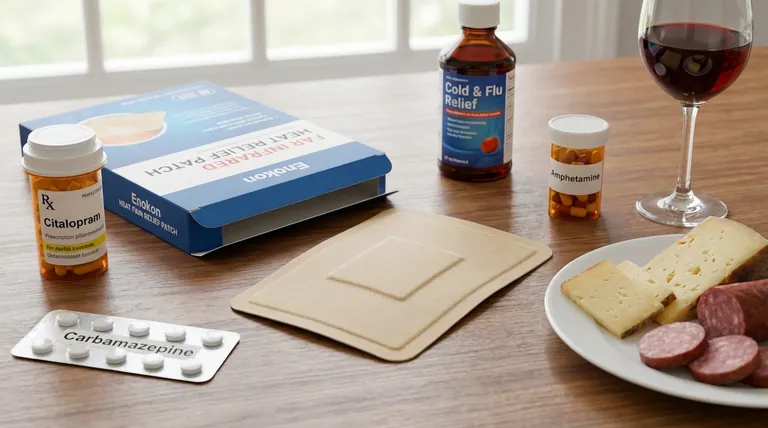
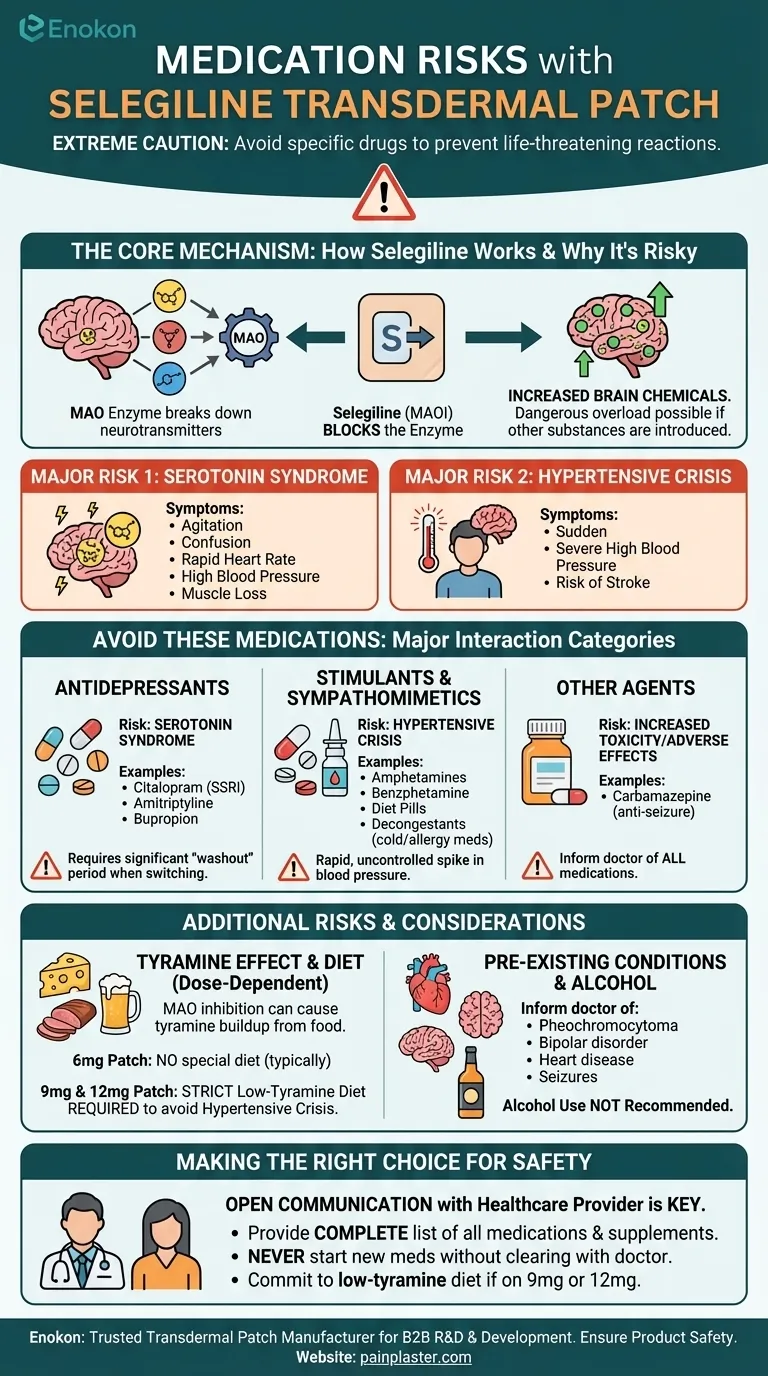
Taking the selegiline transdermal patch requires extreme caution with other medications. You must avoid a wide range of drugs, including many common antidepressants like citalopram and amitriptyline, stimulants such as amphetamines, certain cold medicines, and other specific agents like bupropion and carbamazepine. Combining these can lead to severe, life-threatening reactions.
The core issue is that selegiline is a Monoamine Oxidase Inhibitor (MAOI). It works by blocking an enzyme that breaks down key brain chemicals. Combining it with other drugs that also affect these chemicals can dangerously overload your system, leading to serotonin syndrome or a hypertensive crisis.
The Core Mechanism: Why Selegiline Demands Caution
What is a Monoamine Oxidase Inhibitor (MAOI)?
Selegiline belongs to a class of drugs called Monoamine Oxidase Inhibitors (MAOIs). Monoamine oxidase is an enzyme in your body responsible for cleaning up and breaking down certain neurotransmitters, like serotonin, norepinephrine, and dopamine.
By inhibiting this enzyme, selegiline increases the levels of these powerful chemicals in your brain. While this is the intended therapeutic effect, it also sets the stage for dangerous interactions if other substances are introduced.
The Two Major Risks: Serotonin Syndrome and Hypertensive Crisis
Nearly all dangerous interactions with selegiline stem from two potential outcomes.
Serotonin Syndrome is a life-threatening condition caused by an excessive amount of serotonin in the brain. Symptoms can range from agitation and confusion to rapid heart rate, high blood pressure, and loss of muscle coordination.
A Hypertensive Crisis is a sudden, severe increase in blood pressure that can lead to a stroke. This occurs when substances that raise blood pressure are not broken down effectively because the MAO enzyme is blocked.
Major Drug Classes to Avoid
Antidepressants
This is the most critical category of interacting drugs. Combining another antidepressant with an MAOI like selegiline is a classic recipe for serotonin syndrome.
You must avoid Selective Serotonin Reuptake Inhibitors (SSRIs) like citalopram, tricyclic antidepressants like amitriptyline, and atypical antidepressants like bupropion. A significant "washout" period is required when switching to or from selegiline.
Stimulants and Sympathomimetics
This group includes prescription stimulants and many over-the-counter products. These drugs increase levels of norepinephrine and other stimulating neurotransmitters.
When MAO is inhibited by selegiline, your body cannot break down these substances effectively. This can cause a rapid, uncontrolled spike in blood pressure, leading to a hypertensive crisis.
This category includes amphetamines, benzphetamine, diet pills, and many common decongestants found in cold and allergy medicines.
Other Significant Interactions
Other medications can also pose a risk. For example, the anti-seizure medication carbamazepine is contraindicated.
It is absolutely essential to provide your doctor and pharmacist with a complete list of everything you take, including prescription drugs, over-the-counter medications, and herbal supplements.
Understanding the Trade-offs and Broader Risks
The Tyramine Effect: Why Diet Matters at Higher Doses
The MAO enzyme also breaks down tyramine, an amino acid found in many aged and fermented foods.
When taking higher doses of the selegiline patch (above 6 mg/24 hours), inhibiting this enzyme means tyramine from your diet can build up, triggering a hypertensive crisis.
Foods to avoid on higher doses include aged cheeses, smoked or pickled meats, yeast extracts, and certain alcoholic beverages.
The Critical Role of Patch Dosage
The dietary restrictions are dose-dependent.
At the lowest dose (6 mg/24 hours), selegiline primarily inhibits MAO-B in the brain and has less effect on the MAO-A in your gut that breaks down tyramine. Therefore, no special diet is typically required.
For higher doses (9 mg and 12 mg/24 hours), the drug loses its selectivity and inhibits MAO-A more significantly. At these strengths, you must follow a strict low-tyramine diet.
Pre-existing Conditions and Alcohol
You must inform your doctor of any pre-existing medical conditions, especially pheochromocytoma (a type of adrenal gland tumor), a history of bipolar disorder, heart disease, or seizures.
Alcohol use is also not recommended, as some alcoholic beverages contain high levels of tyramine and can interact poorly with the medication's effects on the central nervous system.
Making the Right Choice for Your Safety
Before you begin or while you are using the selegiline patch, your actions must be guided by open communication with your healthcare provider.
- If your primary focus is starting selegiline: Your absolute priority is to provide your doctor with a complete list of every medication, supplement, and medical condition you have.
- If your primary focus is ongoing treatment: You must never start any new medication, including over-the-counter cold medicine or herbal supplements, without first clearing it with your doctor or pharmacist.
- If your primary focus is managing a higher dose (9mg or 12mg): You must commit to strict adherence to a low-tyramine diet to prevent a hypertensive crisis.
Proactive communication with your healthcare team is the single most important factor in using selegiline safely and effectively.
Summary Table:
| Drug Class | Examples | Primary Risk |
|---|---|---|
| Antidepressants | Citalopram (SSRI), Amitriptyline, Bupropion | Serotonin Syndrome |
| Stimulants | Amphetamines, Benzphetamine, Decongestants | Hypertensive Crisis |
| Other Agents | Carbamazepine | Increased Toxicity |
Need a reliable, high-quality transdermal patch? As Enokon, a bulk manufacturer of trusted transdermal patches and pain plasters, we provide pharmaceutical distributors and brands with the technical expertise for custom R&D and development. Ensure your products are safe and effective. Contact our experts today to discuss your project needs.
Visual Guide
Related Products
- Silicone Scar Sheets Patch Transdermal Drug Patch
- Far Infrared Heat Pain Relief Patches Transdermal Patches
- Menthol Gel Pain Relief Patch
- Icy Hot Menthol Medicine Pain Relief Patch
- Mugwort Wormwood Pain Relief Patch for Neck Pain
People Also Ask
- What role does a silicone-based transdermal delivery system play in Parkinson's? Enhancing Early-Stage Patient Care
- How is the long-term skin tolerance of silicone-based transdermal patches evaluated in clinical settings? R&D and Safety
- Why is a polarizing microscope used to evaluate the long-term stability of transdermal drug patches? Ensure Efficacy.
- What are common adverse effects of transdermal drug delivery? Risks & Prevention Tips
- What are the advantages of transdermal drug patches? Optimize Medication Delivery with Patches


















