
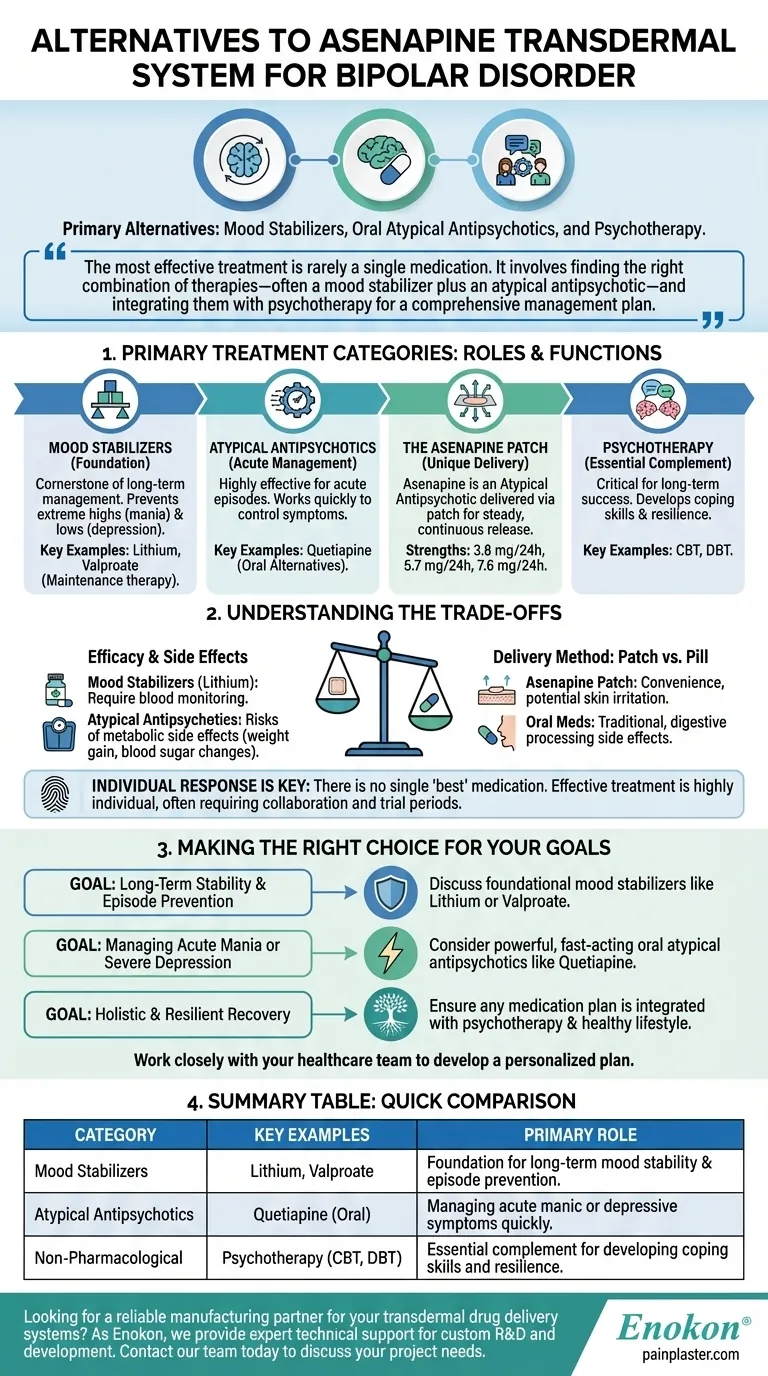
When considering treatments for bipolar disorder beyond the Asenapine transdermal system, the primary alternatives fall into three main categories. These include traditional mood stabilizers like Lithium and Valproate, other atypical antipsychotics such as Quetiapine, and crucial non-pharmacological approaches like psychotherapy and structured lifestyle adjustments.
The most effective treatment for bipolar disorder is rarely a single medication. Instead, it involves finding the right combination of therapies—often a mood stabilizer plus an atypical antipsychotic—and integrating them with psychotherapy for a comprehensive management plan.
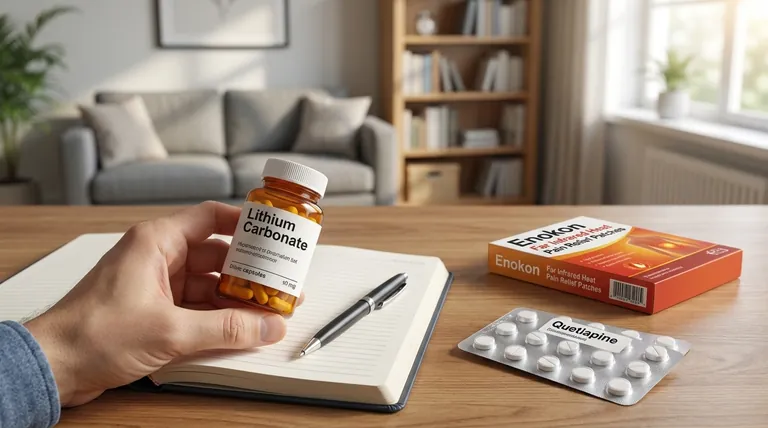
Understanding the Primary Treatment Categories
Choosing an alternative to the Asenapine transdermal system requires understanding the different classes of medication and their specific roles in managing bipolar disorder. Asenapine itself is an atypical antipsychotic, a class of drugs often used to manage acute symptoms.
Mood Stabilizers: The Foundation of Treatment
Mood stabilizers are often considered the cornerstone of long-term bipolar disorder management. Their primary goal is to keep your mood stable, preventing the extreme highs of mania and the deep lows of depression.
The most well-established medications in this class are Lithium and Valproate. They are typically used for maintenance therapy to reduce the frequency and severity of future mood episodes.
Atypical Antipsychotics: Managing Acute Symptoms
This class of medication, which includes Asenapine and alternatives like Quetiapine, is highly effective for treating acute manic or depressive episodes. They work more quickly than traditional mood stabilizers to control symptoms like psychosis, agitation, and severe depression.
While some are used for long-term maintenance, they are often prescribed to gain initial control over an episode before transitioning to or combining with a mood stabilizer.
The Role of the Asenapine Transdermal System
The Asenapine transdermal system is unique because of its delivery method. As a patch, it provides a steady, continuous release of medication into the bloodstream.
This can be advantageous for some individuals, as it may help reduce the side effects associated with the peaks and troughs of oral medication. The available strengths are 3.8 mg/24 hours, 5.7 mg/24 hours, and 7.6 mg/24 hours.
Psychotherapy: An Essential Complement
Medication is only one part of the equation. Psychotherapy, including modalities like Cognitive-Behavioral Therapy (CBT) or Dialectical Behavior Therapy (DBT), is critical for long-term success.
Therapy helps you develop coping skills, identify mood triggers, manage stress, and repair relationships affected by the illness. It works in partnership with medication to provide stability.
Understanding the Trade-offs
Every treatment option comes with a unique set of benefits and potential drawbacks. The decision to switch from or choose an alternative to the Asenapine patch should be made with a clear understanding of these trade-offs.
Efficacy vs. Side Effects
While effective, mood stabilizers like Lithium require regular blood monitoring to ensure therapeutic levels and avoid toxicity. Atypical antipsychotics, including Asenapine and its alternatives, can carry risks of metabolic side effects, such as weight gain or changes in blood sugar.
Delivery Method: Patch vs. Pill
The Asenapine patch offers the convenience of once-daily application and may improve adherence for those who forget to take pills. However, it can cause skin irritation at the application site. Oral medications, while more traditional, must be processed through the digestive system, which can contribute to certain side effects.
Individual Response is Key
Ultimately, there is no single "best" medication for bipolar disorder. The most effective treatment is highly individual and can only be determined through careful collaboration with a healthcare provider, sometimes involving a period of trial and error to find the right fit.
Making the Right Choice for Your Treatment Goals
Navigating these options requires a clear conversation with your psychiatrist about your specific symptoms, history, and treatment priorities.
- If your primary focus is long-term stability and episode prevention: Discuss foundational mood stabilizers like Lithium or Valproate with your doctor.
- If your primary focus is managing acute mania or severe depression: An oral atypical antipsychotic, such as Quetiapine, may be a powerful and fast-acting alternative.
- If your primary focus is a holistic and resilient recovery: Ensure that any medication plan is integrated with consistent psychotherapy and healthy lifestyle adjustments.
Working closely with your healthcare team is the most effective way to develop a personalized treatment plan that addresses your unique needs.
Summary Table:
| Alternative Category | Key Examples | Primary Role in Treatment |
|---|---|---|
| Mood Stabilizers | Lithium, Valproate | Foundation for long-term mood stability and episode prevention |
| Atypical Antipsychotics | Quetiapine (Oral) | Managing acute manic or depressive symptoms quickly |
| Non-Pharmacological | Psychotherapy (CBT, DBT) | Essential complement for developing coping skills and resilience |
Looking for a reliable manufacturing partner for your transdermal drug delivery systems? As Enokon, a bulk manufacturer of reliable transdermal patches and pain plasters, we provide healthcare and pharma distributors and brands with expert technical support for custom R&D and development. Let us help you bring effective and innovative treatments to market. Contact our team today to discuss your project needs.
Visual Guide
Related Products
- Far Infrared Heat Pain Relief Patches Transdermal Patches
- Menthol Gel Pain Relief Patch
- Icy Hot Menthol Medicine Pain Relief Patch
- Silicone Scar Sheets Patch Transdermal Drug Patch
People Also Ask
- Why is the selection of matrix materials critical when developing customized transdermal patches? Optimize Efficacy
- What are the physical impacts of external heat exposure on the performance and safety of transdermal patches? - Guide
- What are the clinical advantages of local transdermal delivery systems? Unlock Safer, More Effective Pain Relief Solutions
- What role does a skin tolerance scoring system play in the safety evaluation of transdermal patches? Key Safety Metrics
- How does high-purity far-infrared ceramic powder contribute to the efficacy of far-infrared physical therapy patches?



