
When considering treatments for schizophrenia beyond the Asenapine transdermal system, the primary alternatives fall into three main categories: other antipsychotic medications with different delivery methods, non-pharmacological therapies, and supportive lifestyle changes. Common medication alternatives include well-established oral antipsychotics like Risperidone and Olanzapine, which have been cornerstones of treatment for many years.
The search for an alternative to the Asenapine patch is fundamentally about finding the right balance between treatment efficacy, medication delivery preference, and individual side effect tolerance. A successful strategy almost always involves a comprehensive plan that combines the right medication with robust therapeutic support.

Understanding the Treatment Landscape
Before exploring alternatives, it's important to understand the unique position of the Asenapine transdermal system. This context clarifies why certain alternatives might be more suitable than others.
What Makes the Asenapine Patch Unique?
The Asenapine transdermal system is a second-generation antipsychotic (SGA), also known as an atypical antipsychotic.
Its key distinction is the delivery method. It is the first antipsychotic available as a once-daily transdermal patch in the United States. This design provides a steady release of medication through the skin, bypassing the digestive system.
Why Seek an Alternative?
Patients and clinicians may seek alternatives for several reasons, including skin irritation at the application site, preference for a different delivery method (like a pill or injection), or an inadequate response to the medication.
Key Medication Alternatives
The most direct alternatives are other antipsychotic medications, which differ primarily in their chemical structure, side effect profile, and method of delivery.
Other Oral Atypical Antipsychotics
This is the most common category of medication for schizophrenia. Instead of a daily patch, these are typically taken as a daily pill.
Well-established options include:
- Risperidone
- Olanzapine
- Quetiapine
These medications work on similar brain pathways to manage symptoms like hallucinations and disorganized thinking but have different potential side effects.
Long-Acting Injectables (LAIs)
For individuals who struggle with the consistency of taking a daily medication, LAIs are a powerful alternative.
These are administered by a healthcare professional every few weeks or months, providing a reliable dose of medication without the need for daily adherence. Many oral atypicals are also available in an LAI formulation.
The Role of Non-Pharmacological Approaches
Medication is the foundation of schizophrenia treatment, but it is rarely sufficient on its own. Therapeutic and lifestyle support are critical for long-term stability and quality of life.
Cognitive Behavioral Therapy (CBT)
CBT is a form of psychotherapy that helps individuals develop coping strategies for symptoms that may persist even with medication.
It focuses on challenging distressing thoughts and changing behavioral patterns, which can significantly reduce the impact of the illness on daily functioning.
Psychosocial Support
This broad category includes family therapy, vocational rehabilitation, and social skills training. These interventions help rebuild social connections, improve independent living skills, and create a strong support network essential for recovery.
Understanding the Trade-offs
Choosing a treatment involves weighing the pros and cons of each approach. The "best" option is highly individual and depends on a person's specific needs and circumstances.
Delivery Method: Patch vs. Pill vs. Injection
Each delivery method has distinct advantages. The patch offers steady, consistent dosing. Pills are non-invasive and familiar. Injections remove the burden of daily medication adherence entirely.
The choice often comes down to balancing convenience, personal preference, and the clinical need for consistent medication levels.
Side Effect Profiles
All antipsychotics carry a risk of side effects, such as weight gain, drowsiness, or metabolic changes. However, individuals react differently to each medication.
Switching from Asenapine to another antipsychotic like Olanzapine or Risperidone is often done to find a medication with a more tolerable side effect profile for that specific person.
Making the Right Choice for Your Treatment Plan
The decision to switch from the Asenapine transdermal system should be made in close collaboration with a healthcare provider. Your specific goals will guide the selection of the best alternative.
- If your primary concern is avoiding daily pills: A long-acting injectable (LAI) is the most direct alternative to the convenience of a patch.
- If you are experiencing skin irritation from the patch: Switching to an oral medication like Risperidone or Olanzapine is the standard solution.
- If medication alone is not providing sufficient relief: Integrating Cognitive Behavioral Therapy (CBT) and other psychosocial supports is critical for managing persistent symptoms and improving overall function.
Ultimately, the most effective treatment for schizophrenia is a personalized and collaborative plan that adapts to your evolving needs.
Summary Table:
| Alternative Type | Key Examples | Primary Benefit |
|---|---|---|
| Other Oral Antipsychotics | Risperidone, Olanzapine, Quetiapine | Avoids skin irritation; familiar pill format |
| Long-Acting Injectables (LAIs) | Various SGA formulations | Eliminates need for daily adherence; consistent dosing |
| Non-Pharmacological Therapies | Cognitive Behavioral Therapy (CBT), Psychosocial Support | Manages persistent symptoms and improves daily function |
Finding the right alternative for your schizophrenia treatment plan requires a partner with deep expertise in medication delivery.
At Enokon, we are a bulk manufacturer of reliable transdermal patches and pain plasters for healthcare and pharma distributors and brands. If you are exploring alternatives to the Asenapine transdermal system or developing a new treatment, our technical expertise is at your service.
We can support your custom R&D and product development needs, helping you create effective, patient-preferred delivery solutions. Let's discuss how we can help you develop a personalized treatment strategy.
Contact our experts today to learn more about our capabilities and start a conversation.
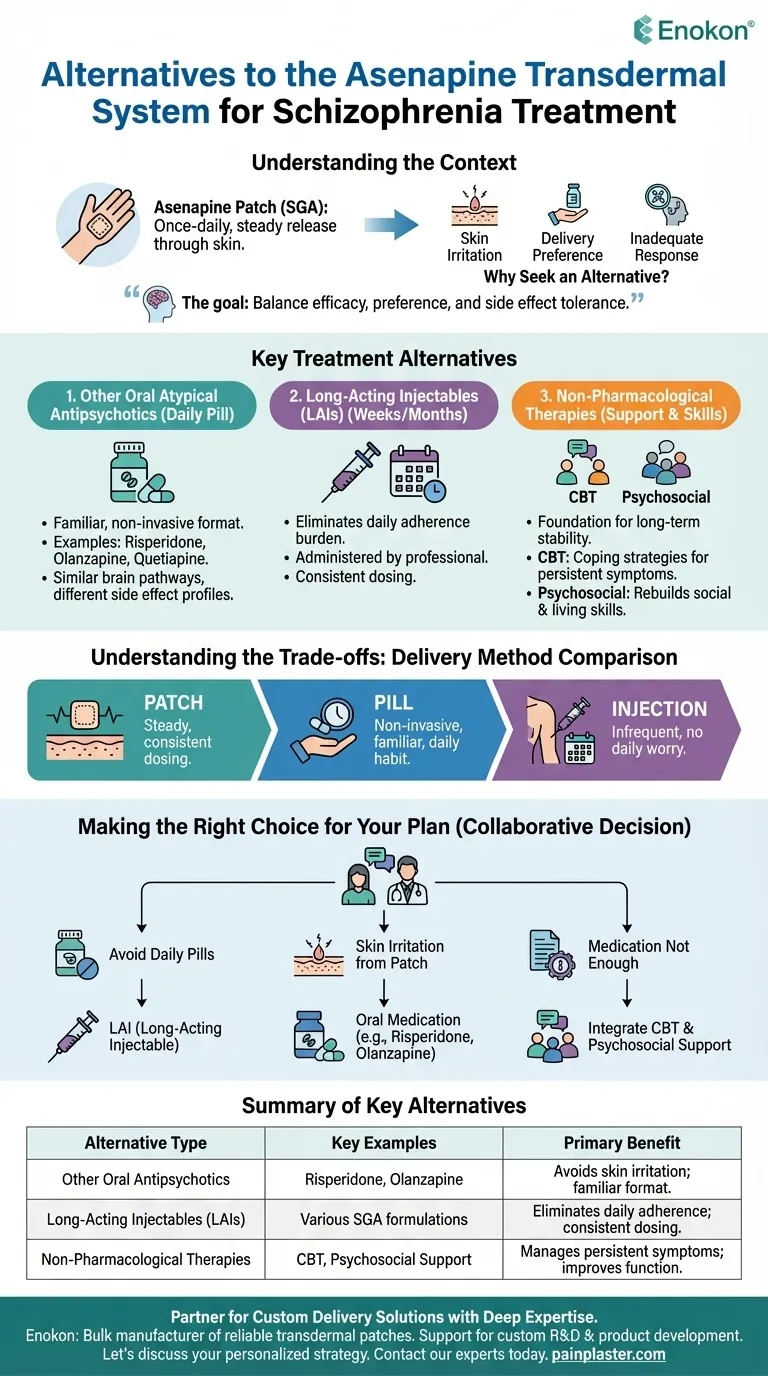
Visual Guide
Related Products
- Far Infrared Heat Pain Relief Patches Transdermal Patches
- Menthol Gel Pain Relief Patch
- Icy Hot Menthol Medicine Pain Relief Patch
- Silicone Scar Sheets Patch Transdermal Drug Patch
People Also Ask
- Why is the selection of matrix materials critical when developing customized transdermal patches? Optimize Efficacy
- What are the physical impacts of external heat exposure on the performance and safety of transdermal patches? - Guide
- What are the clinical advantages of local transdermal delivery systems? Unlock Safer, More Effective Pain Relief Solutions
- What role does a skin tolerance scoring system play in the safety evaluation of transdermal patches? Key Safety Metrics
- How does high-purity far-infrared ceramic powder contribute to the efficacy of far-infrared physical therapy patches?



