
When considering estrogen therapy, the primary advantage of transdermal methods like patches or gels is that they deliver the hormone directly into the bloodstream. This bypasses the liver's "first-pass metabolism," allowing for lower, more stable doses. However, these methods have practical disadvantages, including skin irritation from patches and the risk of accidentally transferring gels to others through skin contact.
The core benefit of transdermal estrogen is its delivery mechanism, which avoids the liver and may sidestep some complications associated with oral therapy. The decision then becomes a practical matter of weighing the convenience and drawbacks of a patch versus a gel.
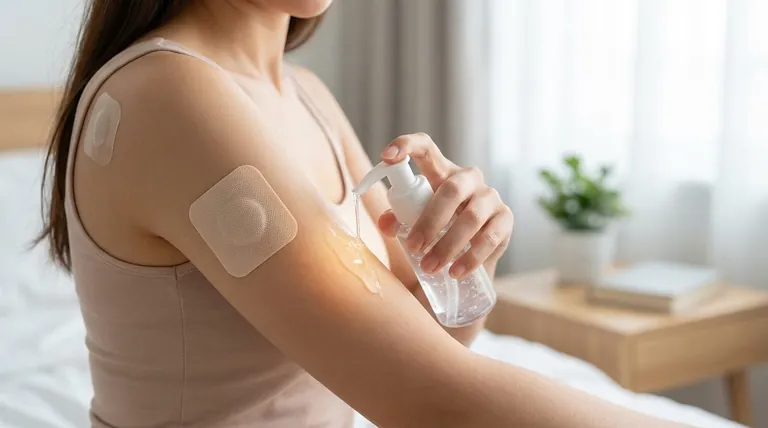
The Core Advantage: Bypassing the Liver
The most significant benefit of transdermal estrogen therapy stems from how it enters your body. Unlike oral pills, it doesn't go through your digestive system first.
Understanding First-Pass Metabolism
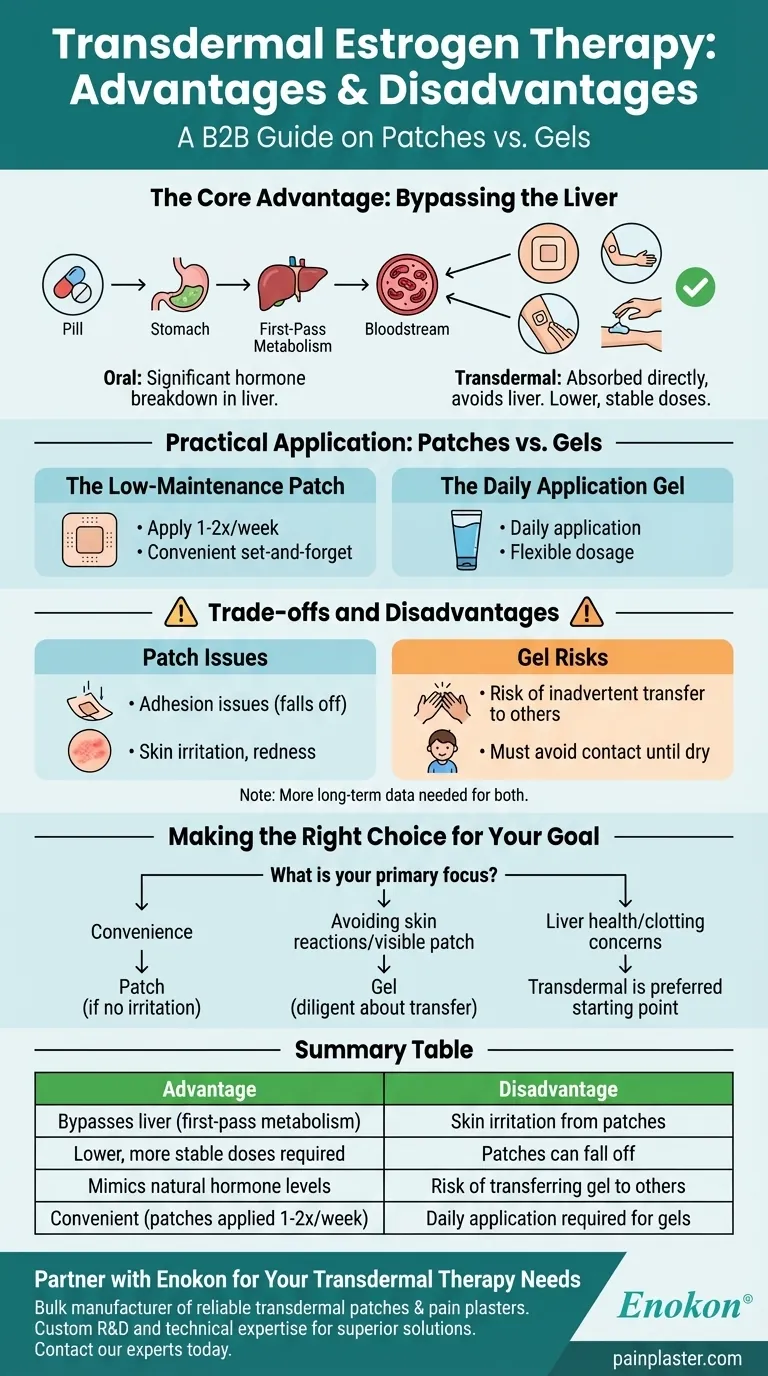
When you swallow a pill, it is absorbed from your intestine and travels directly to the liver. The liver immediately metabolizes, or breaks down, a large portion of the medication before it can circulate throughout the rest of your body. This is known as first-pass metabolism.
The Benefit of Transdermal Delivery
Transdermal patches and gels allow estrogen to be absorbed directly through the skin into the bloodstream. This method completely avoids the liver's first pass.
Because the hormone isn't immediately broken down, a much lower dose is needed to achieve the desired therapeutic effect. This results in more stable and consistent hormone levels, mimicking the body's natural physiological state more closely.
Practical Application: Patches vs. Gels
While both are transdermal, the two main methods have different user experiences.
The Low-Maintenance Patch
Estrogen patches are a "set it and forget it" option. They are typically applied just once or twice per week, which many find highly convenient.
The Daily Application Gel
Gels and creams require daily application. While this is more frequent, it can offer more flexibility in adjusting the dose as needed under a doctor's supervision.
Understanding the Trade-offs and Disadvantages
The downsides of transdermal therapy are almost entirely related to the practical realities of applying something to your skin.
Patch Adhesion and Skin Irritation
A common complaint is that patches can fall off, especially with exposure to water, sweat, or friction from clothing. The adhesive can also cause skin irritation, redness, or itching at the application site. For some, the visible presence of a patch can also be a cosmetic concern.
The Transfer Risk with Gels
Gels carry a significant risk of inadvertent administration to others. If someone touches the area of skin where the gel was applied before it has fully dried, the hormone can be transferred to them. This is a serious consideration for those in close contact with partners, children, or even pets.
The Need for More Data
While transdermal estradiol is considered a major advance in hormone replacement, it is important to note that more long-term studies are needed. This research will help fully confirm its protective effects against conditions like osteoporosis and cardiovascular disease compared to other forms of therapy.
Making the Right Choice for Your Goal
Consulting with your healthcare provider is essential, but understanding these trade-offs will help you have a more informed discussion.
- If your primary focus is convenience: A patch is often the most straightforward option, as long as you do not experience skin irritation or adhesion issues.
- If your primary focus is avoiding skin reactions or a visible patch: A daily gel may be a better choice, but you must be diligent about preventing accidental transfer to others.
- If you have concerns about liver health or clotting factors: Transdermal therapy is often a preferred starting point because it avoids the first-pass effect in the liver.
Ultimately, the best method aligns your personal lifestyle and priorities with the unique practicalities of each application type.
Summary Table:
| Advantage | Disadvantage |
|---|---|
| Bypasses liver (first-pass metabolism) | Skin irritation from patches |
| Lower, more stable doses required | Patches can fall off |
| Mimics natural hormone levels | Risk of transferring gel to others |
| Convenient (patches applied 1-2x/week) | Daily application required for gels |
Partner with Enokon for Your Transdermal Therapy Needs
As a bulk manufacturer of reliable transdermal patches and pain plasters for healthcare and pharmaceutical distributors and brands, Enokon understands the critical balance between efficacy and patient comfort. Our technical expertise in custom R&D and development ensures a product that meets the highest standards of delivery and safety.
Let us help you develop a superior transdermal solution. Contact our experts today to discuss how we can support your product line.
Visual Guide
Related Products
- Silicone Scar Sheets Patch Transdermal Drug Patch
- Icy Hot Menthol Medicine Pain Relief Patch
- Far Infrared Heat Pain Relief Patches Transdermal Patches
- Menthol Gel Pain Relief Patch
- Mugwort Wormwood Pain Relief Patch for Neck Pain
People Also Ask
- What role does a silicone-based transdermal delivery system play in Parkinson's? Enhancing Early-Stage Patient Care
- How is the long-term skin tolerance of silicone-based transdermal patches evaluated in clinical settings? R&D and Safety
- Why is a polarizing microscope used to evaluate the long-term stability of transdermal drug patches? Ensure Efficacy.
- What are common adverse effects of transdermal drug delivery? Risks & Prevention Tips
- What are the advantages of transdermal drug patches? Optimize Medication Delivery with Patches





