
Proper application is critical for the safe and effective use of the transdermal methylphenidate patch. The patch must be applied once daily to the hip area, worn for a maximum of 9 hours, and the application site must be alternated between the left and right hip each day.
The core principle behind these guidelines is ensuring a consistent, controlled release of medication while minimizing the risk of skin irritation and accidental overdose. Every step, from placement to removal, is designed to maintain the integrity of this delivery system.
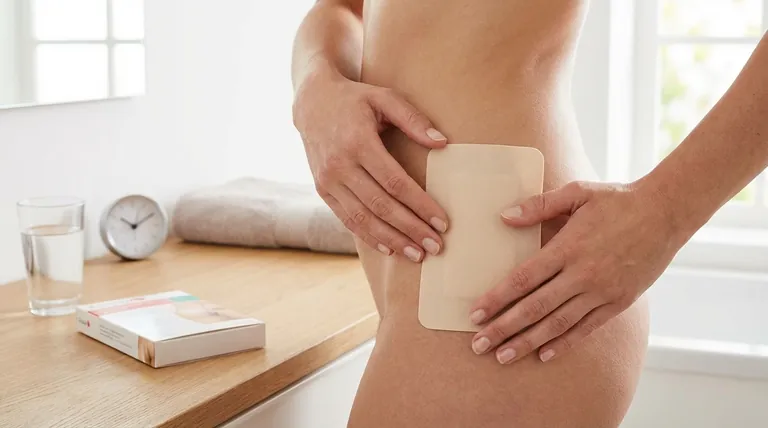
Preparing for Application
Correct preparation ensures the patch adheres properly and delivers the medication as intended. This process involves selecting the right location and applying it at the correct time.
Choose the Correct Location
The patch must be applied to the hip area. Choose a spot that is clean, dry, and free of hair, scars, cuts, or any irritation.
Avoid applying the patch near the waistline where clothing could rub against it and cause it to loosen.
Timing is Critical
Apply the patch approximately 2 hours before the therapeutic effect is needed. This lead time allows the medication to be absorbed through the skin and reach an effective level.
The patch should be applied once a day, typically in the morning.
The Step-by-Step Application Process
Follow these steps carefully to ensure the patch is secure and handled safely.
Open the Pouch
Keep the patch inside its sealed protective pouch until you are ready to apply it. Do not use patches from pouches that are not sealed.
Apply the Patch Firmly
When applying, be careful not to touch the sticky, medicated side of the patch.
Press the patch firmly onto the prepared hip area with the palm of your hand for about 30 seconds. Ensure the edges are smoothed down and have made complete contact with the skin.
Wash Your Hands
Immediately after applying the patch, wash your hands thoroughly with soap and water to remove any residual medication.
Removal and Disposal
The duration of wear and the method of disposal are crucial safety measures.
Adhere to the 9-Hour Limit
The patch must be removed after a maximum of 9 hours. Wearing it longer can result in receiving too much medication.
Fold and Dispose Safely
To remove the patch, peel it off slowly. Fold the patch in half so the sticky, medicated sides press together.
Dispose of it immediately in a manner that prevents accidental access by children or pets.
Critical Safety Rules and Common Pitfalls
Understanding what not to do is as important as knowing the correct application steps. These rules prevent dangerous fluctuations in dosage and protect your skin.
Always Alternate Hips
You must apply the patch to the opposite hip each day. For example, if you use the left hip on Monday, use the right hip on Tuesday. This practice is essential to prevent severe skin irritation.
Never Cut the Patch
Cutting the patch will damage its drug-delivery system. This can cause the medication to be released too quickly or unpredictably, leading to an incorrect and potentially harmful dose.
Avoid Direct Heat
Do not expose the patch to direct heat sources like heating pads, electric blankets, or prolonged direct sunlight. Heat increases the rate of drug absorption through the skin, which can lead to an overdose.
Do Not Use Extra Adhesives
If the patch becomes loose or falls off, do not attempt to reattach it with tape or other adhesives. Discard the patch properly and apply a new one to the opposite hip for the remainder of the 9-hour wearing time.
Protect the Patch from Water
While the patch is designed to be water-resistant, prolonged exposure during swimming or long baths may cause it to loosen.
Making the Right Choice for Your Goal
Adhering to these guidelines ensures you achieve the intended therapeutic outcome safely.
- If your primary focus is effectiveness: Apply the patch 2 hours before the effect is needed and ensure it remains securely attached for the full 9-hour period.
- If your primary focus is safety and minimizing side effects: Never exceed the 9-hour wear time, always alternate hips daily, and keep the patch away from all direct heat sources.
Consistent and precise application is the key to successfully managing treatment with transdermal methylphenidate.
Summary Table:
| Guideline Aspect | Key Instruction |
|---|---|
| Application Site | Hip area, clean and dry; alternate left/right hip daily. |
| Timing | Apply once daily, approximately 2 hours before effect is needed. |
| Wear Time | Maximum of 9 hours. |
| Safety Rules | Do not cut the patch. Avoid direct heat sources. |
| Disposal | Fold patch in half (sticky sides together) and dispose safely. |
Need a reliable, high-quality transdermal patch for your product line?
As Enokon, a bulk manufacturer of reliable transdermal patches and pain plasters, we provide healthcare and pharmaceutical distributors and brands with technically advanced solutions. Our expertise in custom R&D and development ensures your product meets the highest standards of safety, efficacy, and user compliance.
Contact our experts today to discuss your custom transdermal patch needs.
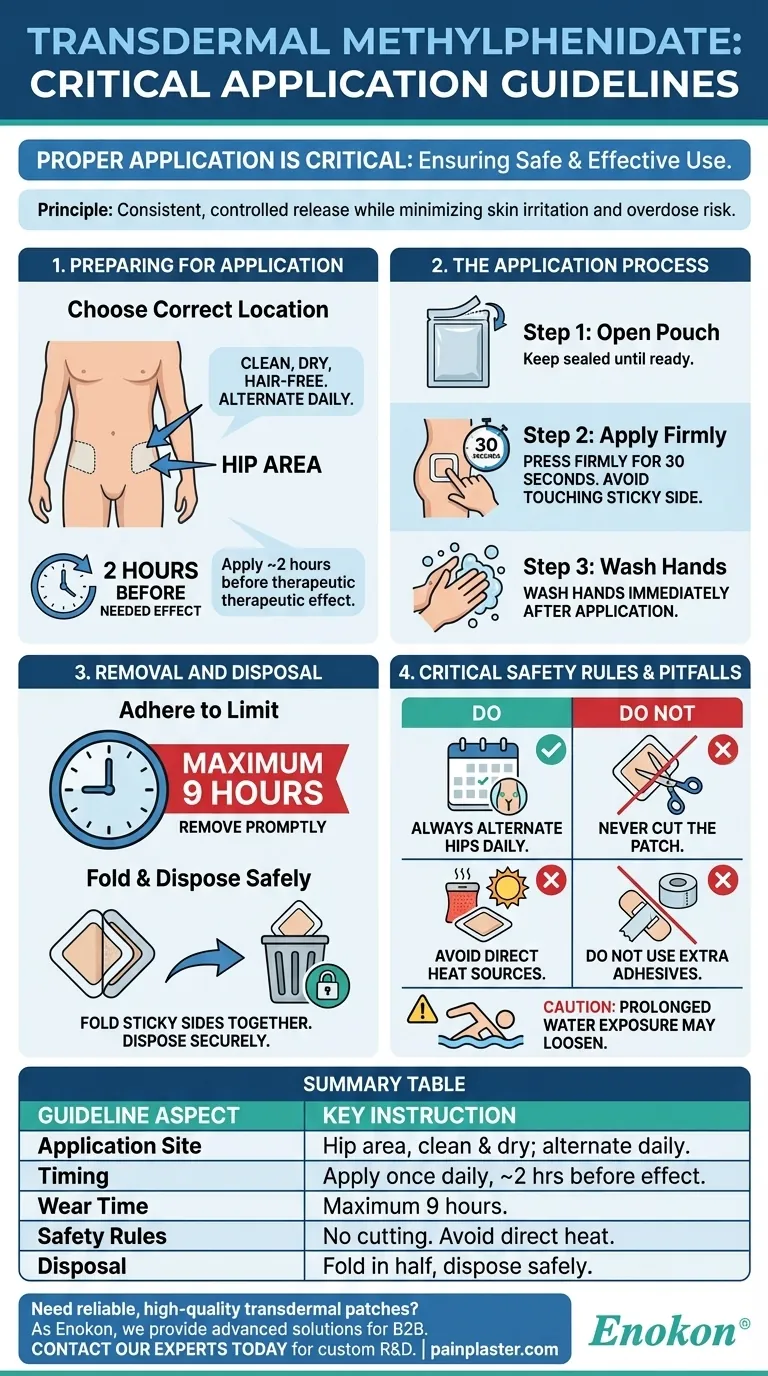
Visual Guide
Related Products
- Menthol Gel Pain Relief Patch
- Silicone Scar Sheets Patch Transdermal Drug Patch
- Far Infrared Heat Pain Relief Patches Transdermal Patches
- Icy Hot Menthol Medicine Pain Relief Patch
- Mugwort Wormwood Pain Relief Patch for Neck Pain
People Also Ask
- How effective are pain relief patches for muscle pain? Target Localized Pain with Transdermal Delivery
- How do pain relief patches compare to other pain relief methods? Discover Targeted, Long-Lasting Relief
- Who should consult a healthcare professional before using pain relief patches? Ensure Your Safety with Medical Advice
- What are the potential side effects of pain relief patches? A Guide to Safe Use & Key Risks
- What are pain relief patches and how do they work? Discover Non-Invasive Pain Management



















