
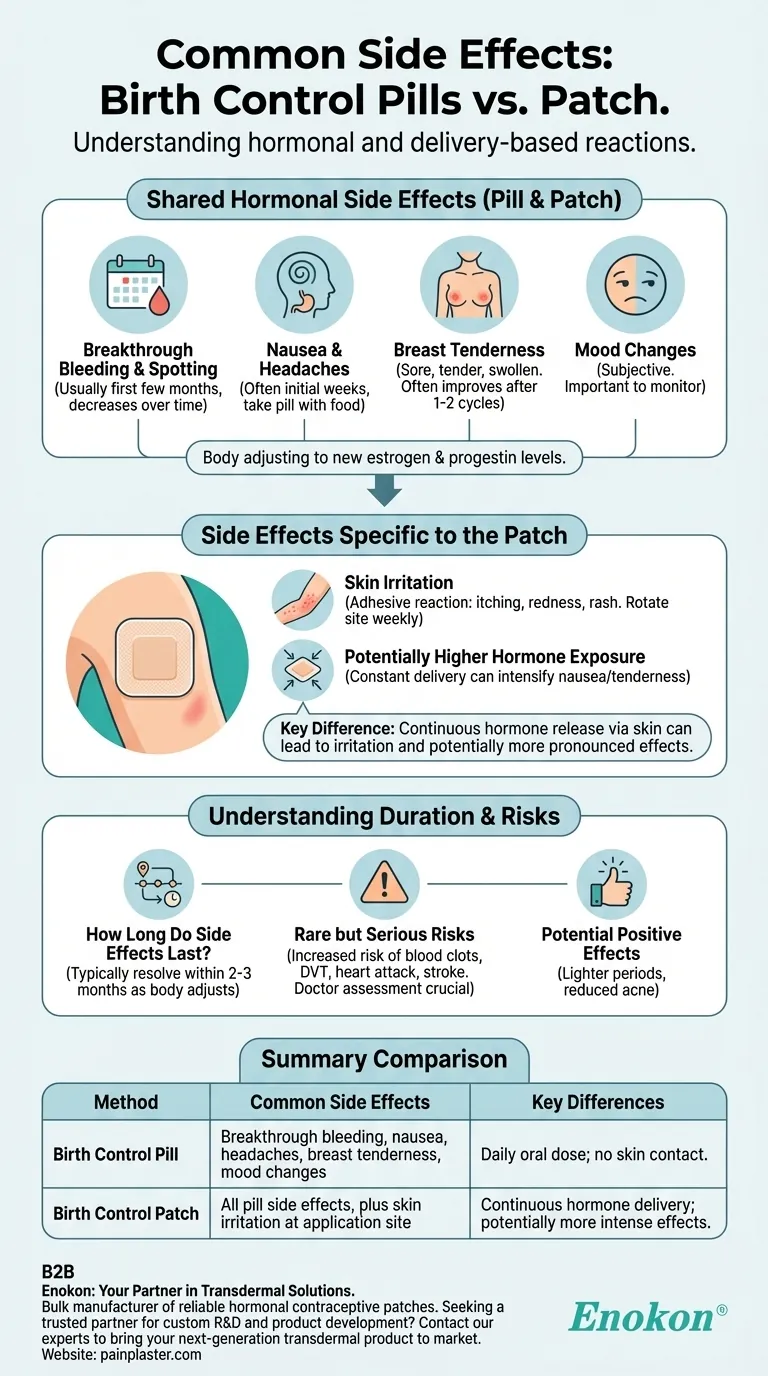
The most common side effects of both birth control pills and the patch are hormonal and often temporary. These include bleeding or spotting between periods, breast tenderness, nausea, headaches, and mood changes. The patch also carries the risk of skin irritation at the application site and may cause more intense side effects for some due to its hormone dosage.
While both methods share a core set of hormonal side effects that typically resolve within a few months, the key difference lies in the delivery. The patch's constant hormone release can lead to skin irritation and potentially more pronounced side effects compared to the daily pill.
The Shared Hormonal Side Effects
Most side effects are a result of your body adjusting to the new levels of hormones—estrogen and progestin. These are most common when you first start the method.
Breakthrough Bleeding and Spotting
This is one of the most frequent side effects. You may experience light bleeding or brown discharge between your expected periods.
This irregularity is very common in the first few months and typically decreases over time as your body adapts.
Nausea and Headaches
Some individuals experience mild nausea or headaches, particularly in the initial weeks of use.
These symptoms often subside as your system gets used to the hormones. Taking the pill with food can sometimes help reduce nausea.
Breast Tenderness
Your breasts may feel sore, tender, or swollen when you first start using the pill or patch.
This is a common hormonal response that usually improves after the first one or two cycles.
Mood Changes
A change in mood or mood swings is a reported side effect for some users.
This can be a subjective experience, but it's an important factor to monitor when starting any hormonal contraceptive.
Side Effects Specific to the Patch
Because the patch delivers hormones through the skin, it has unique considerations.
Skin Irritation
The adhesive on the patch can cause a reaction at the application site.
This may appear as itching, redness, dryness, swelling, or a rash. Rotating the patch's location each week can help minimize this.
Potentially Higher Hormone Exposure
The patch is designed to deliver a steady, continuous dose of hormones directly into the bloodstream.
This can lead to higher overall estrogen exposure compared to some low-dose pills, which may intensify side effects like nausea or breast tenderness for some individuals.
Understanding the Duration and Risks
It's crucial to distinguish between temporary adjustment effects and more serious health concerns.
How Long Do Side Effects Last?
For most people, the common side effects are temporary.
They typically resolve on their own within 2-3 months as your body adjusts to the hormonal changes.
Rare but Serious Risks
While uncommon, all combination hormonal methods (pill and patch) carry an increased risk of serious conditions.
These include blood clots, deep vein thrombosis (DVT), heart attack, and stroke. Your doctor will assess your personal health risks before prescribing either method.
Potential Positive "Side Effects"
Hormonal birth control can also have beneficial effects beyond pregnancy prevention.
Many users experience lighter, more regular periods and an improvement in acne.
Making the Right Choice for Your Body
Understanding these side effects helps you and your doctor choose the method that best aligns with your health and lifestyle.
- If your primary focus is minimizing initial side effects: Both methods have an adjustment period, but if you are sensitive to hormones, starting with a low-dose pill may be a more cautious approach.
- If you have sensitive skin or a history of eczema: The birth control patch may not be the ideal choice due to the risk of significant skin irritation from the adhesive.
- If you are concerned about serious health risks: A thorough discussion with your doctor about your personal and family medical history is the most critical step before starting any hormonal contraceptive.
Ultimately, monitoring how your body responds during the first few months is key to finding the right fit for your health.
Summary Table:
| Method | Common Side Effects | Key Differences |
|---|---|---|
| Birth Control Pill | Breakthrough bleeding, nausea, headaches, breast tenderness, mood changes | Daily oral dose; no skin contact. |
| Birth Control Patch | All pill side effects, plus skin irritation at application site | Continuous hormone delivery through skin; may cause more intense side effects. |
Choosing the right contraceptive method is a crucial health decision. At Enokon, we are a bulk manufacturer of reliable transdermal patches, including hormonal contraceptive patches. If you are a healthcare distributor or pharmaceutical brand looking for a trusted partner for developing safe, effective, and high-quality transdermal solutions, our technical expertise is here to support your custom R&D and product development needs.
Contact our experts today to discuss how we can help bring your next-generation transdermal product to market.
Visual Guide
Related Products
- Heating Pain Relief Patches for Menstrual Cramps
- Prostate Pain Kidney Health Care Patch for Men
- Silicone Scar Sheets Patch Transdermal Drug Patch
- Cooling Fever Patches Color Change Cold Fever Patch
- Mugwort Wormwood Pain Relief Patch for Neck Pain
People Also Ask
- What are the benefits of Period Pain Heat Patches? Drug-Free, On-the-Go Relief
- What are the key benefits of heating patches for elderly individuals? Relieve Pain & Improve Mobility
- What are the key differences between conventional heat patches and deep heat devices? Choosing the Right Pain Relief Solution
- Can heat patches be used for fresh injuries? Avoid This Common Mistake for Faster Recovery
- What are the different types of heat patches? Find the Right Pain Relief for Your Needs




