
Capsaicin transdermal patches, used primarily for pain relief, commonly cause localized and systemic side effects. The most frequent reactions occur at the application site, including temporary pain, redness, itching, dryness, and small bumps (papules). Systemic effects like nausea, vomiting, and headaches may also occur. While most side effects are mild and transient, severe reactions such as blistering, respiratory irritation, or hypertension warrant immediate medical attention. Understanding these effects helps users manage expectations and seek timely care when needed.
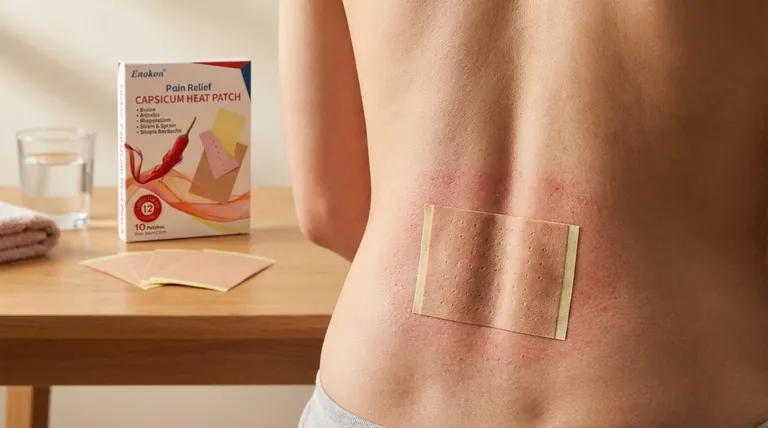
Key Points Explained:
-
Application-Site Reactions
- Transient Increased Pain: A temporary burning or stinging sensation is reported by many users, typically subsiding within hours to days as the body adjusts to the Capsaicin Transdermal Patch.
- Redness and Swelling: Localized inflammation due to capsaicin’s vasodilatory effects.
- Itching and Papules: Mild allergic or irritant responses may cause raised bumps or persistent itchiness.
- Skin Dryness: Capsaicin can disrupt the skin barrier, leading to flakiness or irritation.
-
Systemic Side Effects
- Nausea/Vomiting: Occurs in some users, possibly due to systemic absorption or stress response.
- Headaches/Limb Pain: Rare but linked to capsaicin’s impact on nerve signaling.
- Hypertension: Temporary blood pressure spikes may arise in sensitive individuals.
-
Severe Reactions Requiring Medical Attention
- Blistering/Severe Swelling: Indicates potential chemical burns or hypersensitivity.
- Respiratory Symptoms (Cough, Throat Irritation): Suggests accidental inhalation of capsaicin particles during patch handling.
- Eye Irritation: Requires immediate rinsing if capsaicin transfers from hands to eyes.
-
Management Strategies
- Pre-Application: Clean and dry the skin thoroughly to minimize irritation.
- Post-Application: Avoid heat (e.g., hot showers) near the patch to reduce burning sensations.
- Discontinuation: Remove the patch if severe reactions occur and consult a healthcare provider.
-
User Considerations
- Most side effects diminish with continued use as the body desensitizes to capsaicin.
- Patch placement on intact skin (avoiding broken or sensitive areas) reduces adverse effects.
By recognizing these patterns, users can better navigate treatment while leveraging capsaicin’s pain-relieving benefits. Always monitor for persistent or worsening symptoms to ensure safe usage.
Summary Table:
| Side Effect Type | Common Symptoms | Severity & Action |
|---|---|---|
| Application-Site | Pain, redness, itching, dryness, papules | Mild; usually temporary |
| Systemic | Nausea, headaches, hypertension | Moderate; monitor and consult if persistent |
| Severe Reactions | Blistering, respiratory irritation | Severe; seek immediate medical attention |
Need reliable, high-quality transdermal patches with minimized side effects? Enokon specializes in bulk manufacturing of pain relief patches for healthcare distributors and brands. Our technical expertise ensures safe, effective formulations tailored to your needs. Contact us today for custom R&D solutions and premium transdermal products!
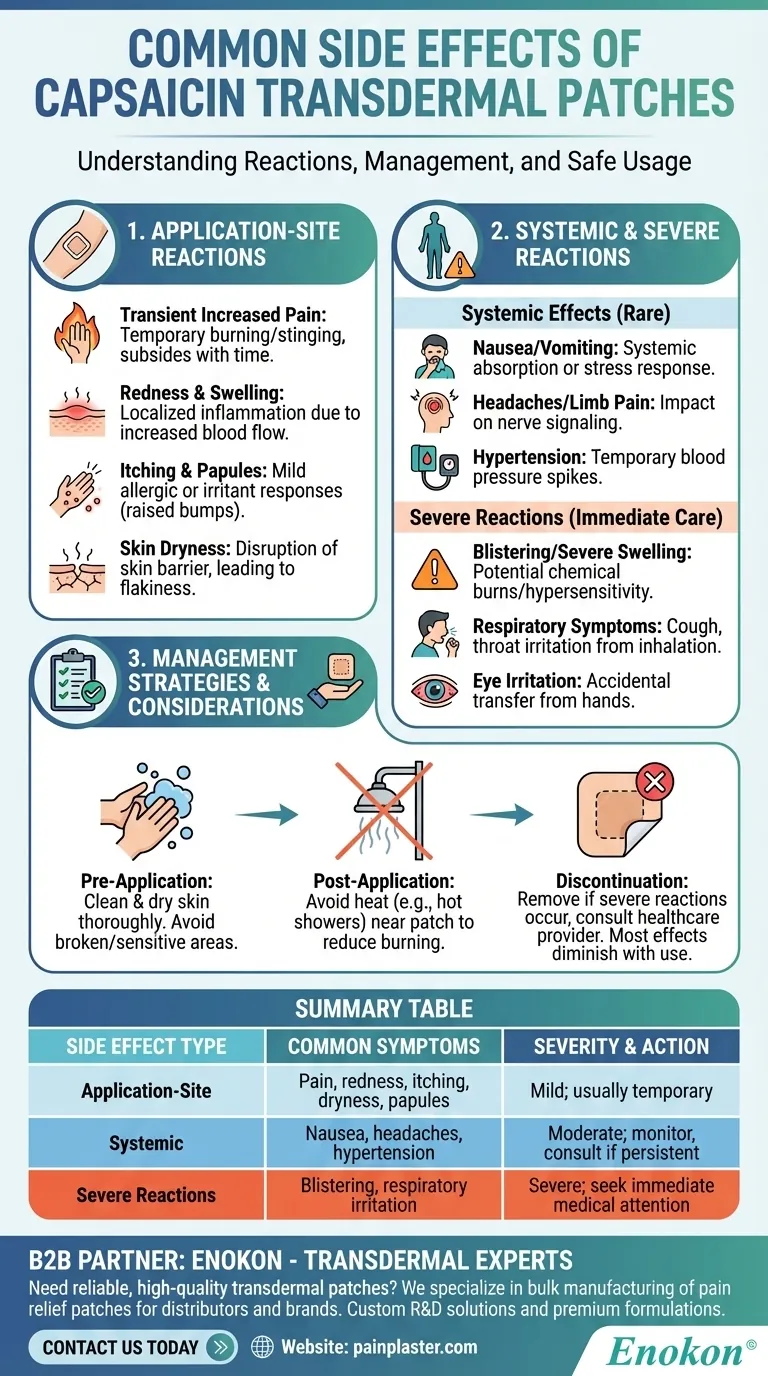
Visual Guide
Related Products
- Capsaicin Chili Medicated Pain Relief Patches
- Heat Relief Capsicum Patch for Lower Back Pain Relief
- Far Infrared Heat Pain Relief Patches Transdermal Patches
- Menthol Gel Pain Relief Patch
- Silicone Scar Sheets Patch Transdermal Drug Patch
People Also Ask
- What conditions should be reported to a care team before using capsaicin patches? Ensure Safe Pain Relief
- What conditions can capsaicin creams and patches help relieve? Find Targeted Pain Relief for Nerves & Joints
- What are the uses of nonprescription capsaicin patches? Natural Pain Relief for Muscles & Joints
- What should be avoided while using capsaicin patches? Essential Safety Tips for Effective Pain Relief
- How are capsaicin patches administered? A Guide to Clinical vs. At-Home Use
















