
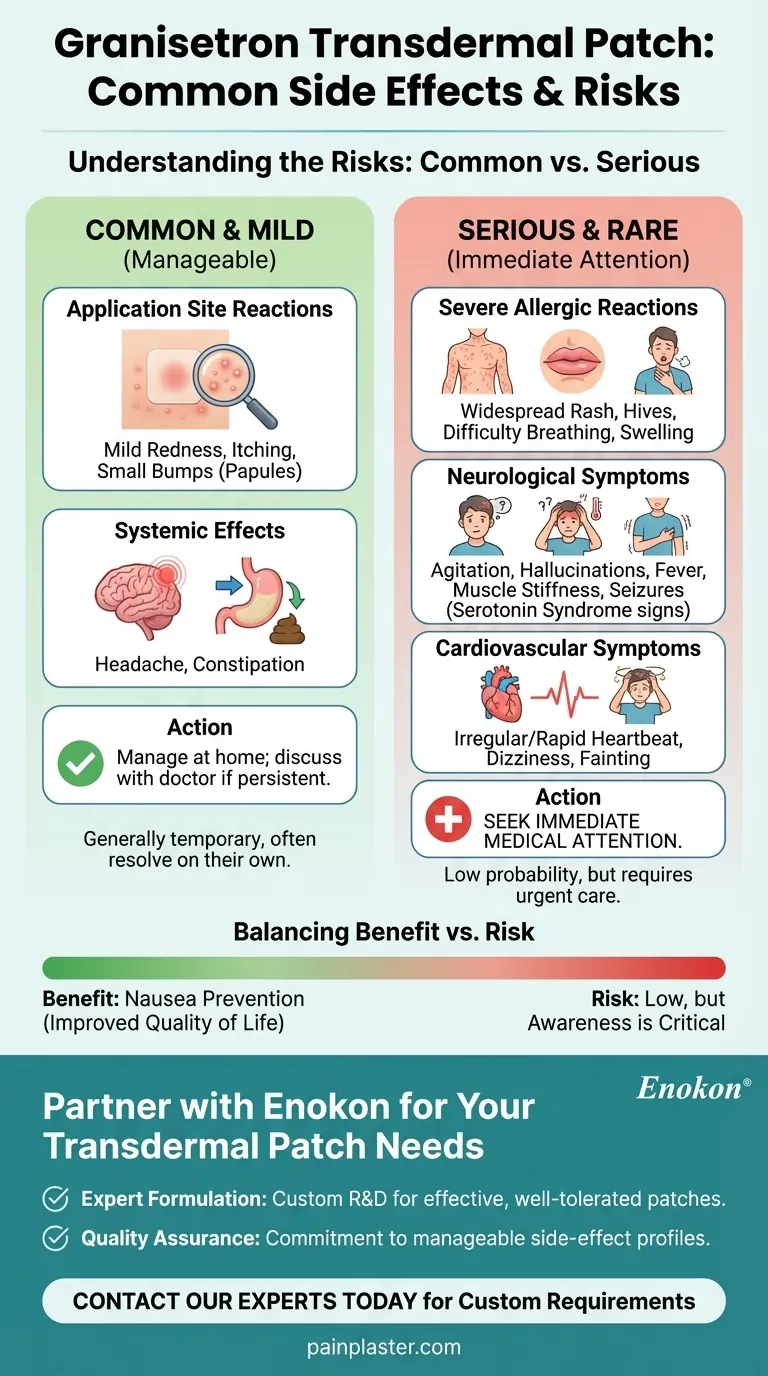
The most common side effects of the granisetron transdermal patch are constipation, headache, and mild skin irritation, such as redness or itching, at the application site. These effects are generally manageable and often resolve on their own.
While the majority of side effects from the granisetron patch are mild and localized, the underlying goal is to understand the full spectrum of risk. This means learning to distinguish between common, manageable issues and the rare but serious reactions that require immediate medical attention.

Unpacking the Common Side Effects
The side effects of a transdermal patch occur in two ways: locally, where the patch touches the skin, and systemically, as the medication is absorbed into your bloodstream.
Application Site Reactions
The most frequent issue is a reaction on the skin directly under the patch. This is a normal consequence of wearing an adhesive patch that delivers medication for an extended period.
These reactions typically include mild redness, itching, or the formation of small bumps (papules). In most cases, these symptoms are temporary and fade after the patch is removed.
Systemic Effects
Once granisetron enters your system, it can cause effects throughout the body. The two most commonly reported are headache and constipation.
These occur because the medication, while targeted to block nausea signals in the brain, can also affect other systems, such as nerve signaling or the digestive tract.
Recognizing Serious (But Rare) Reactions
While uncommon, granisetron can cause severe side effects. Knowing these warning signs is critical for your safety.
Severe Allergic Reactions
An allergic reaction to the medication or the patch adhesive requires immediate medical intervention.
Symptoms include a widespread rash, hives, blisters, and severe redness. Any signs of anaphylaxis, such as difficulty breathing, tightness in the throat, or swelling of the face and lips, constitute a medical emergency.
Neurological Symptoms
In rare cases, users may experience serious neurological events. These can be signs of a condition like serotonin syndrome, which occurs when there is too much serotonin in the brain.
Be alert for agitation, hallucinations, confusion, excessive sweating, fever, and loss of coordination. Muscle stiffness, twitching, or seizures also require immediate medical care.
Cardiovascular Symptoms
Though less common, granisetron can affect the heart. An irregular or rapid heartbeat, dizziness, or fainting should be reported to your doctor right away.
Understanding the Trade-offs
Using any medication involves balancing its intended benefit against its potential risks. The granisetron patch is highly effective but comes with a known side-effect profile.
The Benefit: Preventing Nausea
The primary purpose of the granisetron patch is to prevent nausea and vomiting, most often associated with chemotherapy. For many, this provides a significant improvement in quality of life during treatment.
The Cost: Common vs. Serious Risks
Most users will only ever experience mild skin irritation or a headache. The risk of a serious adverse event is very low. However, this low probability does not reduce the severity if one does occur, which is why awareness is your most important tool.
When to Seek Medical Attention
Your response should be guided by the severity of your symptoms.
- If your primary issue is mild skin irritation, headache, or constipation: These are expected side effects. Mention them to your doctor during your next visit, especially if they are persistent or bothersome.
- If you develop a severe rash, hives, or have any difficulty breathing: This may be a serious allergic reaction. Seek immediate medical help.
- If you notice sudden agitation, fever, hallucinations, or severe muscle stiffness: Contact your doctor or seek emergency care immediately, as these could be signs of a rare but dangerous neurological reaction.
Ultimately, being informed about both the common and rare side effects empowers you to use this medication safely and effectively.
Summary Table:
| Side Effect Type | Common Examples | Key Action |
|---|---|---|
| Common & Mild | Constipation, Headache, Mild Skin Redness/Itching | Manage at home; discuss with doctor if persistent. |
| Serious & Rare | Severe Rash/Hives, Difficulty Breathing, Agitation/Hallucinations, Irregular Heartbeat | Seek immediate medical attention. |
Partner with Enokon for Your Transdermal Patch Needs
As a bulk manufacturer of reliable transdermal patches, including anti-nausea solutions, Enokon provides healthcare and pharma distributors and brands with:
- Expert Formulation: Leverage our technical expertise for custom R&D to develop effective and well-tolerated patches.
- Quality Assurance: Benefit from our commitment to manufacturing patches with a clear and manageable side-effect profile.
Ready to develop or source high-quality transdermal patches? Contact our experts today to discuss your custom requirements.
Visual Guide
Related Products
- Far Infrared Heat Pain Relief Patches Transdermal Patches
- Silicone Scar Sheets Patch Transdermal Drug Patch
- Icy Hot Menthol Medicine Pain Relief Patch
- Menthol Gel Pain Relief Patch
- Mugwort Wormwood Pain Relief Patch for Neck Pain
People Also Ask
- Why is the selection of matrix materials critical when developing customized transdermal patches? Optimize Efficacy
- What role does a skin tolerance scoring system play in the safety evaluation of transdermal patches? Key Safety Metrics
- How does high-purity far-infrared ceramic powder contribute to the efficacy of far-infrared physical therapy patches?
- Why is an optical microscope used for the quality assessment of transdermal patches? Ensure Safety & Matrix Integrity
- What is the purpose of vacuum filtration for polymer solutions? Ensuring Quality in Transdermal Patch Manufacturing















