
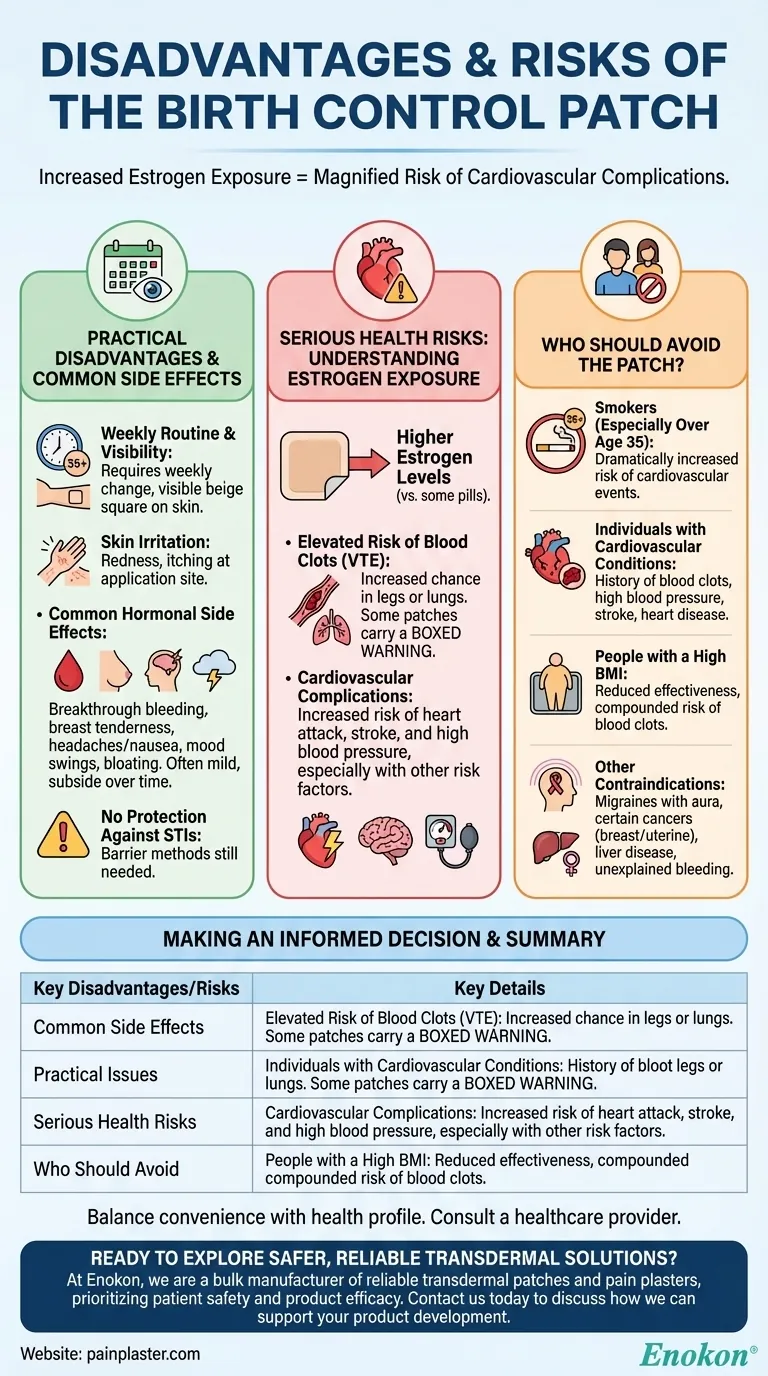
The primary disadvantages of the birth control patch are its potential for common side effects like skin irritation and breakthrough bleeding, the need for a weekly replacement, and its visibility on the body. More significant risks include an elevated potential for blood clots, heart attack, and stroke, particularly due to higher estrogen exposure compared to some other hormonal methods.
While effective for many, the patch is not a universally safe option. Its key risk stems from increased estrogen exposure, which magnifies the potential for serious cardiovascular complications in individuals with pre-existing risk factors like smoking, high blood pressure, or obesity.

Practical Disadvantages and Common Side Effects
Before considering the more serious health risks, it's important to understand the day-to-day realities and common side effects of using the birth control patch. Many of these are manageable but can influence your experience.
The Weekly Routine and Visibility
The patch requires you to remember to remove the old one and apply a new one on the same day each week for three consecutive weeks. Forgetting to change it on time can reduce its effectiveness.
Additionally, the patch is a visible beige square on the skin, which may be a concern for those who prefer more discreet birth control methods.
Skin Irritation
A common complaint is skin irritation, redness, or itching at the application site. Rotating the location of the patch with each change can help minimize this issue.
Common Hormonal Side Effects
Like many hormonal contraceptives, the patch can cause side effects, especially during the first few months as your body adjusts. These may include:
- Breakthrough bleeding or spotting
- Breast tenderness
- Headaches or nausea
- Mood swings or fatigue
- Bloating
For most users, these side effects are mild and diminish over time.
No Protection Against STIs
It is critical to remember that the birth control patch offers no protection against sexually transmitted infections (STIs). Barrier methods, such as condoms, are still necessary for STI prevention.
Understanding the Serious Health Risks
The more significant risks associated with the patch are tied to its hormonal composition. These risks are rare but can be life-threatening, making it crucial to understand if you fall into a high-risk category.
The Central Concern: Increased Estrogen Exposure
The patch works by releasing a continuous dose of estrogen and progestin into your bloodstream. Some research indicates that this delivery method can expose a user to higher overall levels of estrogen than many combination birth control pills.
This increased estrogen is the primary driver behind the most serious cardiovascular risks.
Elevated Risk of Blood Clots (VTE)
The most significant serious risk is an increased chance of developing blood clots in the legs or lungs, a condition known as venous thromboembolism (VTE).
This risk is serious enough that some patches carry a "boxed warning" from regulators, the most stringent caution for prescription medication. The potential for blood clots is higher for patch users than for those on some birth control pills.
Cardiovascular Complications
The hormones in the patch can also increase the risk of other serious cardiovascular events, including heart attack, stroke, and high blood pressure. These risks, while low for the general population, are significantly amplified by certain lifestyle and health factors.
Who Should Avoid the Birth Control Patch?
The patch is not a safe choice for everyone. A thorough discussion with a healthcare provider is essential, but you should be particularly cautious if any of the following apply to you.
Smokers, Especially Over Age 35
This is one of the most critical contraindications. The combination of smoking and the hormones in the patch dramatically increases the risk of serious cardiovascular events like heart attack and stroke.
Individuals with Cardiovascular Conditions
If you have a personal or family history of blood clots, uncontrolled high blood pressure, stroke, or heart disease, the patch is generally not recommended.
People with a High BMI
Effectiveness may be reduced in individuals with a higher body mass index (BMI). More importantly, obesity is an independent risk factor for blood clots, and using the patch can compound this risk.
Other Medical Contraindications
You should avoid the patch if you have a history of:
- Migraines with aura, which are associated with an increased stroke risk.
- Certain cancers, such as breast or uterine cancer.
- Liver disease or liver tumors.
- Unexplained vaginal bleeding.
Making an Informed Decision
Choosing a birth control method requires balancing effectiveness, convenience, and your personal health profile.
- If your primary focus is convenience and avoiding daily pills: The patch is an effective option, but you must be diligent with the weekly change and honestly assess your health risks with a doctor.
- If you have a history of blood clots, high blood pressure, or are a smoker over 35: The patch is almost certainly not a safe choice, and you should explore progestin-only or non-hormonal methods.
- If you are sensitive to hormonal side effects: Be prepared for a potential adjustment period with symptoms like nausea or headaches, and track them to see if they subside.
Ultimately, a candid conversation with your healthcare provider is the essential final step to determine if the patch is the right choice for you.
Summary Table:
| Disadvantage/Risk | Key Details |
|---|---|
| Common Side Effects | Skin irritation, breakthrough bleeding, headaches, nausea. |
| Practical Issues | Visible on skin, requires weekly replacement. |
| Serious Health Risks | Increased risk of blood clots, heart attack, and stroke. |
| Who Should Avoid | Smokers (especially over 35), those with a history of blood clots, high blood pressure, or migraines with aura. |
Ready to explore safer, reliable transdermal solutions?
At Enokon, we are a bulk manufacturer of reliable transdermal patches and pain plasters for healthcare and pharmaceutical distributors and brands. Our technical expertise ensures high-quality, custom R&D and development tailored to your needs, prioritizing patient safety and product efficacy.
Contact us today to discuss how we can support your product development with our trusted manufacturing capabilities.
Visual Guide
Related Products
- Prostate Pain Kidney Health Care Patch for Men
- Heating Pain Relief Patches for Menstrual Cramps
- Silicone Scar Sheets Patch Transdermal Drug Patch
- Menthol Gel Pain Relief Patch
- Icy Hot Menthol Medicine Pain Relief Patch
People Also Ask
- What are the key components of Chinese herbal pain patches? Discover the Science Behind Natural Pain Relief
- What additional practices can enhance the effectiveness of Chinese pain patches? Boost Relief with Holistic Strategies
- Are there any side effects associated with Chinese pain patches? Risks & Safety Tips
- What complementary practices enhance the effectiveness of Chinese pain patches? Boost Relief with Holistic Care
- How can Chinese pain patches help with back pain? Natural Relief & Healing Benefits








