
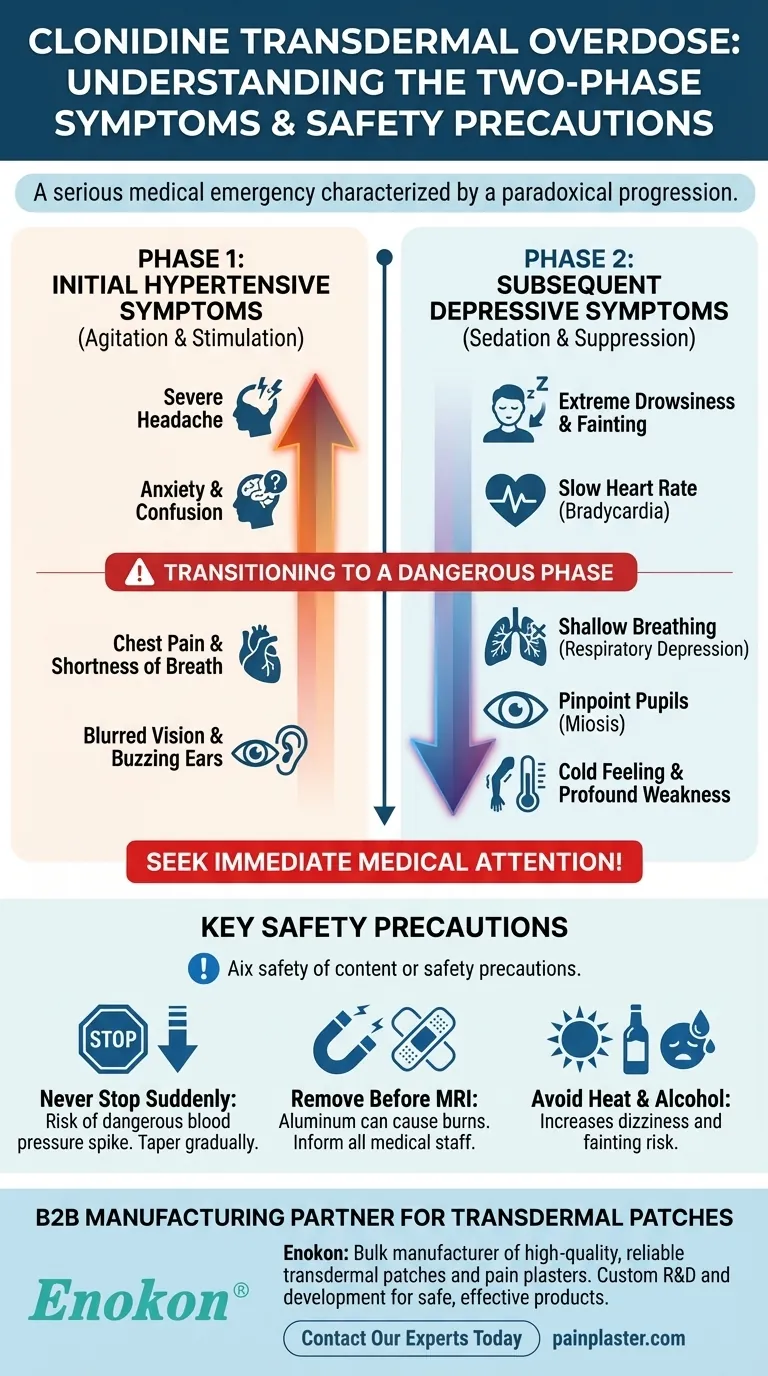
In the event of a clonidine transdermal overdose, symptoms often appear in two distinct phases. Initially, you may experience signs of high blood pressure like a severe headache, anxiety, or confusion, which are then followed by a more dangerous phase of central nervous system depression, including extreme drowsiness, a slow heart rate, shallow breathing, and pinpoint pupils.
A clonidine overdose is a serious medical emergency characterized by a paradoxical progression of symptoms. Understanding this shift from initial agitation to subsequent sedation and suppressed vital signs is critical for recognizing the danger and seeking immediate help.
The Two Phases of Clonidine Overdose
A clonidine overdose doesn't always present with a single, stable set of symptoms. It often follows a pattern, beginning with signs of stimulation before progressing to a more severe depressive state.
Phase 1: Initial Hypertensive Symptoms
The first signs can be misleading, sometimes mimicking high blood pressure or anxiety.
These early warning symptoms may include a severe headache, blurred vision, or buzzing in the ears. You might also experience significant anxiety, confusion, or even chest pain and shortness of breath.
Phase 2: Subsequent Depressive Symptoms
This second phase is the hallmark of a serious overdose and requires immediate medical intervention.
The initial symptoms are often followed by a rapid decline, leading to extreme drowsiness, light-headedness, or fainting. Key signs include a noticeably slow heart rate, shallow breathing, a cold feeling, profound weakness, and pinpoint pupils.
Differentiating Overdose from Common Side Effects
It's crucial to distinguish between a life-threatening overdose and the more common, manageable side effects of the clonidine patch.
Common, Expected Side Effects
Many users experience mild side effects as their body adjusts to the medication.
These frequently include skin irritation, redness, or itching where the patch is worn. Other common effects are drowsiness, dizziness, dry mouth, and constipation.
When to Seek Immediate Medical Attention
Certain reactions, while not full overdose symptoms, are still serious and warrant a call to your doctor.
These include severe skin reactions like blistering or widespread rash, or any noticeable worsening of pre-existing heart conditions.
Understanding Key Safety Precautions
Proper use and awareness of potential risks are essential for anyone using the clonidine transdermal system.
The Risk of Abrupt Discontinuation
You should never stop using clonidine suddenly. Doing so can cause a rapid and dangerous increase in blood pressure. The dosage must be tapered down gradually under a doctor's supervision.
Considerations for Medical Procedures
The clonidine patch contains aluminum, which can conduct electricity and heat.
You must remove the patch before an MRI to prevent skin burns. It should also be removed prior to defibrillation or cardioversion procedures. Always inform all doctors and dentists that you are using this medication.
Interactions with Heat and Alcohol
Be cautious when combining clonidine with things that can lower your blood pressure further.
This includes drinking alcohol, exercising, or exposing yourself to hot weather, as these can increase dizziness and the risk of fainting.
How to Apply This to Your Situation
Your approach should be guided by the specific symptoms you are observing and your immediate goal.
- If your primary focus is monitoring for a potential overdose: Watch for the two-phase progression, especially the shift to extreme drowsiness, a slow heart rate, and shallow breathing.
- If you are experiencing common side effects: Recognize that mild skin irritation or drowsiness can be normal, but report any persistent or bothersome effects to your healthcare provider.
- If you are preparing for a medical procedure: Proactively inform your entire medical team about your clonidine patch use and remember the specific risk associated with MRIs.
Ultimately, your safety relies on being informed and maintaining open communication with your healthcare provider.
Summary Table:
| Phase | Key Symptoms |
|---|---|
| Phase 1: Initial (Hypertensive) | Severe headache, anxiety, confusion, chest pain, shortness of breath |
| Phase 2: Subsequent (Depressive) | Extreme drowsiness, slow heart rate, shallow breathing, pinpoint pupils, fainting |
Are you a healthcare distributor or brand seeking a reliable manufacturing partner for transdermal patches?
At Enokon, we are a bulk manufacturer of high-quality, reliable transdermal patches and pain plasters. Our technical expertise ensures precise drug delivery and consistent performance, which is critical for medications like clonidine. Benefit from our custom R&D and development services to create safe and effective products for your market.
Contact our experts today to discuss your manufacturing needs.
Visual Guide
Related Products
- Silicone Scar Sheets Patch Transdermal Drug Patch
- Far Infrared Heat Pain Relief Patches Transdermal Patches
- Menthol Gel Pain Relief Patch
- Icy Hot Menthol Medicine Pain Relief Patch
- Mugwort Wormwood Pain Relief Patch for Neck Pain
People Also Ask
- What role does a silicone-based transdermal delivery system play in Parkinson's? Enhancing Early-Stage Patient Care
- How is the long-term skin tolerance of silicone-based transdermal patches evaluated in clinical settings? R&D and Safety
- Why is a polarizing microscope used to evaluate the long-term stability of transdermal drug patches? Ensure Efficacy.
- What are common adverse effects of transdermal drug delivery? Risks & Prevention Tips
- What are the advantages of transdermal drug patches? Optimize Medication Delivery with Patches










