
To put it simply, the two types of nicotine patches are the 16-hour "day" patch and the 24-hour "continuous" patch. The fundamental difference lies in their delivery schedule: the 16-hour patch is worn only during your waking hours, while the 24-hour patch is worn around the clock to provide a constant level of nicotine.
Your choice between a 16-hour and 24-hour patch is not just about duration. It's about strategically matching the nicotine delivery to your specific craving patterns, primarily balancing the need to prevent morning cravings against the risk of sleep disturbances.
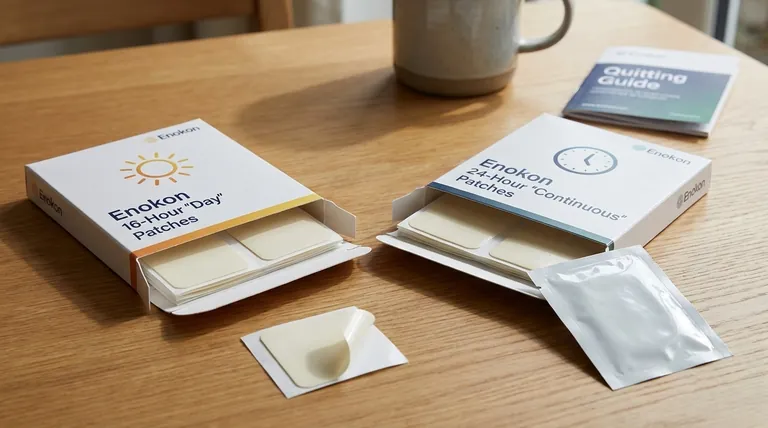
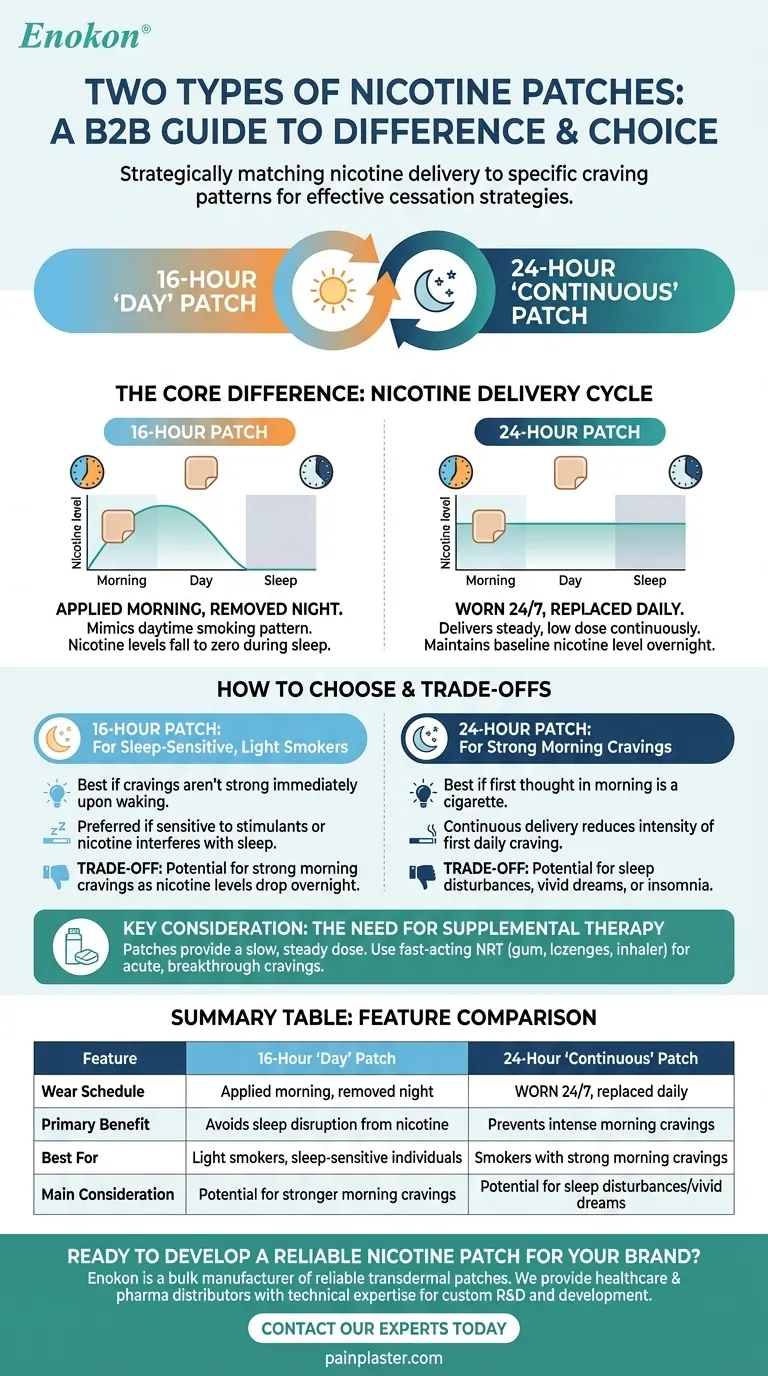
The Core Difference: Nicotine Delivery Cycle
The effectiveness of a nicotine patch depends on how its release of nicotine aligns with your body's needs. The two patch types offer distinct approaches to managing this cycle.
The 16-Hour "Day" Patch
This patch is designed to be applied in the morning and removed before you go to sleep.
It mimics the nicotine pattern of a person who only smokes during the day. By removing it at night, your body's nicotine levels fall to zero while you sleep.
The 24-Hour "Continuous" Patch
This patch is worn all day and all night, and you replace it with a new one each morning.
It delivers a steady, low dose of nicotine continuously. The primary goal is to maintain a baseline level of nicotine in your system even while you sleep, preventing the sharp drop-off that can lead to intense cravings upon waking.
How to Choose Based on Your Smoking Pattern
The right patch for you depends heavily on when your cravings are strongest. Your smoking history provides the most important clues.
Who Should Consider the 16-Hour Patch?
The 16-hour patch is often suitable for individuals who do not experience powerful cravings immediately upon waking.
It's also the preferred choice if you are sensitive to stimulants or have found that nicotine from other sources interferes with your sleep.
Who Should Consider the 24-Hour Patch?
The 24-hour patch is specifically designed for people whose first thought in the morning is to have a cigarette.
If you wake up with a strong, immediate urge to smoke, the continuous overnight delivery of nicotine can significantly reduce the intensity of that first craving of the day.
Understanding the Trade-offs
Neither patch is universally superior; each comes with a primary trade-off that you must weigh based on your personal experience.
The Risk of Sleep Disturbances
The main drawback of the 24-hour patch is its potential to disrupt sleep.
Because nicotine is a stimulant, a continuous dose can lead to side effects like unusually vivid dreams, insomnia, or difficulty staying asleep for some individuals.
The Challenge of Morning Cravings
The primary downside of the 16-hour patch is the potential for strong morning cravings.
Since your nicotine levels drop to zero overnight, the first few hours of the day can be challenging as you wait for the new patch to absorb and take effect.
The Need for Supplemental Therapy
It is critical to understand that patches provide a slow, steady dose of nicotine. They are not designed to handle sudden, acute cravings triggered by stress or habit.
Regardless of which patch you choose, you may need to supplement it with a fast-acting form of nicotine replacement therapy, such as gum, lozenges, or an inhaler, to manage these breakthrough moments.
Making the Right Choice for Your Goal
Selecting the right patch is a key step in customizing your approach to quitting. Base your initial decision on your most significant challenge.
- If your primary focus is preventing intense morning cravings: The 24-hour patch provides the steady, overnight support designed to address this specific issue.
- If your primary focus is avoiding sleep disruption: The 16-hour patch is the logical choice, as it eliminates nicotine delivery while you sleep.
- If you are a light smoker whose habit is tied to daytime activities: The 16-hour patch often aligns better with your existing nicotine-free periods.
Choosing the right tool is a powerful first step in building a successful strategy to quit.
Summary Table:
| Feature | 16-Hour 'Day' Patch | 24-Hour 'Continuous' Patch |
|---|---|---|
| Wear Schedule | Applied in morning, removed at night | Worn 24/7, replaced daily |
| Primary Benefit | Avoids sleep disruption from nicotine | Prevents intense morning cravings |
| Best For | Light smokers, sleep-sensitive individuals | Smokers with strong morning cravings |
| Main Consideration | Potential for stronger morning cravings | Potential for sleep disturbances/vivid dreams |
Ready to develop a reliable nicotine patch for your brand?
As Enokon, a bulk manufacturer of reliable transdermal patches and pain plasters, we provide healthcare and pharma distributors with the technical expertise for custom R&D and development. Let us help you create the perfect patch solution for your customers' quit-smoking journey.
Contact our experts today to discuss your project needs.
Visual Guide
Related Products
- Menthol Gel Pain Relief Patch
- Capsaicin Chili Medicated Pain Relief Patches
- Icy Hot Menthol Medicine Pain Relief Patch
- Lidocaine Hydrogel Pain Relief Patch for Pain Relief
- Mugwort Wormwood Pain Relief Patch for Neck Pain
People Also Ask
- How do pain relief patches compare to other pain relief methods? Discover Targeted, Long-Lasting Relief
- How effective are pain relief patches for muscle pain? Target Localized Pain with Transdermal Delivery
- Who should consult a healthcare professional before using pain relief patches? Ensure Your Safety with Medical Advice
- What are some common applications of pain relief patches? Effective Relief for Muscle & Joint Pain
- What are pain relief patches and how do they work? Discover Non-Invasive Pain Management

















