
At its core, Hormone Replacement Therapy (HRT) patches are a targeted medical treatment used to manage the symptoms of menopause, prevent postmenopausal bone loss, and address conditions caused by insufficient natural estrogen production. They work by delivering a steady, controlled dose of hormones directly through the skin into the bloodstream.
An HRT patch is not a temporary fix but a systemic treatment. Its primary function is to restore the body's level of estrogen, thereby alleviating the wide-ranging physical and emotional symptoms that occur when natural hormone production declines.
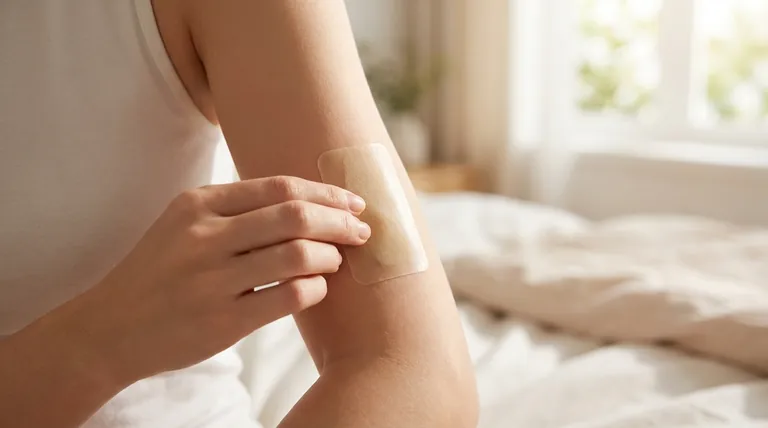
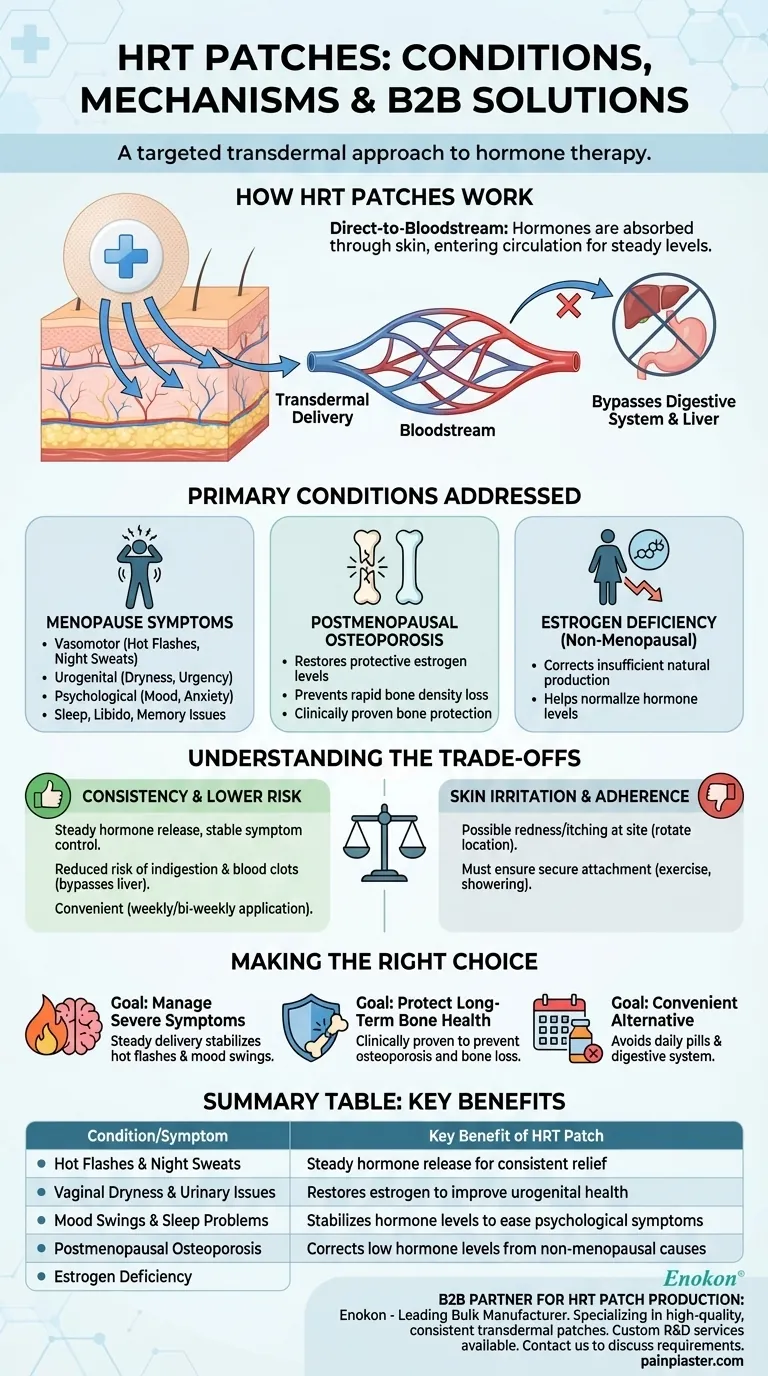
How HRT Patches Work
An HRT patch is a medicated adhesive patch that you apply directly to your skin. It contains hormones, most commonly estrogen, which are slowly and consistently absorbed into your body.
A Direct-to-Bloodstream Approach
The key feature of the patch is its transdermal delivery. By absorbing the hormones through the skin, the medication enters your bloodstream directly.
Bypassing the Digestive System
This transdermal method means the hormones do not have to pass through the digestive system and liver first. This can be a significant advantage over oral pills for some individuals.
The Primary Conditions HRT Patches Address
The use of HRT patches is centered on replacing estrogen to counteract the effects of its decline, which most commonly occurs during menopause.
Alleviating a Wide Range of Menopause Symptoms
This is the most common reason HRT patches are prescribed. They are proven to be effective for managing a variety of symptoms, including:
- Vasomotor symptoms like hot flashes and night sweats.
- Urogenital symptoms such as vaginal dryness, recurrent infections, and urinary urgency.
- Psychological symptoms like mood changes, anxiety, or depression.
- Other common issues including sleep difficulties, decreased libido, and memory problems.
Preventing Postmenopausal Osteoporosis
Estrogen plays a critical role in maintaining bone density. After menopause, the sharp drop in estrogen can lead to rapid bone loss, increasing the risk of osteoporosis. HRT patches help protect against this by restoring protective hormone levels.
Treating Estrogen Deficiency
Patches may also be recommended for individuals who do not produce sufficient estrogen naturally for reasons other than menopause. This therapy helps bring their hormone levels into a normal range.
Understanding the Trade-offs
While effective, the choice to use a patch over other forms of HRT, like pills or gels, involves specific trade-offs.
The Benefit of Consistency
The patch provides a steady release of hormones. This can lead to more stable symptom control compared to the daily fluctuations that can sometimes occur with oral medication.
Reduced Risk of Certain Side Effects
Because the hormones bypass the liver's "first-pass metabolism," HRT patches may be associated with a lower risk of certain side effects, such as indigestion and blood clots, compared to oral HRT tablets.
Potential for Skin Irritation
The most common downside of patches is skin irritation, redness, or itching at the application site. Rotating the location where you apply the patch can help mitigate this.
Adherence and Convenience
For those who have difficulty remembering to take a daily pill, a patch that only needs to be changed once or twice a week can be much more convenient. However, you must ensure it remains securely attached, especially during exercise or showering.
Making the Right Choice for Your Goal
Ultimately, the decision to use an HRT patch should be made in consultation with your doctor. Your specific symptoms, health history, and lifestyle will determine the best course of action.
- If your primary focus is managing severe hot flashes and mood swings: The patch's steady hormone delivery can be highly effective at stabilizing these disruptive symptoms.
- If your primary focus is protecting long-term bone health after menopause: HRT patches are a clinically proven method for preventing the bone density loss that leads to osteoporosis.
- If your primary focus is finding a convenient alternative to oral hormones: The patch avoids the digestive system and the need for daily pill-taking, offering a simpler regimen for many.
Working with your healthcare provider is the essential step to determine if this targeted hormone therapy aligns with your personal health needs.
Summary Table:
| Condition/Symptom Addressed | Key Benefit of HRT Patch |
|---|---|
| Hot Flashes & Night Sweats | Steady hormone release for consistent relief |
| Vaginal Dryness & Urinary Issues | Restores estrogen to improve urogenital health |
| Mood Swings & Sleep Problems | Stabilizes hormone levels to ease psychological symptoms |
| Postmenopausal Osteoporosis | Protects bone density by maintaining estrogen levels |
| Estrogen Deficiency | Corrects low hormone levels from non-menopausal causes |
Need a reliable partner for your HRT patch production?
As Enokon, a leading bulk manufacturer of transdermal patches, we specialize in developing high-quality, consistent HRT patches for healthcare distributors and pharmaceutical brands. Our technical expertise ensures precise hormone delivery and optimal patient outcomes.
Benefit from our custom R&D services to create patches tailored to your specific needs. Contact our team today to discuss your project requirements.
Visual Guide
Related Products
- Far Infrared Heat Pain Relief Patches Transdermal Patches
- Far Infrared Deep Heat Relief Patches Medicated Pain Relief Patches
- Far Infrared Pain Patch Relief Pain Reliever for Back
- Far Infrared Knee Pain Patch Heat Patches for Pain Relief
- Icy Hot Menthol Medicine Pain Relief Patch
People Also Ask
- Why is the selection of matrix materials critical when developing customized transdermal patches? Optimize Efficacy
- What are the physical impacts of external heat exposure on the performance and safety of transdermal patches? - Guide
- What are the clinical advantages of local transdermal delivery systems? Unlock Safer, More Effective Pain Relief Solutions
- What role does a skin tolerance scoring system play in the safety evaluation of transdermal patches? Key Safety Metrics
- How does high-purity far-infrared ceramic powder contribute to the efficacy of far-infrared physical therapy patches?



















