
The key consistency is unequivocal: both the UK and French studies concluded that transdermal estrogen therapy is associated with a significantly lower risk of cholecystectomy (gallbladder removal surgery) compared to oral estrogen therapy. This finding's consistency across two large, distinct patient populations strengthens the evidence that the route of administration is a critical factor in the safety profile of hormone therapy.
The central takeaway is that how estrogen enters the body matters immensely. Transdermal methods, by bypassing a concentrated "first pass" through the liver, appear to mitigate the specific risk of gallbladder disease that has been linked to oral hormone therapy.
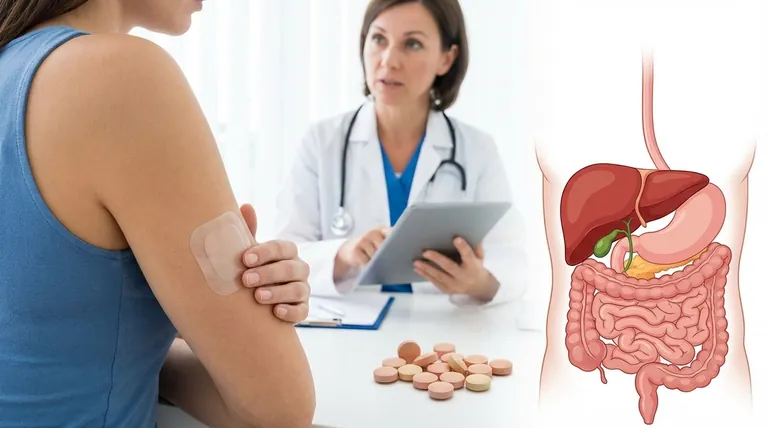
The Core Finding: Why the Delivery Route Matters
The consistency between the UK Million Women Study and the French E3N cohort study provides a powerful signal for clinical practice. Both research efforts pointed to the same fundamental conclusion despite analyzing different groups of women.
Oral Estrogen and the "First-Pass Effect"
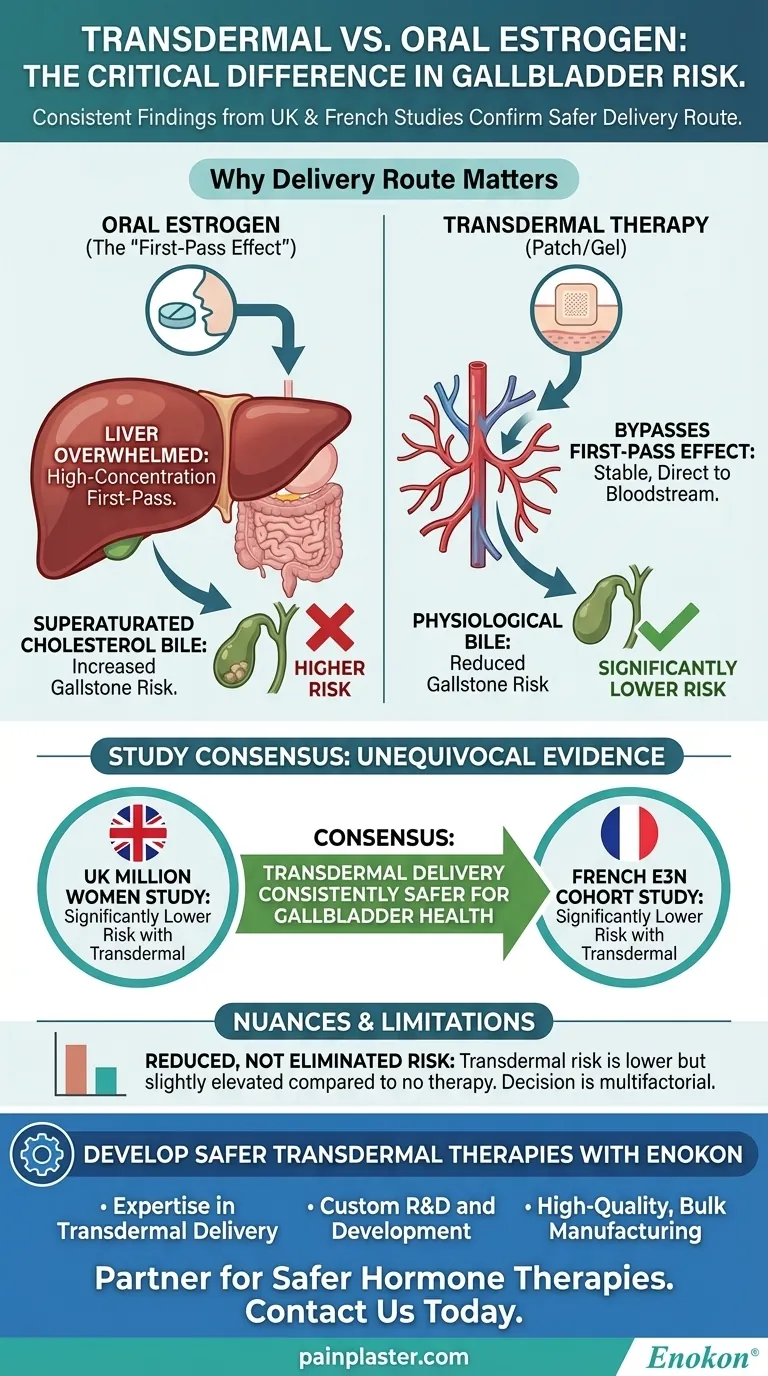
When estrogen is taken orally, it is absorbed through the digestive system and travels directly to the liver in a highly concentrated dose. This is known as the hepatic "first-pass effect."
This initial, high concentration of estrogen can alter the liver's functions, including how it produces bile.
The Liver's Role in Gallstone Formation
A primary function of the liver is to produce bile, which is stored in the gallbladder. Oral estrogen can cause the liver to produce bile that is supersaturated with cholesterol.
This cholesterol-rich bile is the primary precursor to the formation of gallstones, which is the leading cause of gallbladder disease and the need for cholecystectomy.
How Transdermal Therapy Changes the Equation
Transdermal estrogen, delivered via a patch or gel, is absorbed directly into the bloodstream.
This method completely bypasses the hepatic first-pass effect. Estrogen circulates throughout the body in a more stable, physiological manner without first overwhelming the liver, thus avoiding the chain of events that leads to cholesterol-rich bile.
Understanding the Nuances and Limitations
While the findings are consistent and significant, it's crucial to view them with the proper context. A lower risk is not the same as zero risk, and this is just one factor in a complex health decision.
A Reduced Risk, Not an Eliminated Risk
The UK Million Women Study provided an important piece of nuance. While the risk of gallbladder disease was much lower for transdermal users compared to oral users, it was still slightly elevated compared to women who never used hormone therapy at all.
This means transdermal therapy mitigates but does not completely eliminate the therapy's potential impact on the gallbladder.
The Bigger Picture of Hormone Therapy
The decision to use hormone therapy—and which type to use—is multifactorial. Gallbladder health is one consideration among many.
Other factors include cardiovascular risk profiles, bone density protection, management of menopausal symptoms, and individual patient preferences. These must be weighed in a comprehensive discussion with a healthcare provider.
How to Apply This to Your Health Decisions
This consistent research finding provides a clear data point for making informed choices about hormone therapy.
- If your primary focus is minimizing gallbladder risk: The evidence strongly supports that transdermal estrogen is a safer route of administration than oral estrogen.
- If you are currently taking oral estrogen: This finding justifies a conversation with your doctor to re-evaluate whether your current therapy is the optimal choice for your overall risk profile.
- If you are considering starting hormone therapy: Ensure the route of administration is a key point of discussion, specifically asking how it impacts risks beyond the cardiovascular system, including the gallbladder.
Understanding how the delivery method of a treatment affects your body is fundamental to making a truly informed health decision.
Summary Table:
| Study | Key Finding on Gallbladder Risk (Cholecystectomy) |
|---|---|
| UK Million Women Study | Significantly lower risk with transdermal estrogen compared to oral estrogen. |
| French E3N Cohort Study | Significantly lower risk with transdermal estrogen compared to oral estrogen. |
| Consensus | Transdermal delivery is consistently associated with a safer profile regarding gallbladder disease. |
Develop Safer Transdermal Therapies with Enokon
This research underscores the critical importance of the delivery method in hormone therapy. For pharmaceutical brands and distributors, partnering with a trusted manufacturer that masters transdermal technology is key to developing safer, more effective products.
Enokon is a bulk manufacturer of reliable transdermal patches and pain plasters. We provide our partners with:
- Expertise in Transdermal Delivery: Benefit from our technical knowledge to ensure optimal drug delivery and patient safety.
- Custom R&D and Development: We collaborate to create tailored solutions that meet specific therapeutic goals and mitigate risks.
- High-Quality, Bulk Manufacturing: Scale your production with consistent, reliable patches backed by rigorous quality control.
Let's build safer hormone therapies together. Contact our experts today to discuss your transdermal project.
Visual Guide
Related Products
- Far Infrared Heat Pain Relief Patches Transdermal Patches
- Silicone Scar Sheets Patch Transdermal Drug Patch
People Also Ask
- Why is the selection of matrix materials critical when developing customized transdermal patches? Optimize Efficacy
- What are the physical impacts of external heat exposure on the performance and safety of transdermal patches? - Guide
- What role does a skin tolerance scoring system play in the safety evaluation of transdermal patches? Key Safety Metrics
- What are the clinical advantages of local transdermal delivery systems? Unlock Safer, More Effective Pain Relief Solutions
- How does high-purity far-infrared ceramic powder contribute to the efficacy of far-infrared physical therapy patches?

