
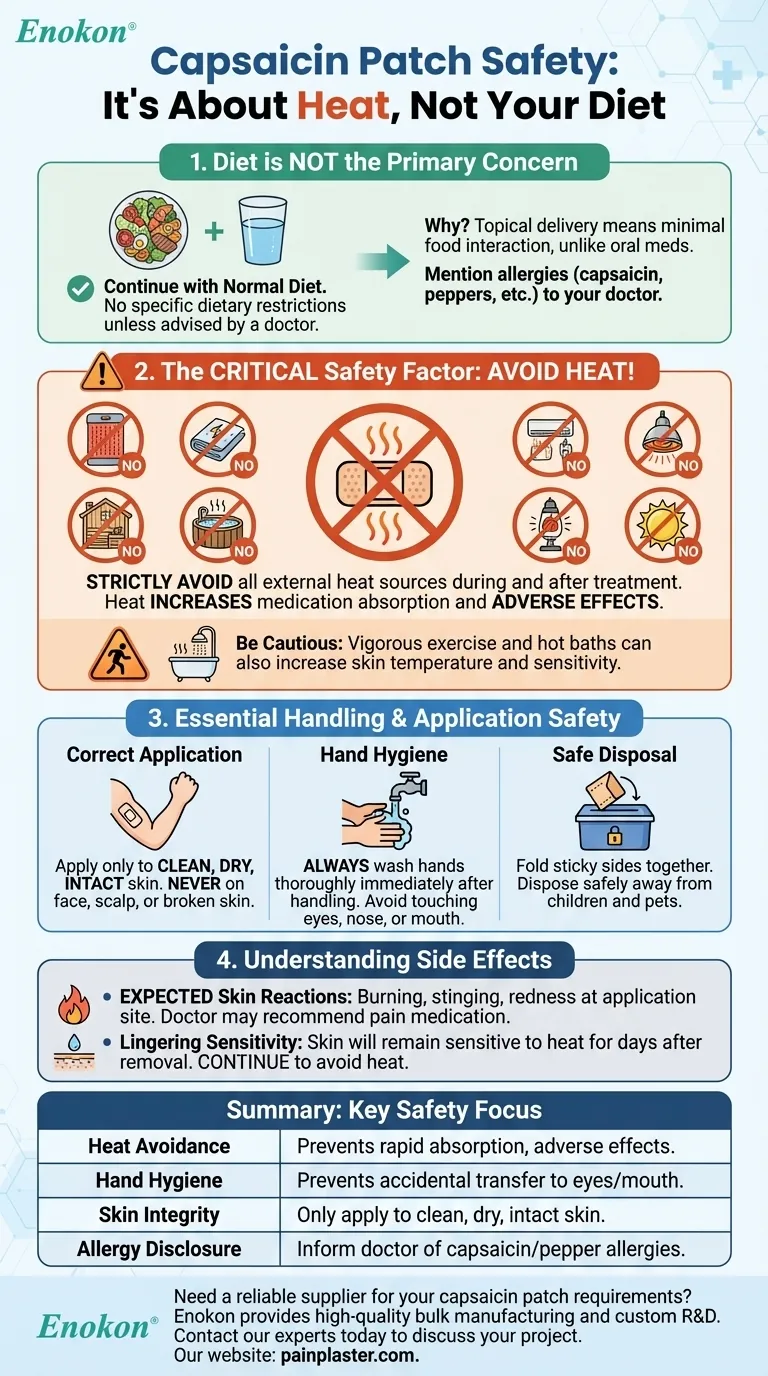
In most cases, there are no specific dietary instructions to follow while using capsaicin patches. Unless your doctor provides you with different guidance, you can and should continue with your normal diet. The primary safety concerns are not related to food, but rather to how you manage the treated skin area.
The critical factor for safety and effectiveness with capsaicin patches is not your diet, but the strict avoidance of heat. Exposing the patch or the treated skin to any heat source can significantly increase medication absorption and lead to adverse effects.
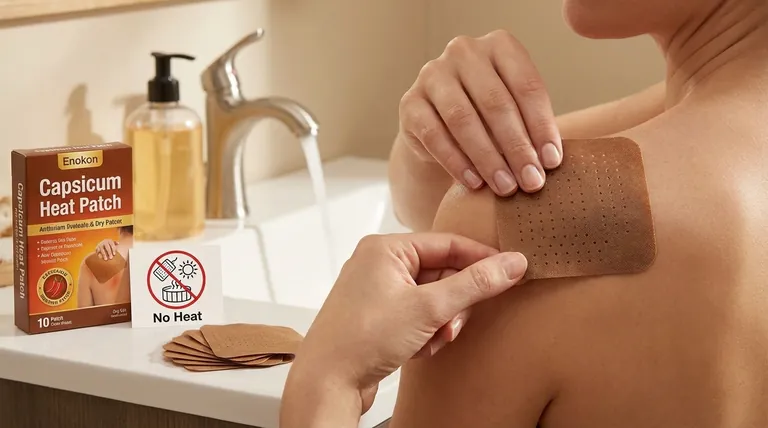
Why Your Diet Isn't the Primary Concern
Topical vs. Systemic Effects
A capsaicin patch delivers medication topically, directly to the skin and underlying nerves in a specific area. Its primary action is localized.
Because of this, interactions with foods you eat are not a typical concern, unlike oral medications that are absorbed through your digestive system.
When to Mention "Diet"
The only time diet-related factors are relevant is in the context of allergies. Before treatment, you must inform your doctor if you have any known allergies to capsaicin, hot peppers, other foods, dyes, or preservatives.
The Real Precaution: Managing Heat and Skin Sensitivity
The most important instructions revolve around protecting the treated skin from heat, which can cause the medication to be absorbed too quickly and intensify side effects.
Avoid All External Heat Sources
Do not expose the application site to direct heat while wearing the patch and for several days after treatment. This includes heating pads, electric blankets, saunas, hot tubs, heat lamps, and direct sunlight.
Be Cautious with Body Heat and Water
Vigorous exercise can increase blood flow and body temperature, making the treated skin feel hotter and more sensitive.
You should also be careful with hot showers or baths. Nonprescription patches should be removed at least one hour before bathing to prevent irritation.
Essential Handling and Application Safety
Proper handling is crucial to prevent accidental exposure and ensure the treatment is effective.
Correct Application is Key
Only apply the patch to clean, dry, and intact skin. Never apply it to your face, scalp, or to skin that is broken, cut, or irritated. Do not bandage the area tightly over the patch unless specifically instructed by your doctor.
Hand Hygiene is Non-Negotiable
Always wash your hands thoroughly with soap and water immediately after handling a capsaicin patch. Be extremely careful not to touch your eyes, nose, mouth, or other sensitive areas.
Safe Disposal Protects Others
After use, fold the patch in half with the sticky sides together. Dispose of it carefully in a way that prevents it from being accessed by children or pets.
Understanding the Trade-offs and Side Effects
Knowing what to expect can help you manage the treatment process effectively.
Expected Skin Reactions
A sensation of burning, stinging, or redness at the application site is a common and expected effect of the treatment. Your doctor may recommend pain medication to manage this discomfort.
Lingering Sensitivity
For several days after you remove the patch, the treated skin will likely be more sensitive to heat. This is a normal part of the process, so continue to avoid heat sources during this time.
When to Consult Your Doctor
Before starting treatment, it is critical to inform your care team about your full medical history. Be sure to mention if you have high blood pressure, a history of heart attack or stroke, or if you are pregnant or breast-feeding.
Making the Right Choice for Your Treatment
Your primary goal is a safe and effective outcome. Following these precautions is the best way to achieve that.
- If you are preparing for treatment: Your priority is to have a thorough discussion with your doctor about your health history and any known allergies.
- While you are wearing the patch: Your focus must be on strictly avoiding all sources of external heat, including direct sun and hot water.
- After you remove the patch: Continue to protect the sensitive skin from heat and sun for a few days as it returns to normal.
By understanding that managing heat and skin contact are the true priorities, you can use your capsaicin patch treatment safely and effectively.
Summary Table:
| Key Safety Focus | Why It's Important |
|---|---|
| Heat Avoidance | Prevents rapid medication absorption and adverse effects. |
| Hand Hygiene | Prevents accidental transfer of capsaicin to eyes or mouth. |
| Skin Integrity | Patches should only be applied to clean, dry, intact skin. |
| Allergy Disclosure | Inform your doctor of any allergies to capsaicin or peppers. |
Need a reliable supplier for your capsaicin patch requirements?
As Enokon, a bulk manufacturer of reliable transdermal patches and pain plasters, we provide healthcare and pharmaceutical distributors and brands with high-quality, consistent products. Benefit from our technical expertise for custom R&D and development to create the perfect patch for your market.
Contact our experts today to discuss your project and ensure a safe, effective supply.
Visual Guide
Related Products
- Capsaicin Chili Medicated Pain Relief Patches
- Heat Relief Capsicum Patch for Lower Back Pain Relief
- Menthol Gel Pain Relief Patch
- Icy Hot Menthol Medicine Pain Relief Patch
- Asthma Cough and Pain Relief Patch for Adults and Kids
People Also Ask
- What conditions should be reported to a care team before using capsaicin patches? Ensure Safe Pain Relief
- What conditions can capsaicin creams and patches help relieve? Find Targeted Pain Relief for Nerves & Joints
- What are the uses of nonprescription capsaicin patches? Natural Pain Relief for Muscles & Joints
- What should be avoided while using capsaicin patches? Essential Safety Tips for Effective Pain Relief
- What less common side effects may occur with the capsaicin patch? Recognizing Systemic & Rare Reactions



















