
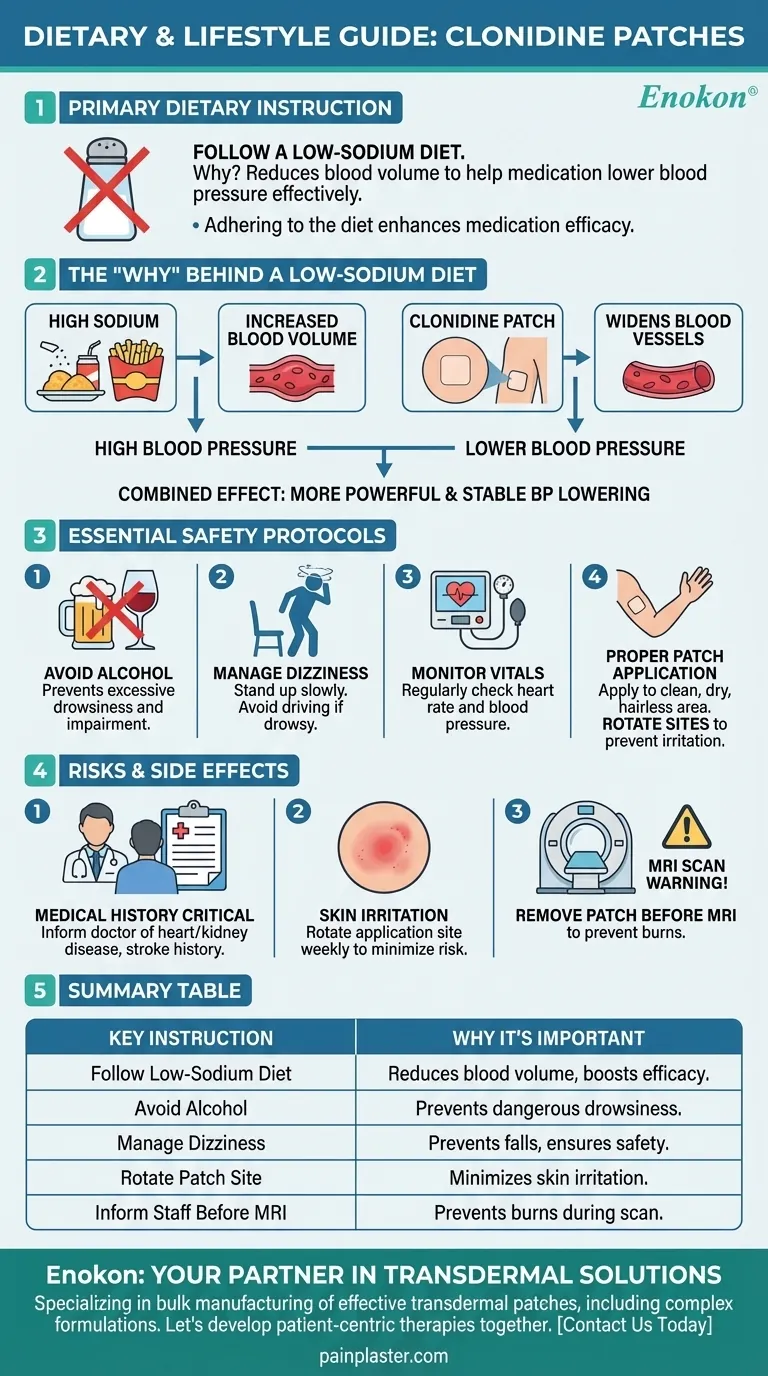
The primary dietary instruction while using clonidine patches is to carefully follow the low-salt or low-sodium diet your doctor may prescribe. This dietary change is a critical component of managing the underlying condition, typically high blood pressure, for which clonidine is used. Adhering to this diet helps the medication work more effectively.
While a low-sodium diet is the key dietary recommendation, successful treatment with clonidine patches requires a broader understanding of lifestyle interactions and safety precautions to manage potential side effects and maximize the medication's benefit.

The "Why" Behind a Low-Sodium Diet
Understanding the reason for dietary changes can significantly improve adherence and outcomes. The connection between sodium and blood pressure is direct and well-established.
How Sodium Affects Blood Pressure
High levels of sodium in your bloodstream pull water into your blood vessels, increasing the total volume of blood inside them. This increased volume raises the pressure against the vessel walls, resulting in high blood pressure.
How Clonidine Works
Clonidine belongs to a class of medicines that help relax and widen your blood vessels. This action makes it easier for blood to flow through, which in turn lowers your blood pressure.
Combining Diet and Medication for Success
Following a low-sodium diet reduces the fluid volume in your blood vessels, while the clonidine patch actively widens them. These two actions work together, creating a more powerful and stable effect on lowering your blood pressure than either approach would alone.
Beyond Diet: Essential Safety Protocols
Effective management with a clonidine patch goes beyond what you eat. You must be aware of several other lifestyle factors and potential side effects to ensure your safety.
Avoid Alcohol Consumption
Alcohol can significantly increase the drowsiness caused by clonidine. It is crucial to avoid alcoholic beverages while using the patch to prevent excessive sedation and impairment.
Manage Dizziness and Drowsiness
The patch may cause dizziness or drowsiness, especially when you first start using it. Avoid activities that require mental alertness, like driving, until you know how the medication affects you.
To prevent dizziness, be sure to stand up slowly from a sitting or lying position.
Monitor Your Vitals
Your doctor will likely ask you to monitor your heart rate and blood pressure regularly. This helps ensure the medication is working correctly and allows for dosage adjustments if needed.
Ensure Proper Patch Application
Always apply the patch to a clean, dry, and hairless area on the upper outer arm or chest. Avoid skin that is irritated, scarred, or calloused.
Rotate the application site with each new patch to prevent skin irritation. If the patch becomes loose, you can place the provided adhesive cover over it.
Understanding the Risks and Side Effects
Being informed about potential issues is key to using any medication safely. Open communication with your healthcare provider is essential.
The Importance of Your Medical History
Before starting treatment, you must inform your doctor about your complete medical history. This is especially critical if you have a history of heart or kidney disease, stroke, or a recent heart attack.
The Risk of Skin Irritation
The patch adhesive can cause irritation at the application site. Rotating where you place the patch each week is the best way to minimize this risk.
A Critical Warning for MRI Scans
The clonidine patch contains materials that can cause burns during an MRI procedure. You must inform medical staff and remove the patch before undergoing an MRI.
How to Apply This to Your Treatment
Your approach should be guided by your primary health goal in partnership with your doctor.
- If your primary focus is lowering blood pressure: Strictly adhere to the low-sodium diet prescribed by your doctor, as this directly supports the medication's primary function.
- If your primary focus is overall safety: Make it a priority to avoid alcohol and be fully transparent with your doctor about your entire medical history and any other medications you take.
- If your primary focus is minimizing side effects: Be diligent about rotating the patch location to avoid skin irritation and always rise slowly to prevent dizziness.
Proactive management of your diet and daily habits is the key to achieving the best possible results with your treatment.
Summary Table:
| Key Instruction | Why It's Important |
|---|---|
| Follow a Low-Sodium Diet | Reduces blood volume, helping clonidine lower blood pressure more effectively. |
| Avoid Alcohol | Prevents dangerous increases in drowsiness and sedation. |
| Manage Dizziness | Stand up slowly to prevent falls; avoid driving if drowsy. |
| Rotate Patch Site | Minimizes the risk of skin irritation from the adhesive. |
| Inform Staff Before MRI | The patch must be removed to prevent risk of burns during the scan. |
Ready to provide your patients with reliable, high-quality transdermal solutions?
As a trusted partner for healthcare and pharmaceutical distributors, Enokon specializes in the bulk manufacturing of effective transdermal patches, including complex formulations like clonidine. We combine rigorous quality control with deep technical expertise to support your custom R&D and product development needs.
Let's develop the next generation of patient-centric transdermal therapies together. Contact our experts today to discuss your project requirements.
Visual Guide
Related Products
- Lidocaine Hydrogel Pain Relief Patch for Pain Relief
- Menthol Gel Pain Relief Patch
- Capsaicin Chili Medicated Pain Relief Patches
- Herbal Medicated Anti Diarrhea Patch for Digestive Relief
- Icy Hot Menthol Medicine Pain Relief Patch
People Also Ask
- How does the aqueous base in a lidocaine patch contribute to drug delivery? Unlocking Sustained Pain Relief Technology
- What are the advantages of topical anesthetics over invasive Lidocaine infiltration? Discover Safer, Scalable Relief
- Which pain patch is most effective for arthritis? Find the Best Relief for Your Joint Pain
- Why are lidocaine patches preferred over oral medications? Targeted Relief & Scale Your Brand with OEM R&D Solutions
- Will a GP routinely continue prescribing lidocaine patches after the initial period? Understanding Short-Term Pain Relief



















