
To be clear, methylphenidate transdermal is available in a single dosage form: an extended-release patch, also referred to as a transdermal system. This patch is designed for once-daily application and comes in four distinct strengths: 10 mg/9 hr, 15 mg/9 hr, 20 mg/9 hr, and 30 mg/9 hr.
The methylphenidate patch is not just a different way to take a pill; it is a sophisticated drug delivery system designed to release medication at a controlled rate directly through the skin, providing consistent symptom management over a specific 9-hour period.

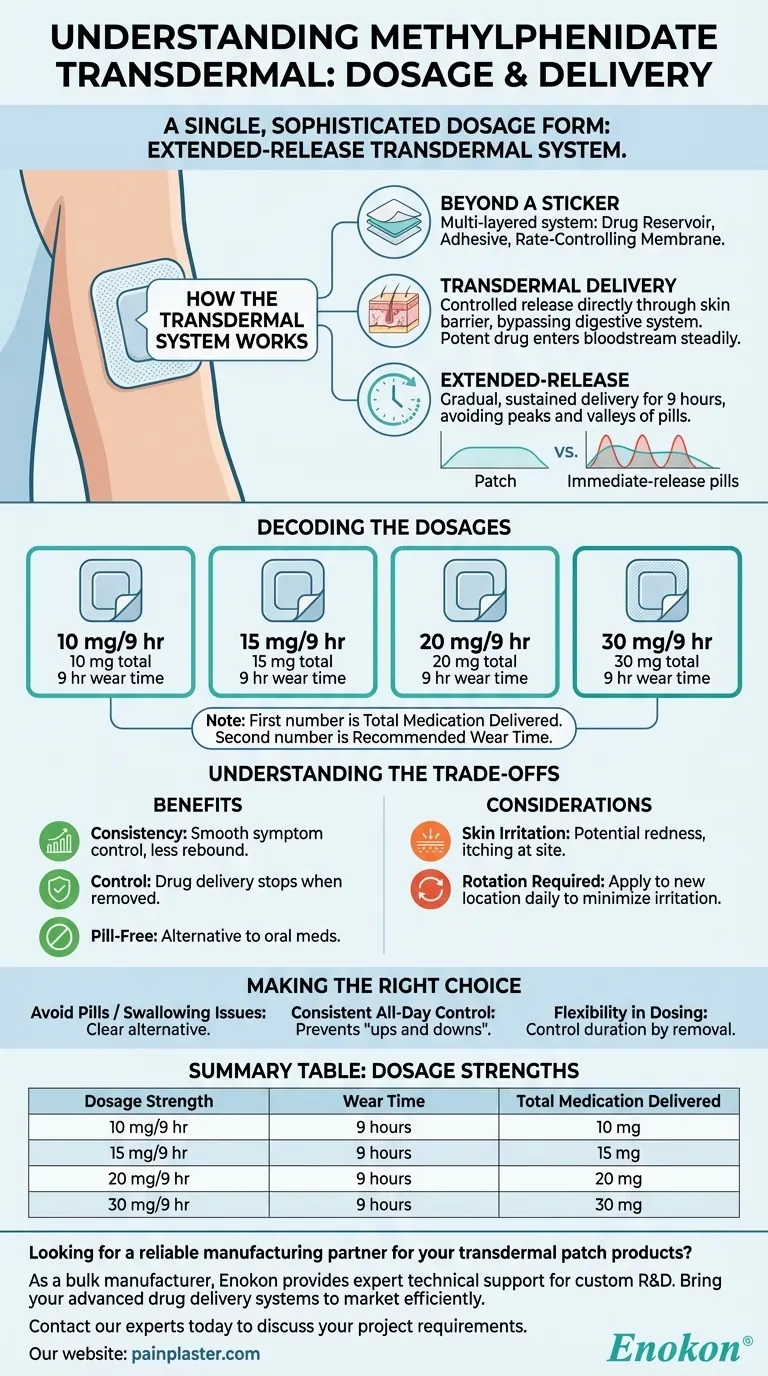
How the Transdermal System Works
Beyond a Simple Sticker
A transdermal patch is a complex, multi-layered system engineered for a specific task. It contains a reservoir of the active drug, an adhesive layer that keeps it securely on the skin, and a rate-controlling membrane.
This membrane is the key to its function, ensuring the medication enters the bloodstream at a steady, predictable pace throughout the time it is worn.
The Principle of Transdermal Delivery
The skin is an effective protective barrier, which is why relatively few drugs can be delivered this way. For a drug to be successful in a patch, it must be potent enough to work at low doses and have the right molecular properties to pass through the skin.
Methylphenidate is one of the drugs that meets these criteria, allowing it to bypass the digestive system and enter circulation directly.
What "Extended-Release" Means
The term extended-release signifies that the patch is designed to work over many hours from a single application.
Unlike an immediate-release pill that causes a rapid spike in medication levels, the patch provides a gradual and sustained delivery. This avoids the peaks and valleys of multiple daily doses.
Decoding the Dosages
What "mg/9 hr" Signifies
The dosage information on the patch is critical to understand. It has two parts.
The first number (e.g., 10 mg) represents the total amount of medication delivered to your system if the patch is worn for the recommended duration. The second part (9 hr) indicates that recommended wear time.
Available Strengths
The system is available in four standard strengths, allowing a healthcare provider to tailor the treatment to the individual's needs:
- 10 mg/9 hr
- 15 mg/9 hr
- 20 mg/9 hr
- 30 mg/9 hr
The appropriate dose is determined by a clinician based on factors like patient history and symptom severity.
Understanding the Trade-offs
The Benefit of Consistency
The primary advantage of the patch is smooth, consistent symptom control. The steady release of medication helps prevent the "rebound" effect or end-of-dose wear-off that can occur with some oral formulations.
The Advantage of Control
A unique feature of the transdermal patch is the control it offers. If medication effects need to be stopped (for instance, to prevent interference with sleep), the patch can simply be removed. Once removed, the delivery of the drug into the bloodstream stops.
The Potential for Skin Irritation
The most common downside is local skin irritation. The adhesive or the medication itself can cause redness, itching, or a rash at the application site.
To minimize this, it is crucial to apply the patch to a new, clean, and dry location each day, rotating between different areas of the body as directed.
Making the Right Choice for Your Goal
When considering treatment options with your healthcare provider, understanding the unique profile of the transdermal patch can help guide your decision.
- If your primary focus is avoiding pills or managing swallowing difficulties: The transdermal patch offers a clear and effective alternative to oral medication.
- If your primary focus is consistent, all-day symptom control: The patch's extended-release mechanism is designed to prevent the "ups and downs" associated with some immediate-release pills.
- If your primary focus is flexibility in dosing duration: The ability to remove the patch to stop drug delivery provides a level of control not possible with long-acting oral capsules.
Ultimately, choosing the right dosage form is a collaborative decision between you and your healthcare provider to best meet your specific therapeutic needs.
Summary Table:
| Dosage Strength | Wear Time | Total Medication Delivered |
|---|---|---|
| 10 mg/9 hr | 9 hours | 10 mg |
| 15 mg/9 hr | 9 hours | 15 mg |
| 20 mg/9 hr | 9 hours | 20 mg |
| 30 mg/9 hr | 9 hours | 30 mg |
Looking for a reliable manufacturing partner for your transdermal patch products?
As Enokon, a bulk manufacturer of reliable transdermal patches and pain plasters, we provide healthcare and pharma distributors and brands with expert technical support for custom R&D and development. Benefit from our expertise to bring your advanced drug delivery systems to market efficiently.
Contact our experts today to discuss your project requirements.
Visual Guide
Related Products
- Menthol Gel Pain Relief Patch
- Far Infrared Heat Pain Relief Patches Transdermal Patches
- Silicone Scar Sheets Patch Transdermal Drug Patch
- Icy Hot Menthol Medicine Pain Relief Patch
- Mugwort Wormwood Pain Relief Patch for Neck Pain
People Also Ask
- How do pain relief patches compare to other pain relief methods? Discover Targeted, Long-Lasting Relief
- How effective are pain relief patches for muscle pain? Target Localized Pain with Transdermal Delivery
- Who should consult a healthcare professional before using pain relief patches? Ensure Your Safety with Medical Advice
- What are some common applications of pain relief patches? Effective Relief for Muscle & Joint Pain
- What are pain relief patches and how do they work? Discover Non-Invasive Pain Management



















