
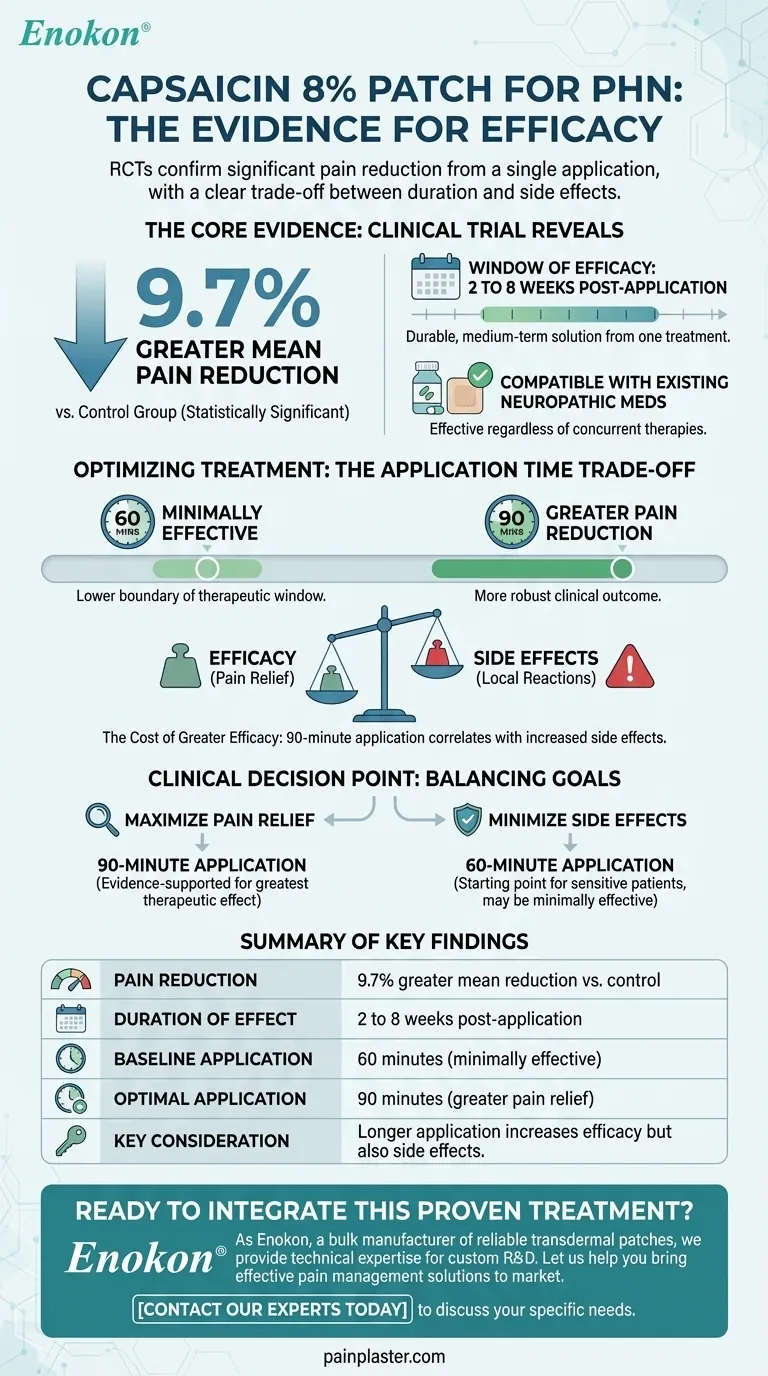
The evidence is clear: Randomized controlled trials (RCTs) confirm that a single application of a capsaicin 8% patch provides a statistically significant reduction in pain for patients with postherpetic neuralgia (PHN). This effect, observed 2 to 8 weeks after treatment, results in a 9.7% greater reduction in pain scores compared to a control group and is effective even when patients are concurrently taking other neuropathic medications.
For PHN, the capsaicin 8% patch is a clinically validated, non-systemic treatment option. However, its effectiveness is directly tied to a crucial trade-off: longer application times yield greater pain relief but also increase the likelihood of side effects.
The Core Evidence: What Clinical Trials Reveal
High-quality evidence from RCTs forms the foundation for using the capsaicin 8% patch in managing PHN. The data points to a specific window of efficacy and quantifies the expected outcome.
Quantifying the Pain Reduction
The primary finding is a 9.7% mean reduction in pain scores when compared to a control group. This demonstrates a clear therapeutic benefit that is statistically significant, moving the treatment beyond anecdotal success.
The Window of Efficacy
The pain-relieving effects are not immediate but are measured in the 2 to 8 weeks following the application. This indicates the patch provides a durable, medium-term solution from a single treatment, differentiating it from daily topical applications.
Compatibility with Existing Treatments
A critical advantage is the patch's effectiveness regardless of concurrent neuropathic medications. This allows it to be integrated into existing treatment plans without requiring patients to stop other therapies they may rely on.
Optimizing Treatment: The Critical Role of Application Time
The duration of the patch application is the key variable that clinicians can adjust to influence outcomes. The evidence presents a clear relationship between time and therapeutic benefit.
The 60-Minute Baseline
An application lasting 60 minutes is considered minimally effective. While it can provide some benefit, it represents the lower boundary of the therapeutic window for this high-concentration formula.
The 90-Minute Advantage
Extending the application time to 90 minutes provides a greater reduction in pain. This longer duration allows for more effective nerve desensitization, leading to a more robust clinical outcome for the patient.
Understanding the Trade-offs: Efficacy vs. Side Effects
While increasing application time improves pain relief, this benefit comes at a cost. Understanding this balance is essential for making informed clinical decisions and setting patient expectations.
The Cost of Greater Efficacy
The move from a 60-minute to a 90-minute application correlates with an increase in side effects. The greater therapeutic effect is accompanied by a higher incidence of local adverse reactions.
A Clinical Decision Point
This creates a clear trade-off. The decision to use a longer application must be based on weighing the potential for enhanced pain control against the patient's ability to tolerate the increased likelihood of side effects.
How to Apply This to Your Goal
Your treatment strategy should be guided by the specific clinical objective for your patient.
- If your primary focus is maximizing pain relief: A 90-minute application is the evidence-supported approach to achieve the greatest therapeutic effect.
- If your primary focus is minimizing side effects for a sensitive patient: A 60-minute application can be used as a starting point, with the understanding that it is minimally effective and may not provide adequate relief.
Ultimately, the high-concentration capsaicin patch is a proven tool for PHN, with its success hinging on a careful balance between application time and patient tolerance.
Summary Table:
| Key Finding | Details |
|---|---|
| Pain Reduction | 9.7% greater mean reduction vs. control group |
| Duration of Effect | Pain relief lasts from 2 to 8 weeks post-application |
| Baseline Application | 60 minutes (minimally effective) |
| Optimal Application | 90 minutes (greater pain relief) |
| Key Consideration | Longer application increases efficacy but also side effects |
Ready to integrate this proven treatment into your product line?
As Enokon, a bulk manufacturer of reliable transdermal patches for healthcare and pharma brands, we provide the technical expertise for custom R&D and development. Let us help you bring effective pain management solutions like capsaicin patches to market.
Contact our experts today to discuss your specific needs.
Visual Guide
Related Products
- Capsaicin Chili Medicated Pain Relief Patches
- Heat Relief Capsicum Patch for Lower Back Pain Relief
- Lidocaine Hydrogel Pain Relief Patch for Pain Relief
- Menthol Gel Pain Relief Patch
People Also Ask
- What conditions should be reported to a care team before using capsaicin patches? Ensure Safe Pain Relief
- What conditions can capsaicin creams and patches help relieve? Find Targeted Pain Relief for Nerves & Joints
- What are the uses of nonprescription capsaicin patches? Natural Pain Relief for Muscles & Joints
- What should be avoided while using capsaicin patches? Essential Safety Tips for Effective Pain Relief
- How are capsaicin patches administered? A Guide to Clinical vs. At-Home Use



