To answer your question directly, topical diclofenac is a nonsteroidal anti-inflammatory drug (NSAID) available in several distinct forms for application to the skin. These formulations include a gel, a liquid solution, and a patch. Each is designed to deliver the medication directly to a specific area of pain or inflammation.
The specific form of topical diclofenac you use—whether a gel, solution, or patch—is not interchangeable. The choice is determined by the condition being treated, such as chronic osteoarthritis versus acute pain from an injury, and the location of the affected area.
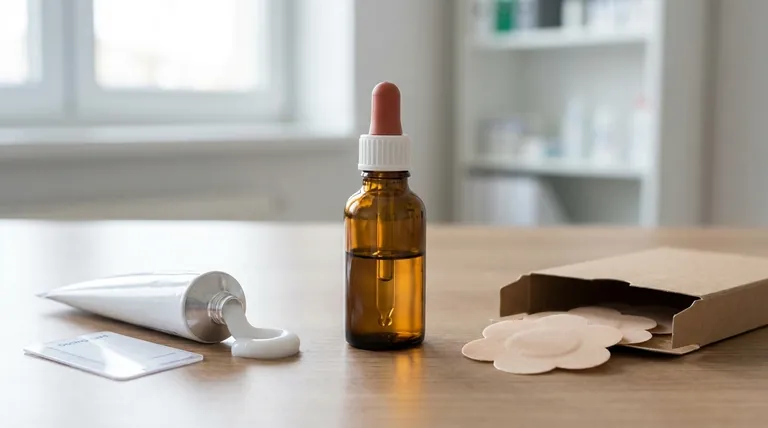
A Closer Look at Each Formulation
Understanding the differences between the forms is key to using the medication effectively. The concentration, application method, and frequency vary significantly based on the product's intended purpose.
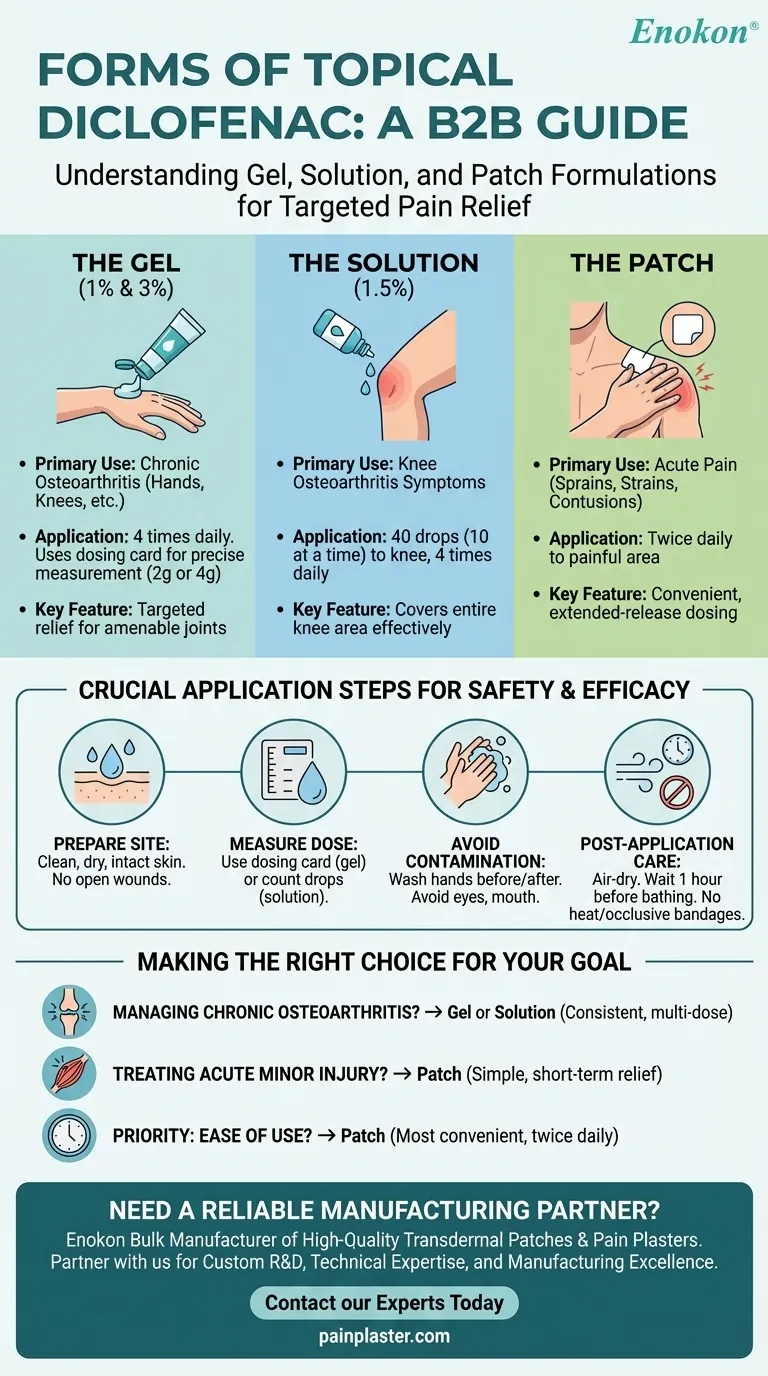
The Gel (1% and 3%)
Diclofenac gel is most commonly used for the chronic pain of osteoarthritis in joints amenable to topical treatment, like the hands, wrists, elbows, knees, ankles, and feet.
The 1% gel comes with a dosing card to measure the precise amount needed—typically 2 grams for smaller joints (hands) or 4 grams for larger joints (knees). It is usually applied four times per day.
The Solution (1.5%)
The topical solution is specifically indicated for treating the symptoms of knee osteoarthritis.
Application involves applying a set number of drops—usually 40 drops, administered 10 at a time—to the affected knee four times daily. This method allows the liquid to cover the entire knee area.
The Patch
The diclofenac patch is designed for treating acute pain resulting from minor sprains, strains, and contusions.
It offers a more convenient, extended-release dosing schedule. A single patch is applied directly to the most painful area twice a day.
Crucial Steps for Safe and Effective Application
Proper application is not just about efficacy; it's also about safety. Incorrect use can reduce the drug's benefit and increase the risk of side effects.
Prepare the Application Site
The skin must be clean, dry, and intact. Never apply topical diclofenac to open wounds, cuts, rashes, or infected skin.
Measure the Dose Correctly
Precision is essential. For the gel, always use the enclosed dosing card to measure the exact amount. For the solution, carefully count the drops as directed. This ensures you receive the intended therapeutic dose without over-applying.
Avoid Contamination and Interference
Wash your hands thoroughly before and after application, unless you are treating your hands. Avoid touching your eyes, nose, or mouth with the medication.
Do not mix the product with other lotions, sunscreens, or cosmetics on the same area.
Post-Application Care
Allow the treated area to air-dry completely. Wait at least one hour before bathing or showering.
Avoid covering the treated area with occlusive bandages or applying heat unless specifically instructed by your healthcare provider.
Making the Right Choice for Your Goal
Selecting the correct formulation is critical for achieving the best results. Your choice should be guided by your specific medical condition and the joint or area you are treating.
- If your primary focus is managing chronic osteoarthritis pain in your hands or knees: The gel or solution is designed for this type of consistent, multi-dose daily application.
- If your primary focus is treating acute pain from a recent minor injury like a sprain: The patch provides a simple, twice-daily application for targeted, short-term relief.
- If your primary focus is ease of use with less frequent application: The patch, requiring only two applications per day, is the most convenient option.
Ultimately, the right formulation provides effective relief by matching the delivery system to your specific therapeutic need.
Summary Table:
| Formulation | Common Strength | Primary Use | Key Application Details |
|---|---|---|---|
| Gel | 1% & 3% | Chronic osteoarthritis pain (hands, knees, etc.) | Applied 4 times/day; uses a dosing card for precise measurement. |
| Solution | 1.5% | Knee osteoarthritis symptoms | Applied as 40 drops (10 at a time) to the knee 4 times/day. |
| Patch | N/A | Acute pain from minor injuries (sprains, strains) | Applied to the painful area twice a day for convenient relief. |
Need a reliable manufacturing partner for topical pain relief products?
At Enokon, we are a bulk manufacturer of high-quality, reliable transdermal patches and pain plasters. We specialize in custom R&D and development to create the perfect formulation for your brand or healthcare distribution needs.
Partner with us to:
- Develop custom topical solutions tailored to your target market.
- Benefit from our technical expertise in transdermal drug delivery systems.
- Ensure product reliability and consistency with our manufacturing excellence.
Contact our experts today to discuss your project and discover how we can bring your pain relief products to market.
Visual Guide
Related Products
- Menthol Gel Pain Relief Patch
- Icy Hot Menthol Medicine Pain Relief Patch
- Capsaicin Chili Medicated Pain Relief Patches
- Herbal Medicated Anti Diarrhea Patch for Digestive Relief
- Lidocaine Hydrogel Pain Relief Patch for Pain Relief
People Also Ask
- How do pain relief patches compare to other pain relief methods? Discover Targeted, Long-Lasting Relief
- How effective are pain relief patches for muscle pain? Target Localized Pain with Transdermal Delivery
- Who should consult a healthcare professional before using pain relief patches? Ensure Your Safety with Medical Advice
- What are the potential side effects of pain relief patches? A Guide to Safe Use & Key Risks
- What are some common applications of pain relief patches? Effective Relief for Muscle & Joint Pain