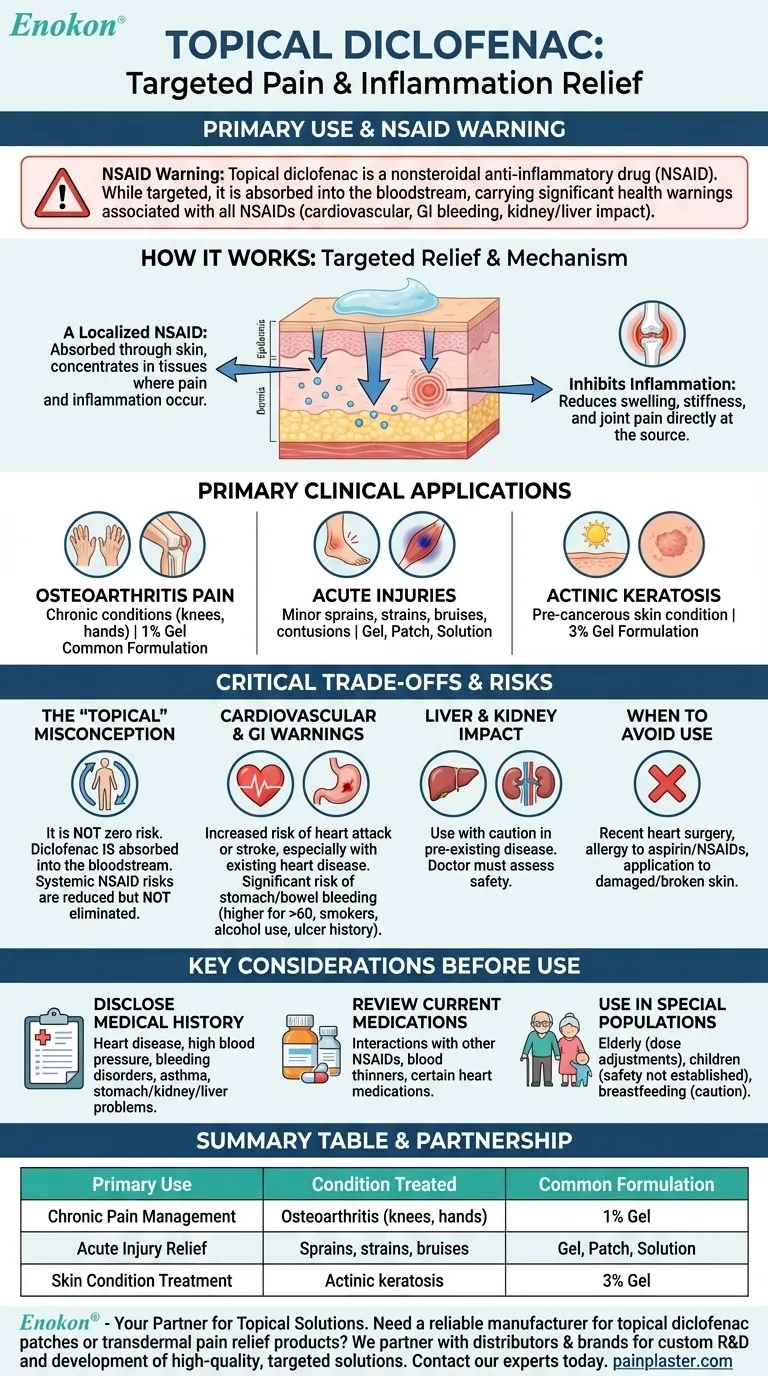
Topical diclofenac is primarily used to treat localized pain and inflammation directly at the source. It is most commonly applied to relieve the symptoms of osteoarthritis in joints like the knees and hands, treat acute pain from minor sprains and bruises, and manage a pre-cancerous skin condition called actinic keratosis.
While topical application targets a specific area to reduce systemic exposure, it is critical to understand that diclofenac is a nonsteroidal anti-inflammatory drug (NSAID) and still carries the significant health warnings associated with this class of medication.
How Topical Diclofenac Works: Targeted Relief
A Localized NSAID
Diclofenac belongs to a class of drugs known as nonsteroidal anti-inflammatory drugs (NSAIDs).
When applied topically as a gel, patch, or solution, it is absorbed through the skin. This allows the medication to concentrate in the underlying tissues where the pain and inflammation are occurring.
The Mechanism of Action
The primary function of diclofenac is to inhibit inflammation. By doing so, it effectively reduces the associated symptoms of swelling, stiffness, and joint pain, providing relief directly at the site of the problem.
Primary Clinical Applications
Managing Osteoarthritis Pain
For chronic conditions like osteoarthritis, topical diclofenac is used to manage symptoms in specific joints, most notably the hands and knees. The 1% gel is a common formulation for this purpose.
Treating Acute Injuries
It is also effective for acute pain caused by minor injuries. This includes muscle strains, sprains, and contusions (bruises) where localized swelling and pain are the main issues.
Addressing Actinic Keratosis
In a distinct and separate application, a higher concentration (3%) diclofenac gel is prescribed to treat actinic keratosis. This is a skin condition caused by sun exposure that has the potential to become cancerous if left untreated.
Understanding the Critical Trade-offs and Risks
The "Topical" Misconception
A common misconception is that "topical" means "zero risk." While it reduces the amount of drug circulating throughout your body compared to an oral pill, diclofenac is still absorbed into the bloodstream.
Therefore, the systemic risks associated with oral NSAIDs, while potentially lessened, are not eliminated.
Cardiovascular and GI Warnings
Like all NSAIDs, diclofenac carries a risk of serious side effects. This includes an increased risk of heart attack or stroke, especially for those with existing heart disease or with long-term use.
There is also a significant risk of stomach or bowel bleeding, which is higher for individuals over 60, smokers, those who consume alcohol, or anyone with a history of ulcers.
Potential Liver and Kidney Impact
Individuals with pre-existing liver or kidney disease must use this medication with caution. Your doctor must be aware of these conditions to determine if it is safe for you.
When to Avoid Use
You should not use topical diclofenac if you have had a recent heart surgery, have an allergy to aspirin or other NSAIDs, or plan to apply it to damaged or broken skin.
Key Considerations Before Use
Disclosing Your Medical History
Before using this medication, it is essential to inform your healthcare provider of any history of heart disease, high blood pressure, bleeding disorders, asthma, or stomach, kidney, or liver problems.
Reviewing Current Medications
Diclofenac can interact with other drugs. Be sure to disclose all medications you are taking, especially other NSAIDs (oral or topical), blood thinners, and certain heart medications.
Use in Special Populations
The elderly may require dose adjustments due to age-related changes in organ function. The safety and effectiveness in children have not been established for many forms, and its use during breastfeeding requires careful consideration as adequate studies are lacking.
Making the Right Choice for Your Goal
Before starting treatment, a thorough discussion with your healthcare provider is necessary to weigh the benefits against the potential risks.
- If your primary focus is chronic joint pain (like osteoarthritis): This is a targeted option for managing localized symptoms, but it demands a conversation about the long-term cardiovascular and gastrointestinal risks.
- If your primary focus is a recent, minor injury (like a sprain): It can provide effective, short-term relief for pain and swelling directly at the injury site.
- If you have a history of heart, stomach, or kidney issues: This medication requires extreme caution and a thorough risk assessment with a healthcare provider, as serious systemic risks are still present.
Understanding both its targeted benefits and its inherent risks is the key to using topical diclofenac safely and effectively.
Summary Table:
| Primary Use | Condition Treated | Common Formulation |
|---|---|---|
| Chronic Pain Management | Osteoarthritis (knees, hands) | 1% Gel |
| Acute Injury Relief | Sprains, strains, bruises | Gel, Patch, Solution |
| Skin Condition Treatment | Actinic keratosis | 3% Gel |
Need a reliable manufacturer for your topical diclofenac patches or other transdermal pain relief products?
As Enokon, a bulk manufacturer of reliable transdermal patches and pain plasters, we partner with healthcare and pharma distributors and brands. Benefit from our technical expertise for custom R&D and development to create high-quality, targeted pain relief solutions for your customers.
Contact our experts today to discuss your project requirements.
Visual Guide
Related Products
- Menthol Gel Pain Relief Patch
- Capsaicin Chili Medicated Pain Relief Patches
- Icy Hot Menthol Medicine Pain Relief Patch
- Mugwort Wormwood Pain Relief Patch for Neck Pain
- Herbal Medicated Anti Diarrhea Patch for Digestive Relief
People Also Ask
- How do pain relief patches compare to other pain relief methods? Discover Targeted, Long-Lasting Relief
- How effective are pain relief patches for muscle pain? Target Localized Pain with Transdermal Delivery
- Who should consult a healthcare professional before using pain relief patches? Ensure Your Safety with Medical Advice
- What are the potential side effects of pain relief patches? A Guide to Safe Use & Key Risks
- What are some common applications of pain relief patches? Effective Relief for Muscle & Joint Pain