
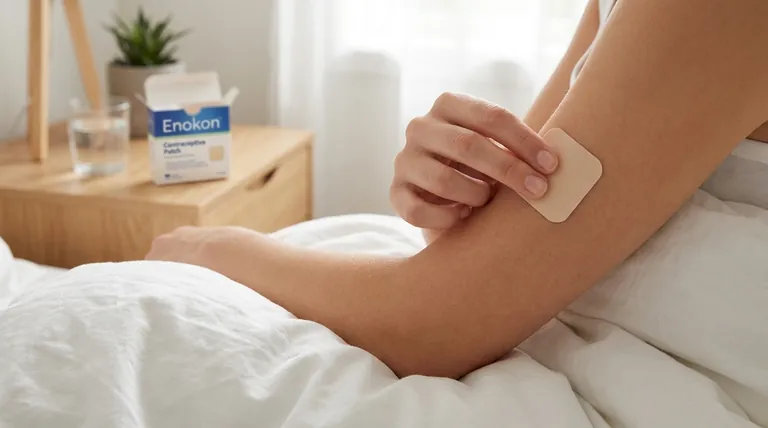
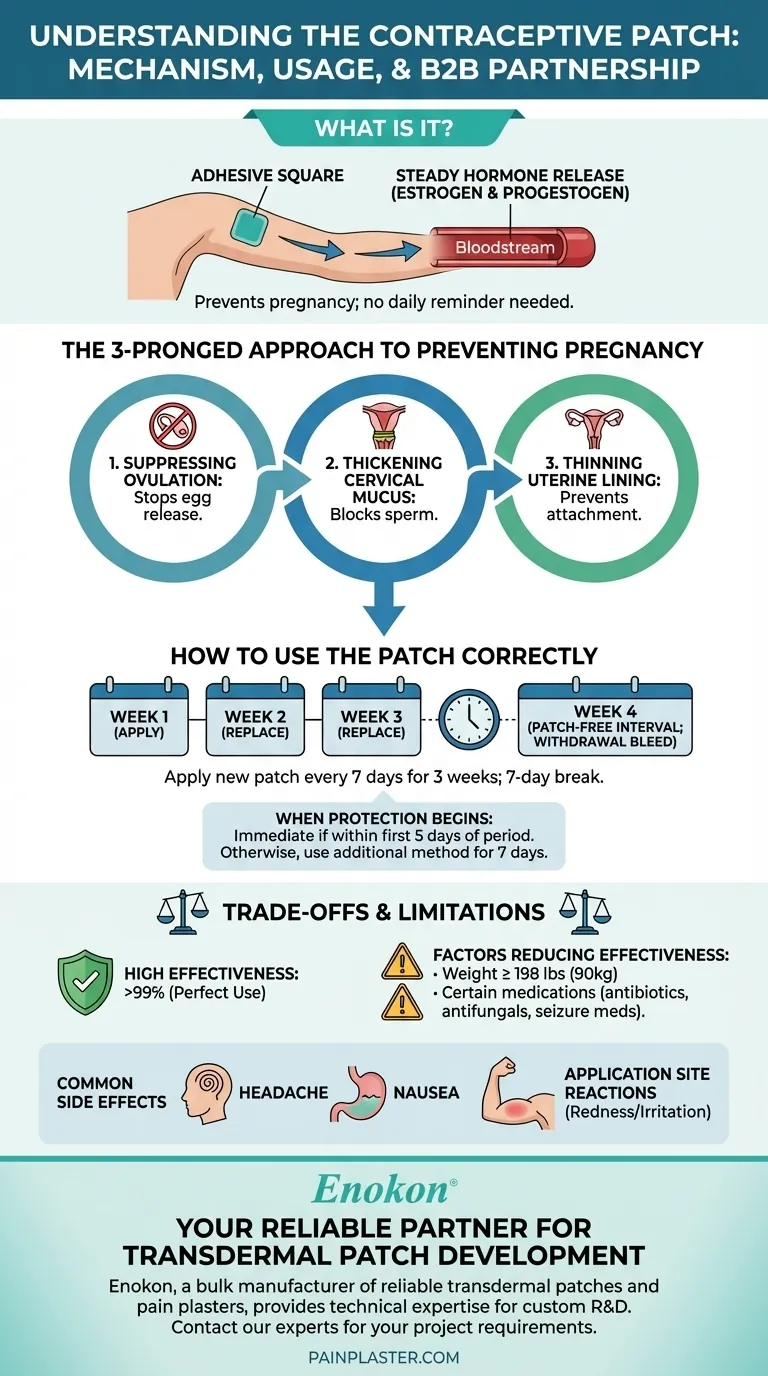
The contraceptive patch is a small, adhesive square worn on the skin that prevents pregnancy by steadily releasing two hormones, estrogen and progestogen, directly into your bloodstream. This hormonal delivery system works primarily by stopping your ovaries from releasing an egg each month (ovulation).
At its core, the patch offers the hormonal effectiveness of a combined pill without the need for daily remembering. It creates a multi-layered defense against pregnancy by altering your body's natural hormonal cycle, making conception highly unlikely.
The Three-Pronged Approach to Preventing Pregnancy
The hormones delivered by the patch—estrogen and progestogen—are similar to those in the combined oral contraceptive pill. They work in unison to prevent pregnancy through three distinct mechanisms.
1. Suppressing Ovulation
The primary way the patch works is by preventing ovulation. The consistent level of hormones signals to your body that it doesn't need to prepare for pregnancy, which stops your ovaries from maturing and releasing an egg each month. Without an egg, fertilization cannot occur.
2. Thickening Cervical Mucus
The hormones also cause the mucus around your cervix to thicken significantly. This creates a physical barrier that makes it very difficult for sperm to travel from the vagina into the uterus to reach a potential egg.
3. Thinning the Uterine Lining
Finally, the patch thins the lining of the womb (the endometrium). In the rare event that an egg is released and fertilized, this thinner lining makes it much less likely that the fertilized egg can successfully attach and develop.
How to Use the Patch Correctly
Proper use is essential for the patch to be effective. It operates on a simple, consistent 4-week cycle.
The 3-Weeks-On, 1-Week-Off Cycle
You apply one new patch and wear it for seven days. On day eight, you remove the old patch and immediately apply a new one. This is repeated for three consecutive weeks.
After the third week (21 days of use), you have a seven-day patch-free interval. You will likely experience a withdrawal bleed, similar to a period, during this week. After seven patch-free days, you apply a new patch to begin the cycle again, even if you are still bleeding.
When Protection Begins
If you apply your first patch within the first five days of your menstrual period, it provides immediate protection against pregnancy.
If you start on any other day of your cycle, you must use an additional method of contraception, such as condoms, for the first seven days of wearing the patch.
Understanding the Trade-offs and Limitations
Like any medication, the patch has a specific effectiveness profile and potential side effects that are important to consider.
High Effectiveness Under Ideal Conditions
When used perfectly and consistently, the patch is highly effective, with a failure rate of less than 1%. This makes it a very reliable form of birth control.
Factors That Reduce Effectiveness
Certain factors can make the patch less effective. Its reliability may decrease if you weigh 198 pounds (90kg) or more.
Effectiveness can also be compromised by certain medications, including some antibiotics, medications for fungal infections, or seizure medications. Always inform your doctor about all medications you are taking.
Common Side Effects
The side effect profile is generally similar to that of combined oral contraceptives. The most commonly reported adverse events are headache and nausea.
Because it is worn on the skin, about 20% of users report application site reactions, such as redness or irritation. Studies show minimal changes in body weight associated with its use.
Making the Right Choice for Your Goal
Understanding these principles helps you determine if the patch aligns with your lifestyle and health needs.
- If your primary focus is convenience: The patch offers a significant advantage, as you only need to think about it once a week rather than every day.
- If your primary focus is maximum effectiveness: The patch is highly reliable, but you must be diligent about changing it on time and be aware of factors like body weight and drug interactions that could compromise its efficacy.
- If you are sensitive to side effects: Be aware that headaches, nausea, and skin irritation are the most common issues, and discuss any concerns with your healthcare provider.
Ultimately, choosing a contraceptive method is a personal health decision best made in consultation with a medical professional.
Summary Table:
| Aspect | Key Detail |
|---|---|
| How It Works | Releases estrogen & progestogen to prevent ovulation, thicken cervical mucus, and thin uterine lining. |
| Usage Cycle | Wear a patch for 7 days, replace for 3 weeks, then have a 7-day patch-free interval. |
| Ideal Use Effectiveness | Over 99% effective when used perfectly. |
| Common Side Effects | Headache, nausea, and application site reactions (e.g., skin redness). |
Need a reliable partner for your transdermal patch development?
As Enokon, a bulk manufacturer of reliable transdermal patches and pain plasters, we provide healthcare and pharmaceutical distributors and brands with the technical expertise for custom R&D and development. Let us help you bring a safe, effective, and user-friendly product to market.
Contact our experts today to discuss your project requirements.
Visual Guide
Related Products
- Heating Pain Relief Patches for Menstrual Cramps
- Prostate Pain Kidney Health Care Patch for Men
- Silicone Scar Sheets Patch Transdermal Drug Patch
- Lidocaine Hydrogel Pain Relief Patch for Pain Relief
- Menthol Gel Pain Relief Patch
People Also Ask
- What are the benefits of Period Pain Heat Patches? Drug-Free, On-the-Go Relief
- What are the key benefits of heating patches for elderly individuals? Relieve Pain & Improve Mobility
- What are the different types of heat patches? Find the Right Pain Relief for Your Needs
- What are the key differences between conventional heat patches and deep heat devices? Choosing the Right Pain Relief Solution
- What percentage of people with back pain use heat patches for relief? Discover the Popular Choice for Pain Management
















