
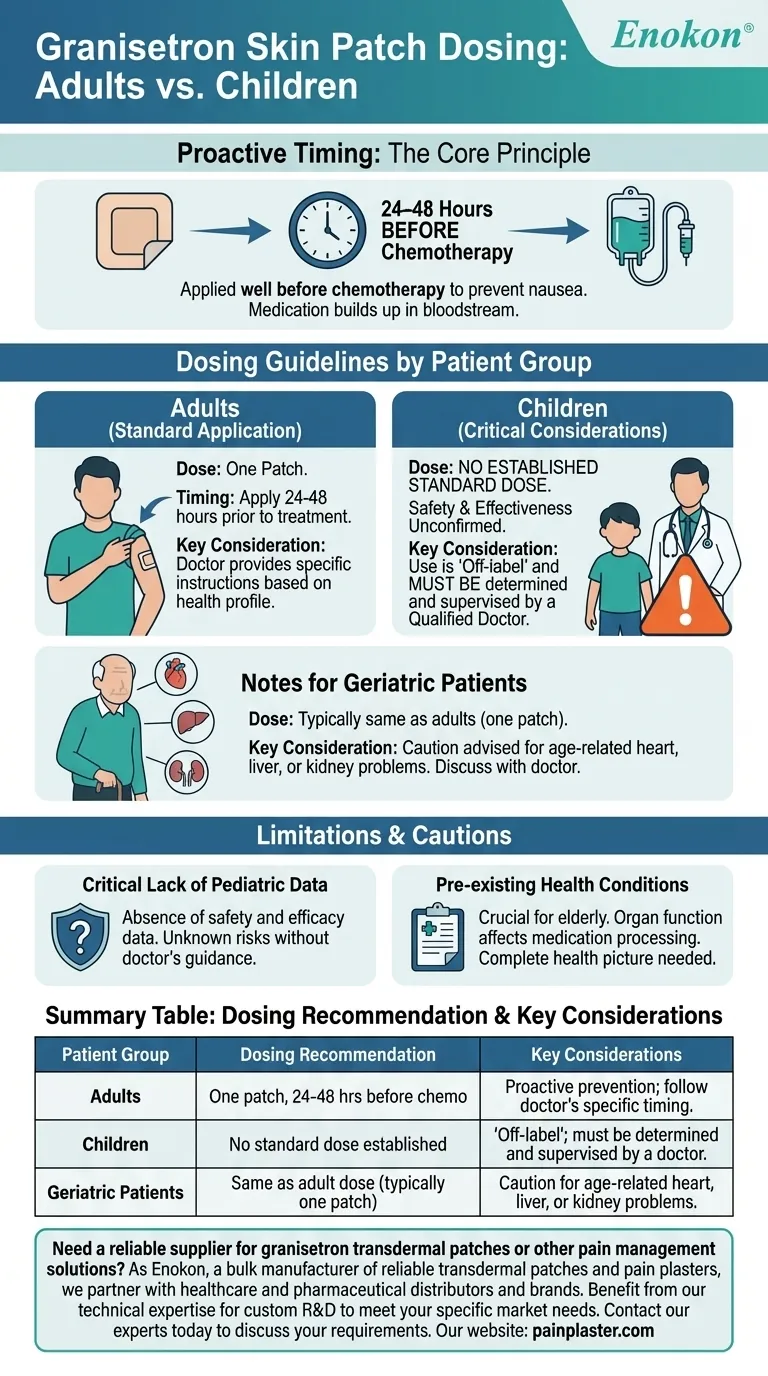
For adults, the standard dose is one granisetron patch applied to the skin at least 24 to 48 hours before the start of chemotherapy. For children, a standard dose has not been established. The use of this medication in pediatric patients must be determined by a doctor, as its safety and effectiveness have not been confirmed in that age group.
The core principle for using the granisetron patch is proactive timing: it must be applied well before chemotherapy to prevent nausea. However, this established adult protocol does not apply to children, where a lack of safety data makes direct medical supervision essential.

How the Dosing Strategy Works
The Principle of Proactive Treatment
The granisetron patch is designed for prevention, not for treating nausea and vomiting that has already started.
Applying the patch 24 to 48 hours before chemotherapy allows the medication to be absorbed through the skin and build up to an effective level in your bloodstream. This ensures the drug is active and ready to block the signals that trigger nausea when the chemotherapy is administered.
The Role of Medical Supervision
While the dose for adults is typically one patch, your doctor may provide specific instructions based on your health profile and treatment plan.
They will make the final determination on timing and monitor for any necessary adjustments. This is not a medication to be used without professional guidance.
Dosing Guidelines by Patient Group
Standard Adult Application
For most adults, the recommendation is straightforward: apply one patch to a clean, dry area of skin on the upper outer arm. This should be done one to two days prior to your scheduled treatment.
Critical Considerations for Pediatric Use
There is no established safe or effective dose for children.
Appropriate studies to determine how children should use the granisetron patch have not been performed. Therefore, its use is considered "off-label" and must only be done under the direct order and supervision of a qualified doctor.
Notes for Geriatric Patients
No specific studies have shown that the granisetron patch causes different side effects or problems in older people than it does in younger adults.
However, elderly patients may be more likely to have age-related heart, liver, or kidney problems. This requires caution and open communication with a doctor to ensure the medication is appropriate.
Understanding the Limitations and Cautions
The Critical Lack of Pediatric Data
The most significant limitation is the absence of safety and efficacy data for children. This is why a standard pediatric dose does not exist. Using this medication in a child without a doctor's explicit guidance carries unknown risks.
Pre-existing Health Conditions
For any patient, but especially the elderly, it is crucial to consider overall health.
Age-related decreases in heart, liver, or kidney function can affect how the body processes medication. Your doctor needs a complete picture of your health to prescribe this patch safely.
Making the Right Choice for Your Treatment
Follow these guidelines to ensure the safe and effective use of the granisetron patch.
- If you are an adult patient: Apply one patch 24 to 48 hours before your scheduled chemotherapy, precisely as directed by your healthcare team.
- If you are a caregiver for a child: Never use this patch unless specifically prescribed by a pediatric specialist who will determine the appropriate use and dose.
- If you are an elderly patient: Be sure to discuss all your health conditions, particularly any heart, liver, or kidney issues, with your doctor before use.
Ultimately, successful nausea prevention relies on following your doctor's expert medical advice tailored to your specific situation.
Summary Table:
| Patient Group | Dosing Recommendation | Key Considerations |
|---|---|---|
| Adults | One patch applied 24-48 hours before chemotherapy. | Designed for proactive prevention; follow doctor's specific timing instructions. |
| Children | No standard dose established. | Use is 'off-label' and must be determined and supervised by a doctor. |
| Geriatric Patients | Same as adult dose, typically one patch. | Caution advised for patients with age-related heart, liver, or kidney problems. |
Need a reliable supplier for granisetron transdermal patches or other pain management solutions?
As Enokon, a bulk manufacturer of reliable transdermal patches and pain plasters, we partner with healthcare and pharmaceutical distributors and brands. Benefit from our technical expertise for custom R&D and development to meet your specific market needs.
Contact our experts today to discuss your requirements.
Visual Guide
Related Products
- Menthol Gel Pain Relief Patch
- Icy Hot Menthol Medicine Pain Relief Patch
- Silicone Scar Sheets Patch Transdermal Drug Patch
- Natural Herbal Wormwood Patch Pain Plaster
People Also Ask
- How do pain relief patches compare to other pain relief methods? Discover Targeted, Long-Lasting Relief
- How effective are pain relief patches for muscle pain? Target Localized Pain with Transdermal Delivery
- Who should consult a healthcare professional before using pain relief patches? Ensure Your Safety with Medical Advice
- What are some common applications of pain relief patches? Effective Relief for Muscle & Joint Pain
- What are pain relief patches and how do they work? Discover Non-Invasive Pain Management



