
The standard dosing regimen for nicotine skin patches is a structured step-down program designed to gradually wean your body off nicotine. The specific starting dose and duration depend directly on the number of cigarettes you smoke per day, with the entire process typically lasting between 8 and 12 weeks.
The core principle of nicotine patch therapy is not to replace smoking, but to manage withdrawal symptoms while you systematically reduce your nicotine dependence. Success hinges on starting with the correct dose and adhering to the tapering schedule.
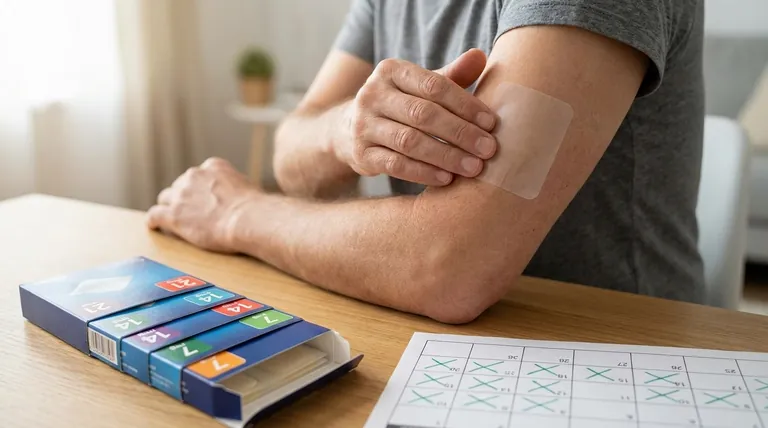
How to Determine Your Starting Dose
Your current smoking habit is the single most important factor in selecting the right initial patch strength. This ensures you receive enough nicotine to manage cravings without being overwhelmed.
For Heavier Smokers (More than 10 cigarettes/day)
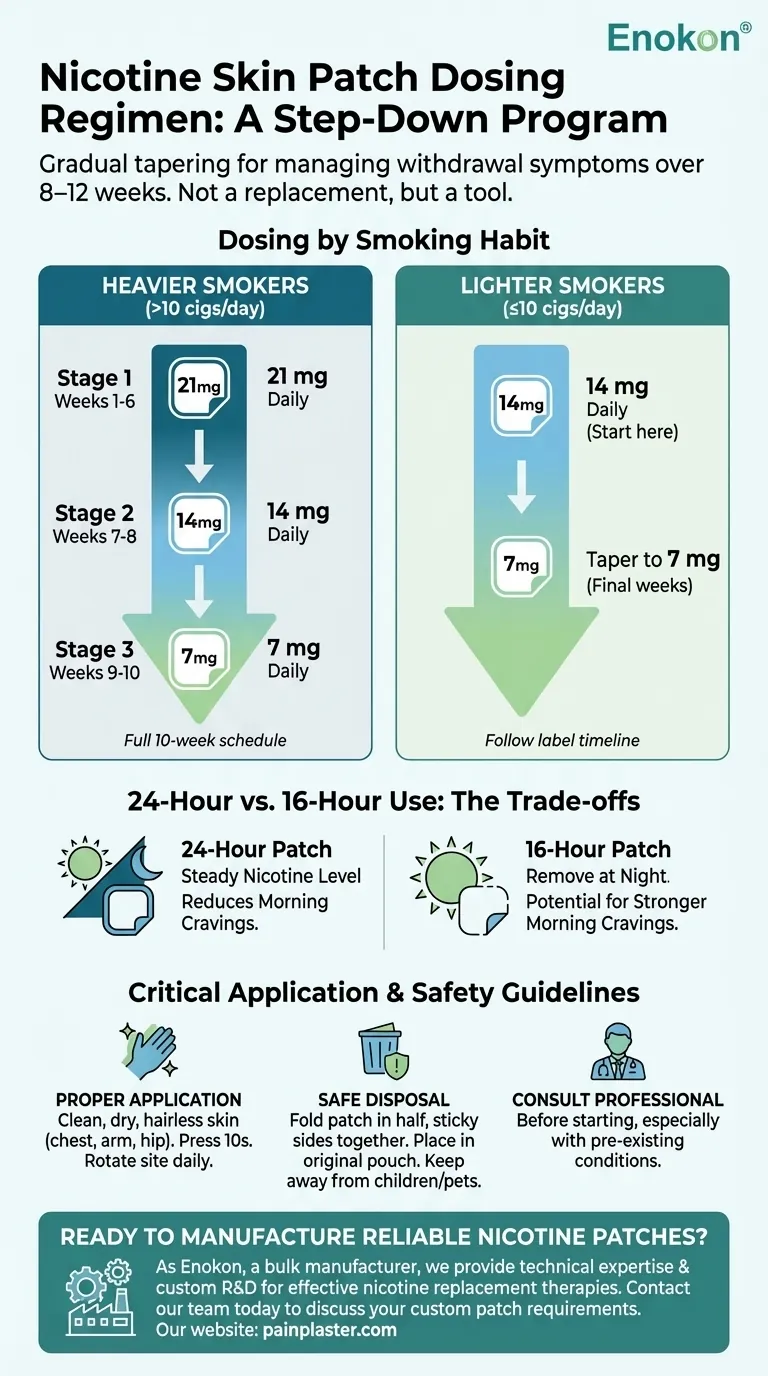
If you smoke more than 10 cigarettes daily, the typical starting dose is a 21 mg patch, worn for 24 hours. This is the highest available strength and is designed to match a heavier nicotine dependence.
The full step-down program for this group generally follows a 10-week schedule:
- Weeks 1-6: Use the 21 mg patch daily.
- Weeks 7-8: Taper down to the 14 mg patch daily.
- Weeks 9-10: Taper down to the 7 mg patch daily.
For Lighter Smokers (10 or fewer cigarettes/day)
If you smoke 10 or fewer cigarettes daily, you should start with a lower dose. The common recommendation is to begin with the 14 mg patch.
You will then follow the subsequent steps of the tapering program, moving to the 7 mg patch for the final weeks before stopping completely. Always follow the specific timeline provided on the product label.
The Role of a Stop-Smoking Program
The nicotine patch is a tool, not a complete solution. Its effectiveness is significantly increased when used as part of a comprehensive stop-smoking program that addresses the behavioral and psychological aspects of addiction.
Understanding the Trade-offs: 24-Hour vs. 16-Hour Use
Most patches are designed for 24-hour use to provide a steady, continuous stream of nicotine. However, you have a choice in how long you wear it each day.
The 24-Hour Patch
Wearing the patch overnight ensures a consistent nicotine level in your system when you wake up. This can significantly reduce the intensity of morning cigarette cravings, which are often the most difficult to overcome.
The 16-Hour Patch
Some individuals may choose to remove the patch before going to bed. The main trade-off for this approach is the potential for stronger nicotine cravings upon waking, as your body has gone several hours without it.
Critical Application and Safety Guidelines
Proper use is essential for both effectiveness and safety. Always follow the specific instructions included with your product.
Proper Patch Application
Apply the patch once a day to a clean, dry, and hairless area of skin. Good locations include the upper chest, upper arm, or hip.
Press the patch firmly onto the skin with the palm of your hand for about 10 seconds to ensure it is sealed. Wash your hands with water after applying.
To avoid skin irritation, rotate the application site each day. Do not apply a new patch to the same spot for at least a week.
Safe Storage and Disposal
Store patches at room temperature in their sealed pouch, away from heat and moisture.
After removing a used patch, fold it in half with the sticky sides together. Place it back into its original storage pouch and dispose of it in a place that is safely out of reach of children and pets.
When to Consult a Professional
Before starting, speak with a doctor or pharmacist if you have pre-existing medical conditions. This is especially important for those with heart disease, uncontrolled high blood pressure, or a history of allergies.
Making the Right Choice for Your Quit Journey
The goal is to follow a structured plan that fits your specific needs. The patch helps manage the physical withdrawal, allowing you to focus on the behavioral changes needed to quit for good.
- If you are a heavy smoker (more than 10 cigarettes/day): Start with the highest strength (21 mg) and commit to the full 10-week step-down schedule.
- If you are a lighter smoker (10 or fewer cigarettes/day): Begin with a medium-strength patch (14 mg) and follow the subsequent tapering schedule as directed.
- If you experience intense morning cravings: A 24-hour patch is likely the better choice to maintain a steady nicotine level overnight.
- If you are concerned about overnight nicotine exposure: You can use a 16-hour schedule by removing the patch at night, but be prepared for stronger morning cravings.
Following a structured dosing regimen is a critical component of a successful plan to stop smoking for good.
Summary Table:
| Smoking Level | Starting Dose | Tapering Schedule (Typical) |
|---|---|---|
| Heavy Smoker (>10 cigarettes/day) | 21 mg | Weeks 1-6: 21 mg → Weeks 7-8: 14 mg → Weeks 9-10: 7 mg |
| Light Smoker (≤10 cigarettes/day) | 14 mg | Start with 14 mg, then taper to 7 mg as directed |
Ready to manufacture reliable nicotine patches for your brand?
As Enokon, a bulk manufacturer of high-quality transdermal patches, we provide the technical expertise and custom R&D needed to develop effective nicotine replacement therapies (or other pain relief plasters) for healthcare and pharmaceutical distributors and brands.
Benefit from our reliable production and development support to bring your smoking cessation products to market. Contact our team today to discuss your custom patch requirements.
Visual Guide
Related Products
- Menthol Gel Pain Relief Patch
- Icy Hot Menthol Medicine Pain Relief Patch
- Capsaicin Chili Medicated Pain Relief Patches
- Lidocaine Hydrogel Pain Relief Patch for Pain Relief
- Silicone Scar Sheets Patch Transdermal Drug Patch
People Also Ask
- How do pain relief patches compare to other pain relief methods? Discover Targeted, Long-Lasting Relief
- How effective are pain relief patches for muscle pain? Target Localized Pain with Transdermal Delivery
- Who should consult a healthcare professional before using pain relief patches? Ensure Your Safety with Medical Advice
- What are some common applications of pain relief patches? Effective Relief for Muscle & Joint Pain
- What are pain relief patches and how do they work? Discover Non-Invasive Pain Management




