
The generic name for the Butrans skin patch is the buprenorphine transdermal system. This means the active medication, buprenorphine, is delivered continuously through a patch placed on the skin. It is prescribed for managing severe, long-term pain.
While knowing the generic name is useful for cost and clarity, the more critical understanding is that buprenorphine is not a typical opioid. Its unique properties create a different profile of effectiveness and risk that you must be aware of.
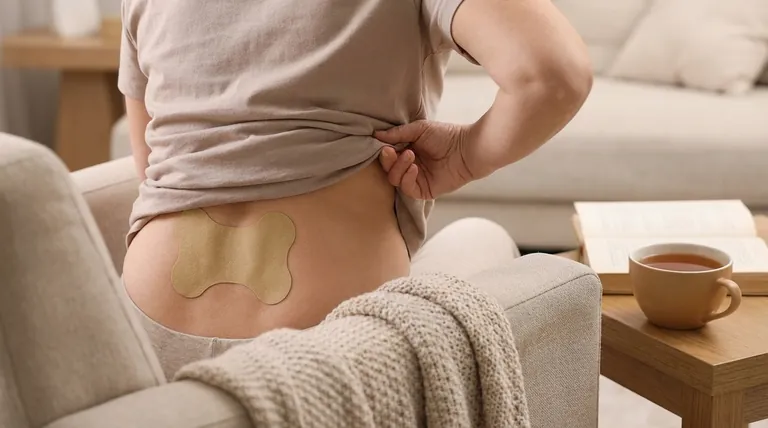
How Buprenorphine Works
Understanding how this medication functions is key to using it safely and effectively. It operates differently from more common opioids like morphine or oxycodone.
The Partial Opioid Agonist Mechanism
Buprenorphine is classified as a partial opioid agonist. This means it binds to and activates the same opioid receptors in the brain as other opioids, but only partially.
This partial activation is enough to provide significant pain relief but is less intense than that produced by full agonists (like morphine).
The "Ceiling Effect"
A direct result of its partial agonist nature is the ceiling effect. After a certain dose, taking more buprenorphine does not produce stronger effects or greater euphoria.
This characteristic can lower the risk of respiratory depression—the dangerous slowing of breathing that causes fatal opioid overdoses—compared to full agonist opioids. However, the risk is not zero.
Why a Skin Patch?
Using a transdermal patch allows the medication to be absorbed slowly and consistently into the bloodstream over a seven-day period.
This delivery method is designed to provide stable, around-the-clock pain control, avoiding the peaks and troughs associated with oral "as-needed" pain medication.
Who Is This Medication For?
The buprenorphine patch is not a first-line treatment for all types of pain. Its use is highly specific.
Indication: Severe and Chronic Pain
Butrans, or its generic equivalent, is only indicated for pain that is severe enough to require daily, around-the-clock, long-term opioid treatment and for which alternative treatments are inadequate.
Not for Acute or "As-Needed" Pain
This patch should never be used for acute pain, post-surgical pain, or pain that is mild or intermittent. Its slow onset and long duration make it entirely unsuitable for immediate pain relief.
Understanding the Trade-offs and Risks
Like any powerful medication, the buprenorphine patch comes with significant risks and side effects that must be carefully managed.
Risk of Addiction and Dependence
Even as a partial agonist, buprenorphine is an opioid. It carries a serious risk of addiction, abuse, and misuse.
Physical dependence is also expected with long-term use. This means you will experience withdrawal symptoms if the medication is stopped suddenly.
Common Side Effects
Patients often experience side effects, including nausea, headache, dizziness, constipation, and drowsiness. It is also common to have skin irritation, itching, or a rash at the patch application site.
The Limits of the Ceiling Effect
While the ceiling effect adds a layer of safety, it does not eliminate risk, especially if combined with other central nervous system depressants like alcohol, benzodiazepines, or sedatives.
Furthermore, this effect can make it difficult to treat new, acute pain (like from an injury) because giving additional full-agonist opioids may be less effective.
Making the Right Choice for Your Goal
Navigating pain management requires clear communication with your healthcare provider. Understanding your medication is a crucial part of that conversation.
- If your primary focus is cost: Asking your doctor or pharmacist specifically for the "buprenorphine transdermal system" is the correct way to request the generic version.
- If your primary focus is safety: You must disclose all other medications and substances you use, especially alcohol or sedatives, as the combination can still be dangerous.
- If your primary focus is consistent pain relief: The 7-day patch is designed for stable, long-term pain and is not a tool for managing sudden flare-ups.
Being an informed participant in your own healthcare is the most reliable path to a safe and effective outcome.
Summary Table:
| Key Aspect | Details |
|---|---|
| Generic Name | Buprenorphine Transdermal System |
| Primary Use | Severe, chronic pain requiring around-the-clock treatment |
| Key Mechanism | Partial opioid agonist with a ceiling effect |
| Delivery Method | 7-day transdermal patch for stable relief |
| Important Note | Not for acute or post-surgical pain |
Need a reliable transdermal patch solution? As Enokon, a bulk manufacturer of trusted transdermal patches and pain plasters, we partner with healthcare and pharmaceutical distributors and brands. Our technical expertise ensures high-quality, consistent delivery systems. Benefit from our custom R&D and development services to create the perfect patch for your needs. Contact our experts today to discuss your project.
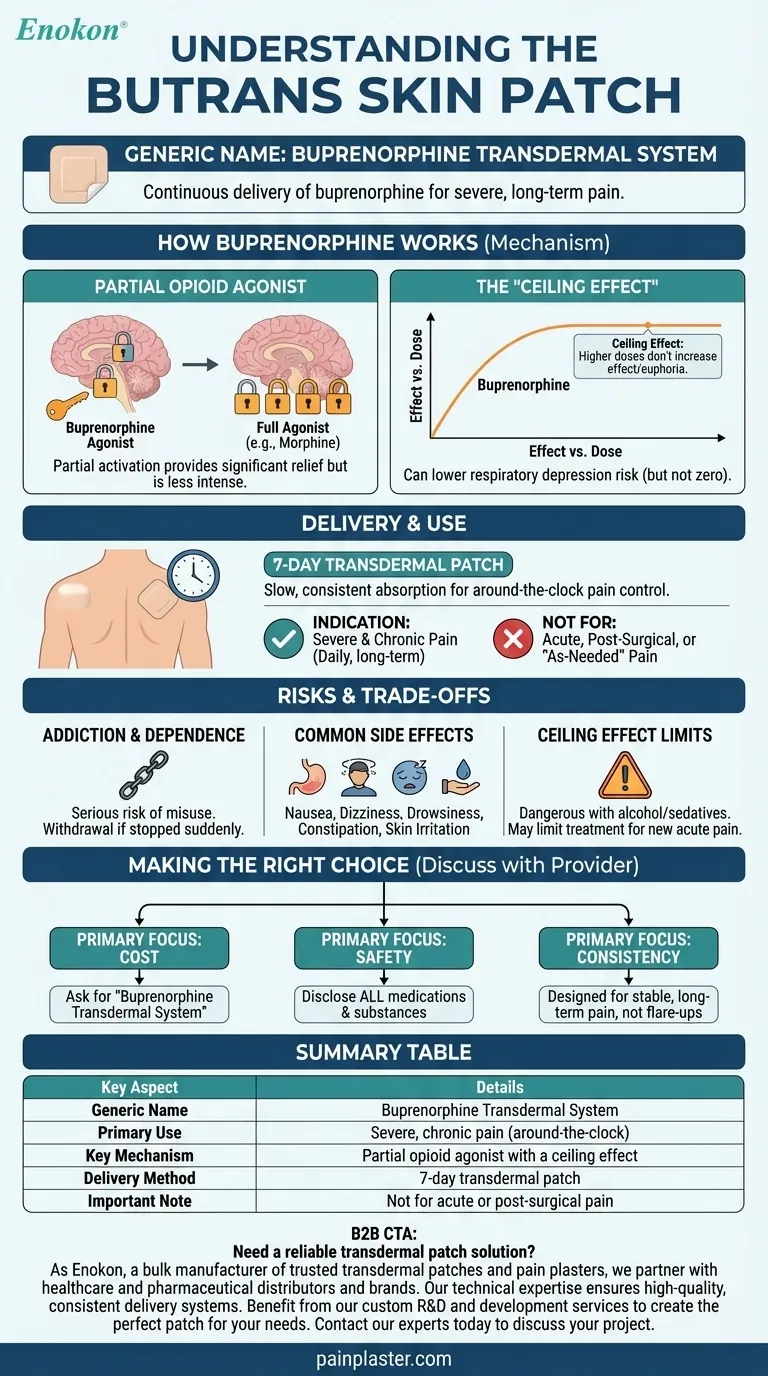
Visual Guide
Related Products
- Menthol Gel Pain Relief Patch
- Far Infrared Heat Pain Relief Patches Transdermal Patches
- Icy Hot Menthol Medicine Pain Relief Patch
- Cooling Fever Patches Color Change Cold Fever Patch
- Mugwort Wormwood Pain Relief Patch for Neck Pain
People Also Ask
- How effective are pain relief patches for muscle pain? Target Localized Pain with Transdermal Delivery
- How do pain relief patches compare to other pain relief methods? Discover Targeted, Long-Lasting Relief
- Who should consult a healthcare professional before using pain relief patches? Ensure Your Safety with Medical Advice
- What are the different types of pain relief patches available? Find the Right Solution for Your Pain
- What are pain relief patches and how do they work? Discover Non-Invasive Pain Management






