Selecting a specific Molecular Weight Cut-Off (MWCO) is the technical foundation for ensuring that in vitro release data accurately reflects a product's true efficacy. By establishing a precise semi-permeable barrier, the MWCO allows active small molecules to diffuse into a receptor medium while successfully retaining large polymers, lipid vesicles, and formulation excipients. This separation is essential to confirm that the analytical results measure the drug's release rate rather than the passage of the entire formulation matrix.
Core Takeaway: Choosing the correct MWCO is a critical quality control measure that validates the sustained-release profile of a formulation. It ensures that B2B partners receive scientifically sound data, proving that the active ingredients are being delivered as intended without interference from the delivery vehicle itself.
The Mechanism of Precision Filtration
Establishing a Semi-Permeable Barrier
The dialysis membrane acts as a gatekeeper during the diffusion process. By selecting a specific MWCO—such as 3.5 kDa or 12–14 kDa—manufacturers can simulate biological barriers like the skin’s stratum corneum.
Isolating Active Ingredients from the Matrix
In complex formulations like nanoliposomes or organogels, the active ingredient is often encapsulated within a larger structure. The MWCO ensures these large macromolecular structures remain trapped, while only the "free" drug molecules pass through for measurement.
Accurate Kinetic Monitoring
A precise MWCO allows researchers to track slow-release kinetic behavior over time. This data is vital for brands that market "time-release" or "long-lasting" benefits, as it provides the empirical evidence needed to back those claims.
Ensuring Data Integrity for Global Brands
Eliminating Matrix Interference
If a membrane allows the entire formulation matrix to pass through, the resulting data is a false positive. Enterprise-level R&D relies on MWCO selection to ensure that impurities and carrier particles do not skew the concentration readings of the active ingredient.
Validating Entrapment Efficiency
For B2B resellers and brand owners, knowing the entrapment efficiency is key to product potency. The MWCO allows for the physical separation of unencapsulated drugs from the delivery system, providing a clear window into how much of the active ingredient is actually "loaded" into the carrier.
Supporting Regulatory Compliance
High-volume manufacturing for global markets requires GMP-certified testing protocols. Utilizing specific MWCO membranes is a standard technical requirement for providing the reproducible, high-quality data packages expected by international regulatory bodies.
Understanding the Trade-offs and Pitfalls
The Risk of Over-Sized MWCO
Selecting an MWCO that is too high can lead to "matrix leakage." If the pore size is too large, intact nano-vesicles or polymer fragments may enter the receptor medium, leading to an overestimation of the drug's release rate and a failed stability profile.
The Consequences of Under-Sized MWCO
Conversely, an MWCO that is too low creates artificial resistance. This may trap the active ingredient unnecessarily, resulting in a false "slow-release" profile that does not reflect the product's actual performance in a physiological environment.
Membrane Material Compatibility
Beyond the cut-off point, the material of the membrane (such as regenerated cellulose) must be chemically compatible with the formulation. Interaction between the drug and the membrane surface can lead to "binding," which artificially reduces the detected release levels.
How to Align Selection with Your Product Goals
Selecting the right MWCO is a balance between the molecular weight of your active ingredient and the size of your delivery vehicle.
- If your primary focus is high-potency small molecules: Use a lower MWCO (e.g., 3.5 kDa) to ensure even the smallest matrix components are excluded from your data.
- If your primary focus is complex lipid nanocarriers: Utilize a mid-range MWCO (e.g., 12–14 kDa) to allow for free diffusion while securely retaining larger transethosomes or liquid crystals.
- If your primary focus is verifying sustained-release marketing claims: Ensure your R&D partner uses a validated MWCO protocol that mimics physiological barriers to provide credible, consumer-facing data.
The strategic selection of an MWCO is a hallmark of rigorous R&D, ensuring that every batch delivered meets the highest standards of performance and transparency.
Summary Table:
| MWCO Selection | Impact on Data Accuracy | Technical Consequence |
|---|---|---|
| Correct MWCO | High (Validated kinetics) | Successfully isolates active molecules from the formulation matrix. |
| Too High | Overestimated release rates | Matrix leakage; large vesicles pass through, causing false positives. |
| Too Low | Underestimated release rates | Artificial resistance; active ingredients are trapped, causing false slow-release. |
| Incompatible Material | Inaccurate concentration | Chemical binding between drug and membrane reduces detected release levels. |
Partner with Enokon for Proven Transdermal Excellence
Maximize your product's market potential with Enokon, a trusted manufacturer and leader in transdermal drug delivery. We provide brand owners, distributors, and B2B resellers with turnkey contract R&D and massive production capacity across our GMP-certified facilities.
Our expertise ensures that your formulations—from Lidocaine and Menthol pain relief to Herbal and Medical Cooling Gel patches—are backed by rigorous scientific validation and precise R&D protocols (excluding microneedle technology).
Why choose Enokon?
- Custom Formulations: Tailored R&D to meet specific therapeutic needs.
- Global Compliance: High-quality data packages for international regulatory standards.
- Scalable Manufacturing: Reliable high-volume delivery for global wholesalers.
Ready to elevate your brand with scientifically sound, high-performance patches? Contact our expert team today for wholesale and OEM/ODM solutions!
References
- Jirapornchai Suksaeree, Chaowalit Monton. Madecassoside and Asiaticoside-Loaded Film-Forming Polymeric Solutions Based on Hypromellose E5 and Eudragit® NE 30D. DOI: 10.48048/tis.2022.796
This article is also based on technical information from Enokon Knowledge Base .
Related Products
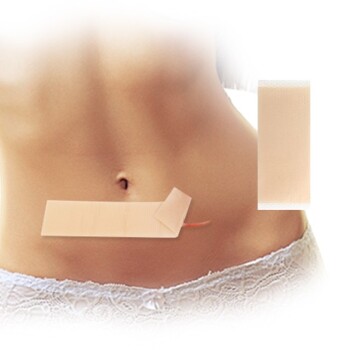
- Silicone Scar Sheets Patch Transdermal Drug Patch
- Mugwort Wormwood Pain Relief Patch for Neck Pain
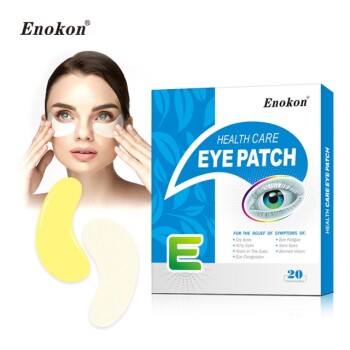
- Hydra Gel Health Care Eye Patch
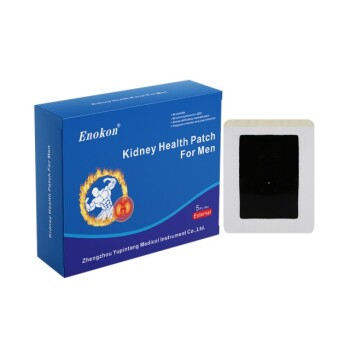
- Prostate Pain Kidney Health Care Patch for Men
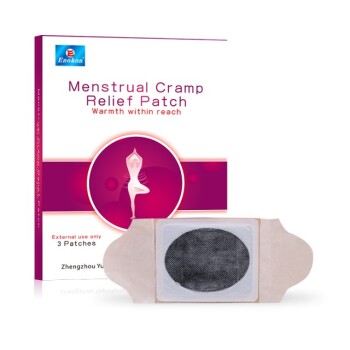
- Heating Pain Relief Patches for Menstrual Cramps
People Also Ask
- What is the function of PDMS-NH2 in silicone patches? Catalyzing Room-Temp Curing for Heat-Sensitive APIs
- What role does a silicone-based transdermal delivery system play in Parkinson's? Enhancing Early-Stage Patient Care
- Why is TEOS used as a cross-linking agent in silicone transdermal patches? Ensure Structural Integrity & Drug Stability
- How do PEG 200 and Glycerol modify silicone transdermal patches? Optimize Drug Release and Patch Flexibility
- How is the long-term skin tolerance of silicone-based transdermal patches evaluated in clinical settings? R&D and Safety