
In the European Union, the capsaicin 8% dermal patch is specifically indicated for the treatment of peripheral neuropathic pain (PNP) in adult patients. It is approved for use either as a standalone treatment (monotherapy) or in combination with other pain-relieving medications.
The core value of the capsaicin 8% patch lies in its targeted approach. It delivers a high-concentration dose directly to the source of pain, acting on specific nerve receptors to provide localized, long-lasting relief from a single application.
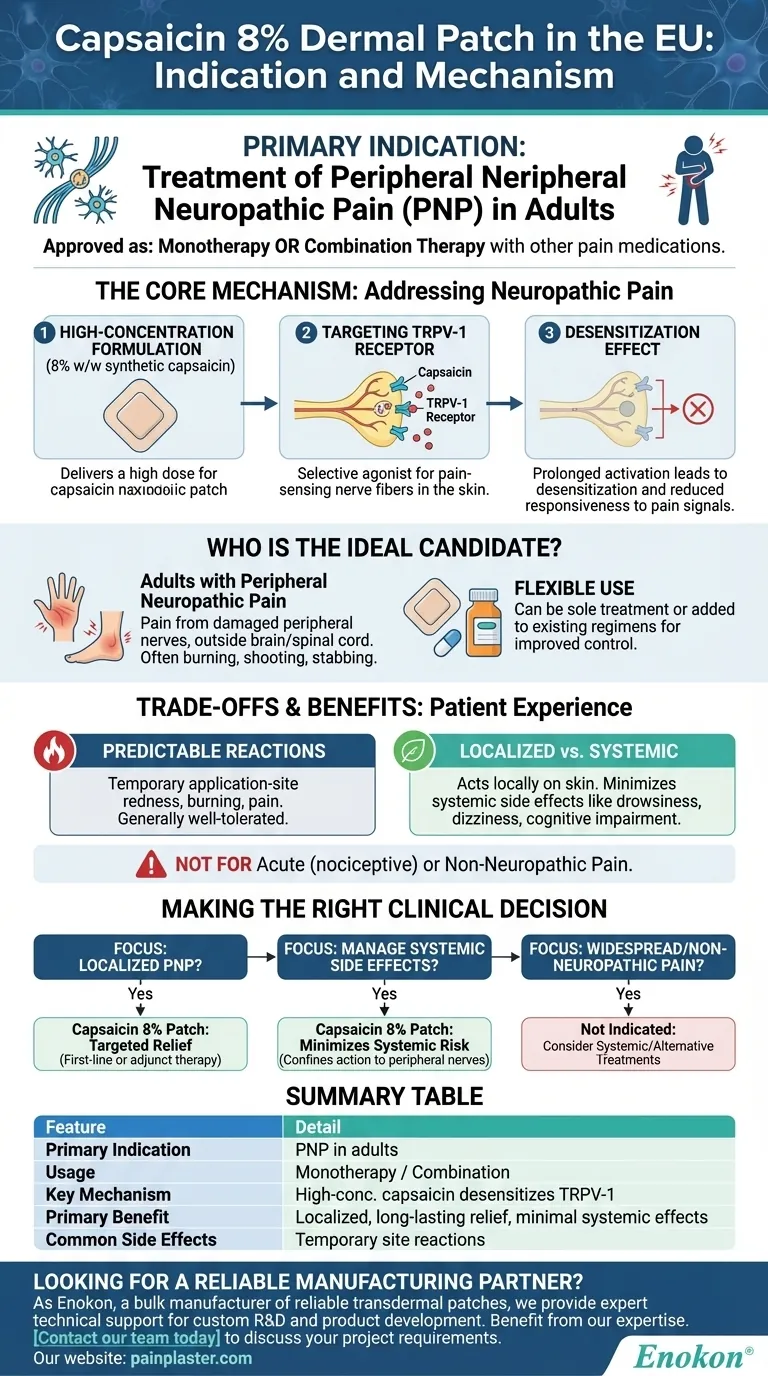
The Core Mechanism: How Capsaicin Addresses Neuropathic Pain
A High-Concentration Formulation
The patch contains an 8% weight-for-weight (w/w) concentration of synthetic capsaicin. This is a significantly high dose designed for clinical application to achieve a therapeutic effect that lower-concentration topical creams cannot.
Targeting the TRPV-1 Receptor
Capsaicin is a highly selective agonist for a receptor known as the transient receptor potential vanilloid-1 (TRPV-1). These receptors are found on the ends of pain-sensing nerve fibers in the skin.
The Desensitization Effect
When the high-concentration capsaicin binds to these TRPV-1 receptors, it initially causes a warming or burning sensation. However, this prolonged activation ultimately overwhelms the nerve endings, causing them to become desensitized and less responsive to painful stimuli for an extended period.
Who Is the Ideal Candidate for This Treatment?
Adults with Peripheral Neuropathic Pain
The indication is specific to pain that originates from damaged or dysfunctional nerves in the peripheral nervous system—that is, outside of the brain and spinal cord. This can result from various conditions, and the pain is often described as burning, shooting, or stabbing.
Use as Monotherapy or Combination Therapy
The flexibility of the indication is a key feature. The patch can be the sole treatment for a patient's localized neuropathic pain, or it can be added to an existing regimen of oral or other pain medications to improve pain control.
Understanding the Trade-offs and Patient Experience
Predictable Application-Site Reactions
The most common adverse events are related to the patch's mechanism of action. Patients should expect temporary, localized reactions at the application site, such as redness, burning, or pain, which are generally well-tolerated and transient.
Not for Acute or Non-Neuropathic Pain
It is critical to understand that this treatment is specifically for neuropathic pain. It is not indicated for acute pain from an injury (nociceptive pain) or pain originating from the central nervous system.
A Localized vs. Systemic Approach
A major advantage of the patch is that it acts locally on the skin. This minimizes the systemic side effects often associated with oral neuropathic pain medications, such as drowsiness, dizziness, or cognitive impairment.
Making the Right Clinical Decision
- If your primary focus is localized neuropathic pain: The capsaicin 8% patch is a first-line or adjunct therapy designed for this exact scenario, offering targeted relief.
- If your primary focus is managing systemic side effects: The patch provides a significant advantage by confining its action to the peripheral nerves, avoiding widespread effects.
- If your primary focus is widespread or non-neuropathic pain: This therapy is not indicated, and systemic or alternative treatments should be considered.
Understanding its precise mechanism and specific indication is the key to effectively integrating this therapy into a comprehensive pain management strategy.
Summary Table:
| Feature | Detail |
|---|---|
| Primary Indication | Treatment of Peripheral Neuropathic Pain (PNP) in adults |
| Usage | Monotherapy or in combination with other pain medications |
| Key Mechanism | High-concentration (8% w/w) capsaicin desensitizes TRPV-1 receptors |
| Primary Benefit | Localized, long-lasting pain relief with minimal systemic side effects |
| Common Side Effects | Temporary application-site reactions (redness, burning, pain) |
Looking for a reliable manufacturing partner for advanced transdermal patches like capsaicin 8%?
As Enokon, a bulk manufacturer of reliable transdermal patches and pain plasters, we provide healthcare and pharmaceutical distributors and brands with expert technical support for custom R&D and product development. Benefit from our expertise to bring targeted, effective pain management solutions to market.
Contact our team today to discuss your project requirements.
Visual Guide
Related Products
- Capsaicin Chili Medicated Pain Relief Patches
- Heat Relief Capsicum Patch for Lower Back Pain Relief
- Menthol Gel Pain Relief Patch
- Lidocaine Hydrogel Pain Relief Patch for Pain Relief
- Icy Hot Menthol Medicine Pain Relief Patch
People Also Ask
- What conditions should be reported to a care team before using capsaicin patches? Ensure Safe Pain Relief
- What conditions can capsaicin creams and patches help relieve? Find Targeted Pain Relief for Nerves & Joints
- What are the uses of nonprescription capsaicin patches? Natural Pain Relief for Muscles & Joints
- What should be avoided while using capsaicin patches? Essential Safety Tips for Effective Pain Relief
- How are capsaicin patches administered? A Guide to Clinical vs. At-Home Use




