
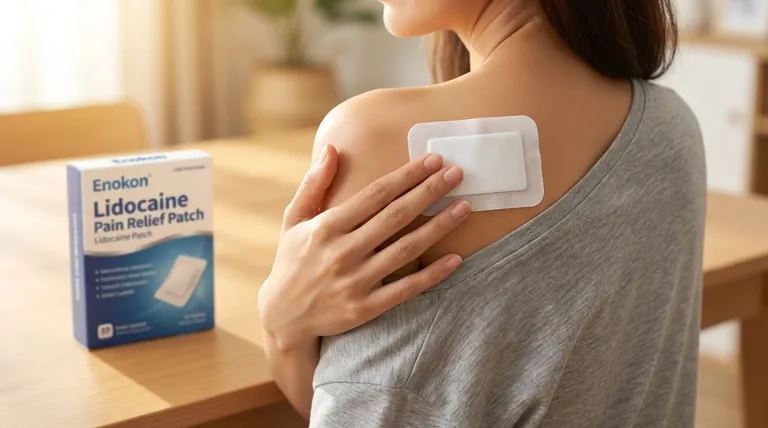
At its core, a lidocaine patch is a targeted pain relief system. It is a topical painkiller applied directly to the skin to deliver a local anesthetic, lidocaine, to a specific, painful area, effectively numbing it without affecting your entire body.
The fundamental purpose of a lidocaine patch is to block pain signals at their source. By continuously releasing a local anesthetic through the skin, it provides localized, long-lasting relief for certain types of pain, bypassing the systemic effects of oral medications.
How Lidocaine Patches Target Pain
The Mechanism of Action
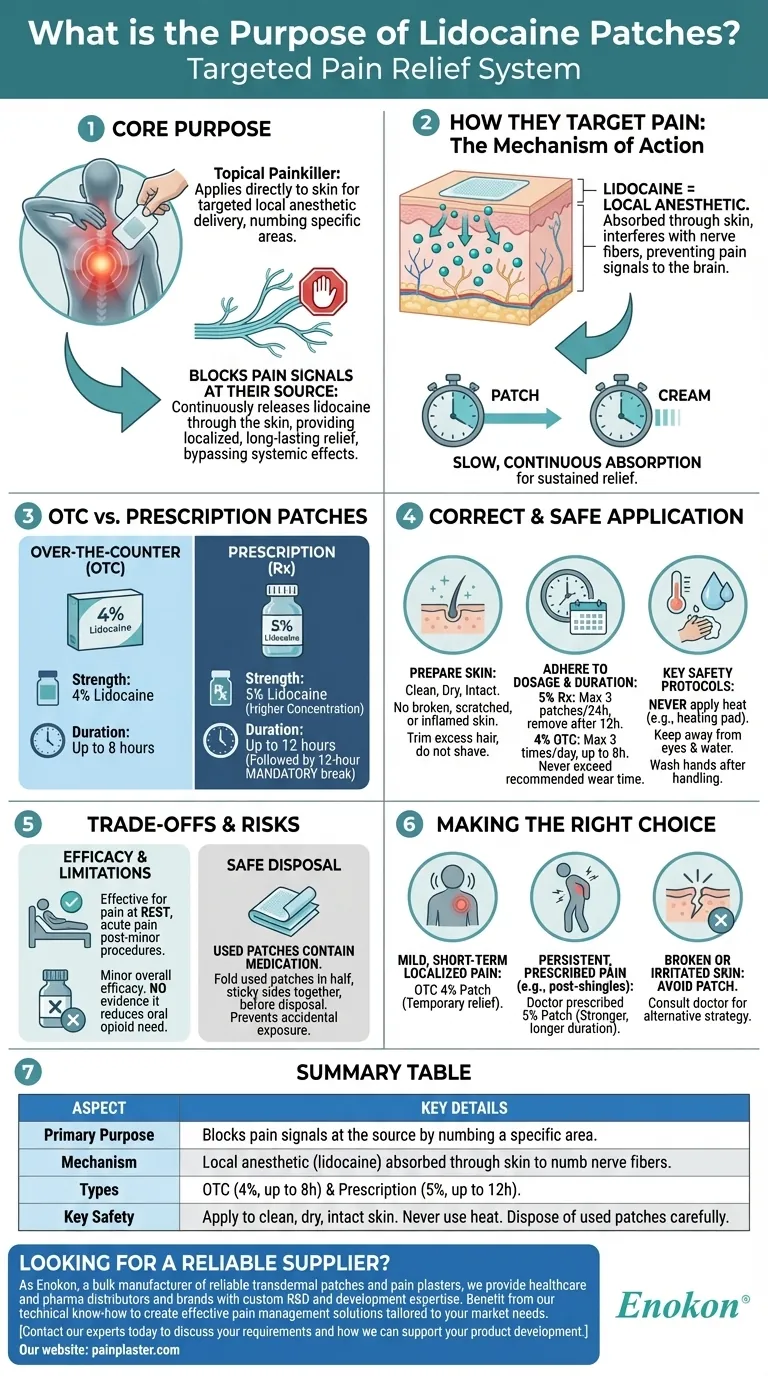
Lidocaine is a local anesthetic. When absorbed through the skin from the patch, it directly interferes with nerve fibers in that specific area.
This action prevents the nerves from sending pain signals to your brain. The patch delivery system ensures the medication is absorbed slowly and continuously, providing more sustained relief than a cream or lotion.
Over-the-Counter vs. Prescription Patches
There are two primary strengths available. Over-the-counter (OTC) patches typically contain 4% lidocaine, while prescription versions contain a higher concentration of 5% lidocaine.
The main difference lies in duration and strength. OTC patches can often be worn for up to 8 hours, while the more potent prescription patches are usually worn for 12 hours, followed by a mandatory 12-hour break.
Correct and Safe Application
Preparing the Skin
Proper application is critical for both safety and effectiveness. The patch must only be applied to skin that is clean, dry, and intact.
Avoid using patches on skin that is broken, scratched, or inflamed. If the area has excess hair, it should be trimmed, not shaved, before application.
Adhering to Dosage and Duration
You must follow the recommended wear time precisely. For a 5% prescription patch, no more than three patches should be applied within a 24-hour period, and they must be removed after 12 hours of use.
For a 4% OTC patch, the typical recommendation is to wear it for up to 8 hours and not use it more than three times a day. Never use a patch for longer than directed.
Understanding the Trade-offs and Risks
Key Safety Protocols
Never apply a source of heat, such as a heating pad, over a lidocaine patch, as this can increase the absorption of the medication and lead to adverse effects.
Patches must be kept away from water and your eyes. After handling a patch, always wash your hands thoroughly.
Efficacy and Limitations
Lidocaine patches are proven to be effective for reducing pain at rest, particularly for acute pain following minor procedures.
However, their overall efficacy is generally considered minor. There is currently no evidence that their use reduces the need for oral opioid painkillers.
Safe Storage and Disposal
Used patches still contain a significant amount of active medication. To prevent accidental exposure, especially to children and pets, fold used patches in half with the sticky sides together before disposing of them safely.
Making the Right Choice for Your Goal
Consulting a healthcare professional is essential before starting any treatment for chronic pain. Based on the common use cases, you can determine the best approach.
- If your primary focus is managing mild, short-term localized pain: An over-the-counter 4% patch is a logical starting point for temporary relief.
- If your primary focus is addressing persistent, prescribed pain (like post-shingles nerve pain): A doctor may prescribe a 5% patch for stronger, longer-duration relief as part of a comprehensive treatment plan.
- If your skin in the painful area is broken or irritated: You must avoid using a patch and consult your doctor for a different pain management strategy.
By understanding their specific mechanism and adhering strictly to safety guidelines, lidocaine patches can serve as a valuable tool for targeted pain management.
Summary Table:
| Aspect | Key Details |
|---|---|
| Primary Purpose | Blocks pain signals at the source by numbing a specific area. |
| Mechanism | Local anesthetic (lidocaine) absorbed through the skin to numb nerve fibers. |
| Types | OTC (4% lidocaine, up to 8 hours) & Prescription (5% lidocaine, up to 12 hours). |
| Key Safety | Apply to clean, dry, intact skin. Never use heat. Dispose of used patches carefully. |
Looking for a reliable supplier of high-quality transdermal patches?
As Enokon, a bulk manufacturer of reliable transdermal patches and pain plasters, we provide healthcare and pharma distributors and brands with custom R&D and development expertise. Benefit from our technical know-how to create effective pain management solutions tailored to your market needs.
Contact our experts today to discuss your requirements and how we can support your product development.
Visual Guide
Related Products
- Lidocaine Hydrogel Pain Relief Patch for Pain Relief
- Herbal Medicated Anti Diarrhea Patch for Digestive Relief
- Menthol Gel Pain Relief Patch
- Icy Hot Menthol Medicine Pain Relief Patch
- Asthma Cough and Pain Relief Patch for Adults and Kids
People Also Ask
- How does the aqueous base in a lidocaine patch contribute to drug delivery? Unlocking Sustained Pain Relief Technology
- What are the advantages of topical anesthetics over invasive Lidocaine infiltration? Discover Safer, Scalable Relief
- Which pain patch is most effective for arthritis? Find the Best Relief for Your Joint Pain
- Will a GP routinely continue prescribing lidocaine patches after the initial period? Understanding Short-Term Pain Relief
- Why are lidocaine patches preferred over oral medications? Targeted Relief & Scale Your Brand with OEM R&D Solutions



















