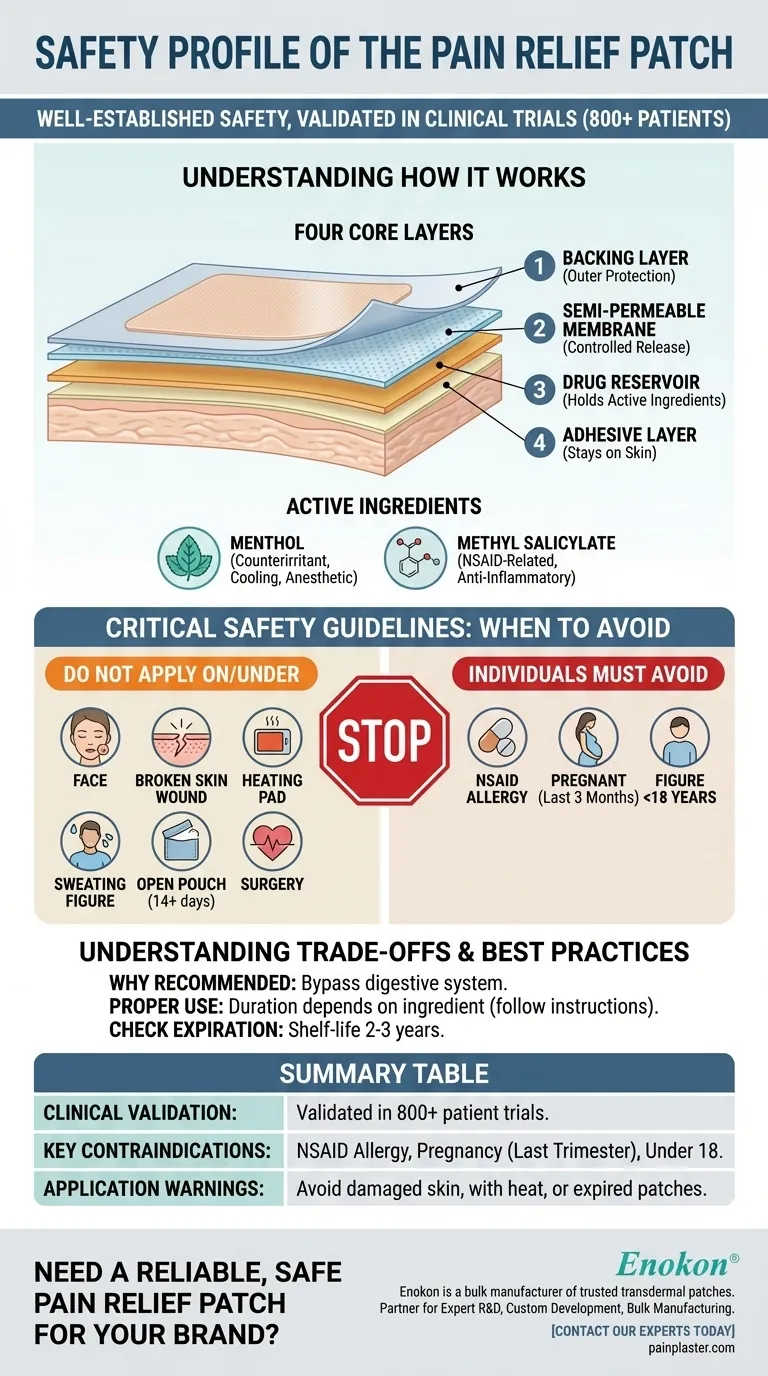
For the most part, the pain relief patch has a well-established safety profile, validated in clinical trials with over 800 patients. Its safety is contingent upon correct usage, as there are specific situations, conditions, and body areas where it must be avoided.
The patch is generally safe and effective when used as directed, but its safety profile is defined by strict limitations. Understanding when not to use it—particularly regarding skin condition, allergies to NSAIDs, and pregnancy—is critical to avoiding adverse effects.
Understanding How the Patch Delivers Relief
To appreciate the safety guidelines, it’s helpful to understand the patch's mechanics. It is not simply a sticker; it's a multi-layered system designed for controlled drug delivery through the skin.
The Four Core Layers
A pain patch typically consists of four distinct layers working in concert.
- Adhesive Layer: This ensures the patch stays firmly on the skin.
- Drug Reservoir: This layer holds the active pain-relieving ingredients.
- Semi-permeable Membrane: This is a critical component that controls the rate at which the medication is released into the skin.
- Backing Layer: The outer layer protects the patch from the environment and prevents the medication from leaking.
The Active Ingredients
The primary active ingredients in this patch are Menthol and Methyl Salicylate.
Menthol acts as a counterirritant, creating a cooling sensation that distracts from the pain and has a local anesthetic effect. It also helps suppress inflammatory mediators.
Methyl Salicylate is related to aspirin and is converted to salicylic acid in the skin. This provides an anti-inflammatory effect by inhibiting prostaglandin production, similar to other NSAIDs (nonsteroidal anti-inflammatory drugs).
Critical Safety Guidelines: When to Avoid Use
The effectiveness of this patch is matched by a clear set of contraindications. Adhering to these rules is essential for safe use.
Do Not Apply Under These Conditions
You must not use the patch in several specific situations:
- On the face, on rashes, or on wounds and damaged skin.
- In conjunction with a heating pad.
- When sweating heavily, such as during exercise or in high heat.
- If the pouch containing the patch has been open for 14 days or more.
- Right before or immediately after heart surgery.
Individuals Who Must Avoid This Patch
Certain individuals should not use this product due to heightened risks:
- Anyone with an allergy to aspirin or other NSAIDs like ibuprofen or naproxen.
- Women during the last three months of pregnancy.
- Individuals under 18 years of age.
Understanding the Trade-offs and Best Practices
A healthcare provider may recommend a patch for a clear reason: it delivers medication directly to the site of pain while bypassing the digestive system.
Why a Patch Might Be Recommended
Patches are a valuable alternative for patients who cannot take oral medications. This is often due to stomach irritation or other conditions that make swallowing pills difficult or unsafe.
Proper Use is Non-Negotiable
The duration and frequency of use depend entirely on the active ingredient. While this patch contains menthol, other patches like diclofenac are applied twice daily, and prescription fentanyl is applied every 72 hours. Always follow the specific instructions for your product or from your provider.
Check the Expiration Date
The patch has a shelf-life of two to three years from its production date. Always check the expiration date printed on the box before use to ensure its potency and safety.
Making the Right Choice for Your Pain
To use this patch safely and effectively, align its use with your specific health profile and pain management goals.
- If your primary focus is avoiding NSAID-related allergies: Do not use this patch if you have a known sensitivity to aspirin or other NSAIDs.
- If you have broken, irritated, or sensitive skin: Never apply the patch to any area that is not clean, dry, and completely intact.
- If your pain is severe, chronic, or undiagnosed: Consult a healthcare professional to ensure this is the most suitable option for your specific type of pain.
Ultimately, informed and cautious use is the key to leveraging the benefits of a pain relief patch while avoiding its risks.
Summary Table:
| Safety Consideration | Key Details |
|---|---|
| Clinical Validation | Safety profile validated in trials with over 800 patients. |
| Active Ingredients | Menthol (counterirritant) and Methyl Salicylate (NSAID-related). |
| Key Contraindications | Allergy to NSAIDs, last trimester of pregnancy, age under 18. |
| Application Warnings | Avoid on damaged skin, with heat, or for extended periods without checking expiration. |
| Shelf Life | 2-3 years from production date; check expiration before use. |
Need a reliable, safe pain relief patch for your brand or distributors?
At Enokon, we are a bulk manufacturer of trusted transdermal patches and pain plasters. We understand that a robust safety profile is non-negotiable for your customers.
Partner with us to benefit from:
- Expert R&D: Our technical team ensures formulations meet the highest safety and efficacy standards.
- Custom Development: We tailor patches to your specific needs, from ingredient selection to layer design.
- Bulk Manufacturing: Dependable, high-volume production for healthcare and pharma brands.
Let's develop a safe and effective pain management solution together. Contact our experts today to discuss your project!
Visual Guide
Related Products
- Icy Hot Menthol Medicine Pain Relief Patch
- Mugwort Wormwood Pain Relief Patch for Neck Pain
- Far Infrared Pain Patch Relief Pain Reliever for Back
- Menthol Gel Pain Relief Patch
- Far Infrared Deep Heat Relief Patches Medicated Pain Relief Patches
People Also Ask
- What should you consider when choosing between a pain relief patch and a cream? Key Factors for Effective Pain Management
- Can the pain relief patch be used with oral pain relief products? Avoid Dangerous Drug Interactions
- What alternatives exist for pain relief patches? Compare systemic meds & physical therapy
- What factors should be considered when choosing between pills and patches for pain relief? A Guide to Personalized Pain Management
- What are the benefits of using pain relief patches compared to oral medications? Targeted Relief with Fewer Side Effects