
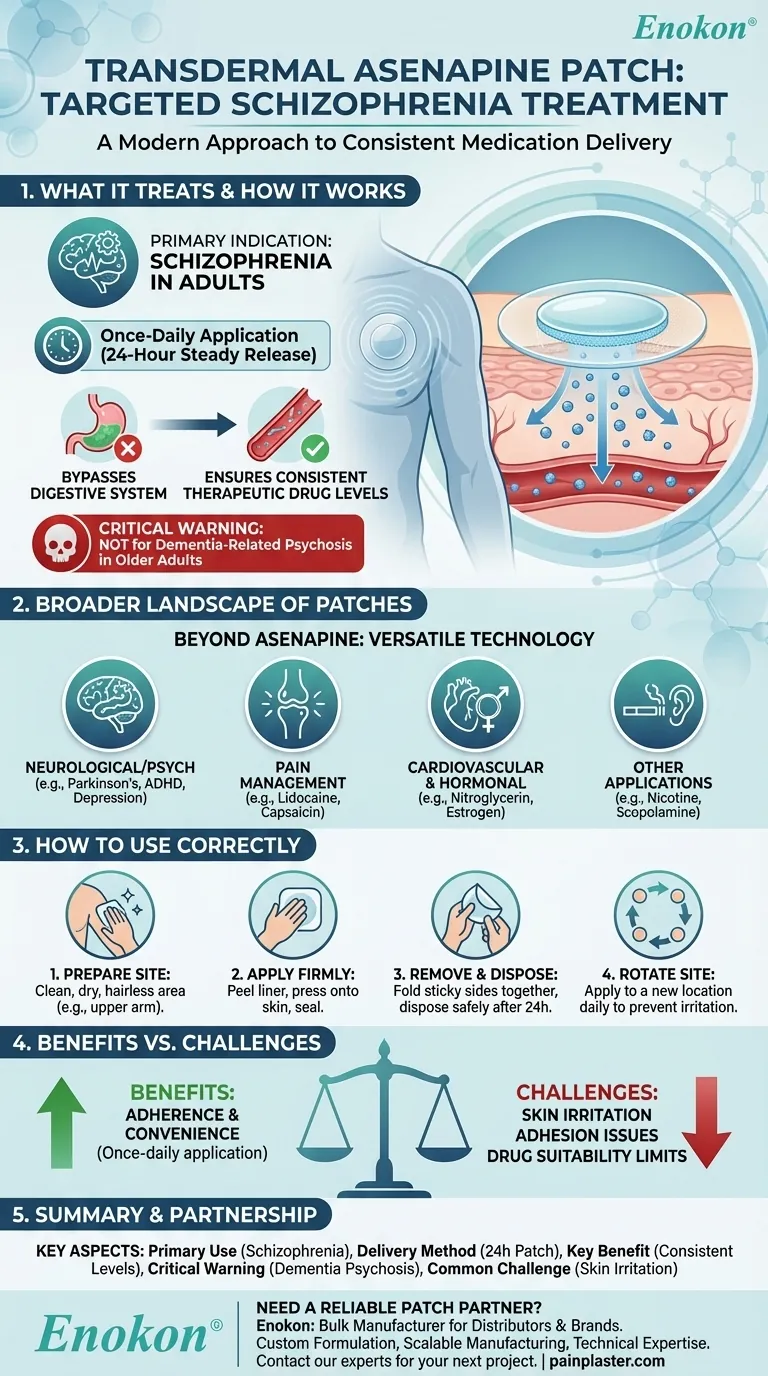
At its core, the transdermal asenapine patch is a targeted medication delivery system specifically approved for the treatment of schizophrenia in adults. It provides a steady dose of the antipsychotic medication asenapine through the skin over a 24-hour period.
The asenapine patch represents a modern approach to managing schizophrenia, leveraging transdermal technology to ensure consistent medication levels. While it offers a specific solution for this condition, it is part of a much broader class of medical patches used for everything from heart conditions to pain management.
What is Asenapine and Why Use a Patch?
Understanding the asenapine patch involves knowing both the medication itself and the reason for its unique delivery method. This approach is chosen to address specific challenges in managing chronic psychiatric conditions.
The Primary Indication: Schizophrenia
The asenapine transdermal system is prescribed for the treatment of schizophrenia. This is its sole approved psychiatric indication.
The patch is designed to be applied once daily, providing a continuous and stable release of the medication into the bloodstream.
The Critical Warning: Dementia-Related Psychosis
There is a significant warning associated with this medication. The asenapine patch should not be used to treat behavioral problems or psychosis in older adult patients who have dementia.
This is a critical safety consideration that healthcare providers strictly adhere to.
The Advantage of Transdermal Delivery
Using a patch instead of an oral pill offers several key benefits. It ensures a consistent therapeutic level of the drug in the body, avoiding the peaks and troughs associated with oral dosing.
This method also bypasses the digestive system, which can be beneficial for patients who experience gastrointestinal side effects from oral medications.
The Broader Landscape of Transdermal Patches
The asenapine patch is one example of a sophisticated drug delivery system used across many areas of medicine. This technology is valued for its convenience and controlled-release capabilities.
Central Nervous System Conditions
Patches are frequently used for neurological and psychiatric conditions. This includes the rotigotine patch for Parkinson's disease and restless legs syndrome, as well as patches for ADHD, Alzheimer's disease, and depression.
Pain Management
Transdermal delivery is a cornerstone of modern pain management. Patches containing lidocaine or capsaicin are used to treat localized pain from conditions like shingles, diabetic neuropathy, and arthritis.
Cardiovascular and Hormonal Health
For cardiovascular health, nitroglycerin patches are used to prevent angina (chest pain). In hormone therapy, estrogen patches help manage menopause symptoms, and other patches are widely used for contraception.
Other Common Applications
The technology is also applied to other common issues. Nicotine patches are a well-known tool for smoking cessation, while scopolamine patches are effective for preventing motion sickness.
How to Correctly Use a Transdermal Patch
Proper application is essential for the medication to work effectively and safely. The process is straightforward but requires careful attention to detail.
Step 1: Prepare the Application Site
Choose a clean, dry, and hairless area of skin. Common locations include the upper arm, upper back, abdomen, or hip. Avoid areas with cuts, rashes, or irritation.
Step 2: Apply the Patch Firmly
After opening the sealed pouch, peel off the protective liner. Without touching the adhesive, press the sticky side of the patch firmly onto the prepared skin area for several seconds to ensure it is sealed.
Step 3: Removal and Disposal
After 24 hours, or as directed, peel the patch off slowly. Fold it in half with the sticky sides together and dispose of it safely, keeping it away from children and pets.
Step 4: Rotate the Application Site
To prevent skin irritation, apply the new patch to a different location each day. Avoid using the same spot for at least a week.
Understanding the Trade-offs
While transdermal patches offer clear benefits, it's important to recognize their limitations. No single delivery method is perfect for every patient or every medication.
Benefit: Adherence and Convenience
For many, applying a patch once a day is simpler and easier to remember than taking multiple pills, which can improve treatment adherence.
Challenge: Skin Irritation
The most common drawback of transdermal patches is local skin irritation, redness, or itching at the application site due to the adhesive or the medication itself.
Challenge: Adhesion Issues
Patches can sometimes peel off or lose adhesion, especially with exposure to water, sweat, or friction. This can lead to an incomplete or interrupted dose.
Limitation: Drug Suitability
Not all medications can be delivered via a patch. The drug's molecular size and the required dosage must be suitable for absorption through the skin, which limits the number of drugs that can use this technology.
Making the Right Choice for Your Goal
Understanding the specific role of the asenapine patch allows for informed discussions with healthcare providers.
- If you are a patient or caregiver: Know that the asenapine patch is a specialized treatment for schizophrenia and that proper daily application and site rotation are critical for its success.
- If you are a healthcare professional: Recognize its specific indication for schizophrenia while being acutely aware of the crucial contraindication in elderly patients with dementia-related psychosis.
- If you are interested in medical technology: View this as a prime example of using transdermal delivery to provide stable dosing for complex, chronic central nervous system disorders.
Ultimately, the transdermal asenapine patch provides a targeted and valuable option for managing a challenging condition through advanced drug delivery.
Summary Table:
| Key Aspect | Details for the Asenapine Patch |
|---|---|
| Primary Use | Treatment of schizophrenia in adults. |
| Delivery Method | Once-daily transdermal patch (24-hour release). |
| Key Benefit | Provides consistent drug levels, avoiding peaks and troughs. |
| Critical Warning | Not for use in elderly patients with dementia-related psychosis. |
| Common Challenge | Potential for skin irritation at the application site. |
Need a reliable partner for your transdermal patch development?
At Enokon, we are a bulk manufacturer of reliable transdermal patches and pain plasters for healthcare and pharmaceutical distributors and brands. Whether you are developing a complex medication like asenapine or a pain management solution, our technical expertise is at your service for custom R&D and product development.
Benefit from our capabilities:
- Custom Formulation: Tailor drug delivery profiles to meet specific therapeutic needs.
- Scalable Manufacturing: From pilot batches to large-scale commercial production.
- Technical Expertise: Navigate the complexities of transdermal technology with an experienced partner.
Contact our experts today to discuss how we can support your next project.
Visual Guide
Related Products
- Silicone Scar Sheets Patch Transdermal Drug Patch
- Far Infrared Heat Pain Relief Patches Transdermal Patches
- Menthol Gel Pain Relief Patch
- Icy Hot Menthol Medicine Pain Relief Patch
- Mugwort Wormwood Pain Relief Patch for Neck Pain
People Also Ask
- What role does a silicone-based transdermal delivery system play in Parkinson's? Enhancing Early-Stage Patient Care
- How is the long-term skin tolerance of silicone-based transdermal patches evaluated in clinical settings? R&D and Safety
- Why is a polarizing microscope used to evaluate the long-term stability of transdermal drug patches? Ensure Efficacy.
- What are common adverse effects of transdermal drug delivery? Risks & Prevention Tips
- What are the advantages of transdermal drug patches? Optimize Medication Delivery with Patches

















