
When using a clonidine transdermal patch, it is critical to be aware of interactions with other substances that also lower blood pressure or cause drowsiness. This includes categories like sleeping pills, opioid pain medications, muscle relaxers, and certain medications for anxiety, depression, or seizures. Alcohol can also significantly amplify these side effects.
The core principle of clonidine interactions is not about complex chemical reactions, but about additive effects. Clonidine's primary actions—reducing blood pressure and causing sedation—are amplified by any other drug, substance, or activity that has a similar effect.

How Clonidine's Mechanism Drives Interactions
Clonidine works by stimulating specific receptors in the brain that relax blood vessels and slow the heart rate. This mechanism is the source of both its therapeutic benefits and its potential interactions.
The Central Nervous System (CNS) Effect
Clonidine has a sedative effect, which means it can cause drowsiness, dizziness, and reduced alertness. This is a common and expected side effect.
The Cardiovascular Effect
The primary purpose of clonidine is to lower blood pressure (antihypertensive effect). It achieves this by calming the part of the nervous system that controls vascular tension.
Key Interaction Categories to Monitor
When another substance shares either of clonidine's core effects, the combined result can be dangerously strong.
Central Nervous System (CNS) Depressants
Any drug that slows down brain activity will compound the drowsiness caused by clonidine. This can impair your ability to drive or operate machinery and increase the risk of falls.
This category includes:
- Alcohol
- Sleeping pills (hypnotics)
- Opioid (narcotic) pain medications
- Muscle relaxers
- Benzodiazepines and other anxiety medications
- Certain antidepressants and seizure medications
Other Antihypertensive Drugs
Taking clonidine with other medications designed to lower blood pressure can cause an excessive drop, a condition known as hypotension.
Symptoms of hypotension include severe dizziness, lightheadedness, fainting, and blurred vision. Always inform your doctor about all blood pressure medications you take.
Common Pitfalls and Critical Safety Precautions
Beyond direct drug interactions, several situations require careful management to ensure your safety while using the clonidine patch.
The Danger of Abrupt Discontinuation
Never stop using clonidine suddenly. Doing so can cause a rapid, dangerous increase in blood pressure known as rebound hypertension. Your doctor will provide a schedule to taper off the dose gradually.
The Risk of Burns During an MRI
The clonidine patch contains aluminum in its backing. This can conduct electricity and heat up during a Magnetic Resonance Imaging (MRI) scan, potentially causing serious skin burns at the patch site. Always remove the patch before an MRI.
Environmental and Lifestyle Factors
Be cautious with activities that can lower your blood pressure or cause dehydration, as these can enhance clonidine's effects. This includes prolonged sun exposure, hot weather, exercise, and alcohol consumption.
Communication is Essential
Always inform all healthcare providers, including doctors and dentists, that you are using clonidine transdermal before any procedure or when receiving a new prescription.
A Proactive Approach to Your Safety
Managing your treatment effectively requires understanding how different factors impact your body.
- If your primary focus is managing blood pressure alongside other medications: Be vigilant for signs of dizziness or lightheadedness, and report them to your doctor, as your dosages may need adjustment.
- If you take any medication for sleep, anxiety, or pain: Be aware that your level of drowsiness may be significantly increased, and avoid driving or other critical tasks until you know how the combination affects you.
- If you plan to have any medical or dental procedure: You must inform the provider you are using a clonidine patch, as it can affect anesthesia and other procedural medications.
Ultimately, maintaining an open and detailed conversation with your healthcare team is the most effective way to ensure your safety and treatment success.
Summary Table:
| Interaction Category | Examples of Substances | Primary Risk |
|---|---|---|
| CNS Depressants | Alcohol, opioids, sleeping pills, muscle relaxers | Severe drowsiness, dizziness, impaired coordination |
| Other Antihypertensives | Other blood pressure medications | Excessively low blood pressure (hypotension) |
| Medical Procedures | MRI scans (due to aluminum backing) | Risk of skin burns at the patch site |
Ensure the safety and efficacy of your transdermal medication. Partner with Enokon, a bulk manufacturer of reliable transdermal patches and pain plasters for healthcare and pharma distributors and brands. Our technical expertise supports custom R&D and development to meet your specific needs. Contact our experts today to discuss your project.
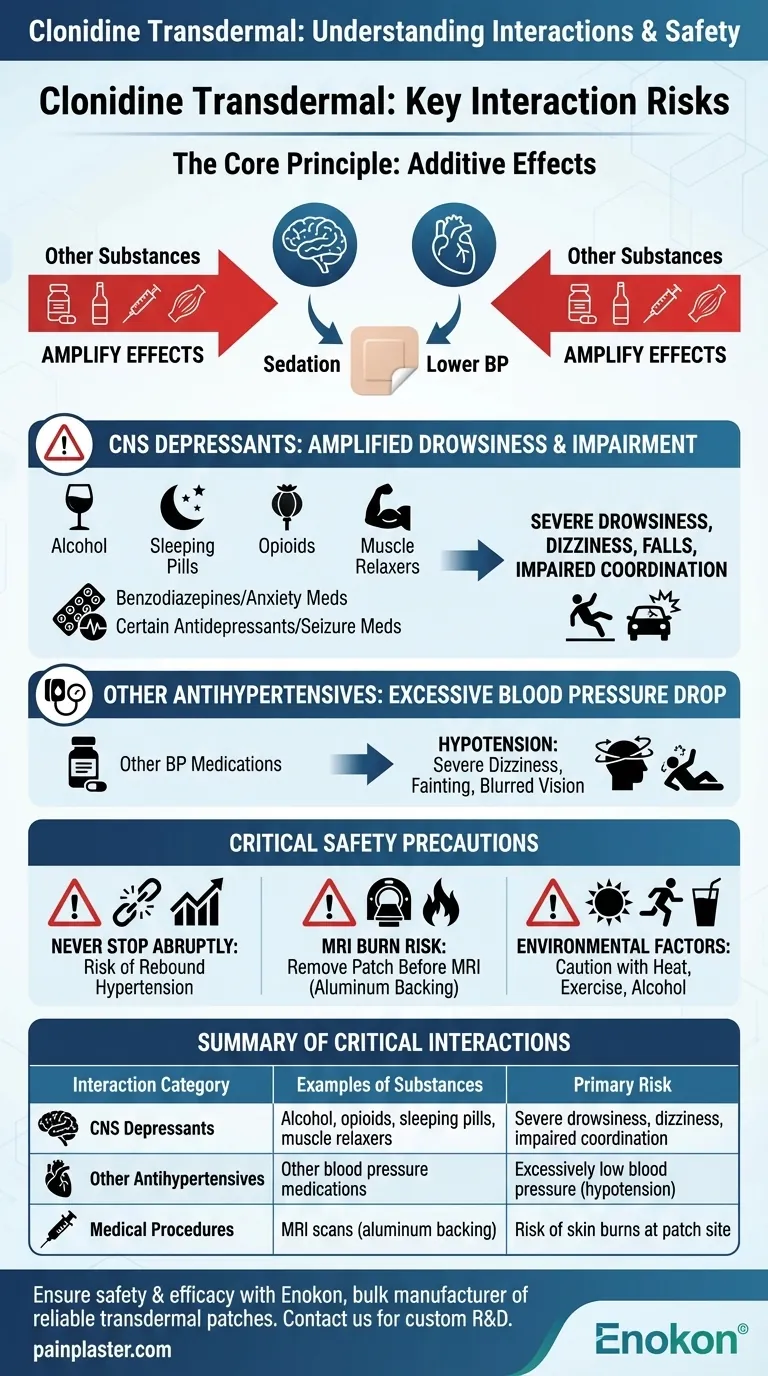
Visual Guide
Related Products
- Far Infrared Heat Pain Relief Patches Transdermal Patches
- Silicone Scar Sheets Patch Transdermal Drug Patch
- Menthol Gel Pain Relief Patch
- Icy Hot Menthol Medicine Pain Relief Patch
- Mugwort Wormwood Pain Relief Patch for Neck Pain
People Also Ask
- Why is the selection of matrix materials critical when developing customized transdermal patches? Optimize Efficacy
- What are the physical impacts of external heat exposure on the performance and safety of transdermal patches? - Guide
- What role does a skin tolerance scoring system play in the safety evaluation of transdermal patches? Key Safety Metrics
- What are the clinical advantages of local transdermal delivery systems? Unlock Safer, More Effective Pain Relief Solutions
- How does high-purity far-infrared ceramic powder contribute to the efficacy of far-infrared physical therapy patches?












