
Before prescribing the contraceptive patch, a doctor's primary precaution is to conduct a thorough medical evaluation. They will assess your complete health history, review any allergies or current medications, and specifically screen for risk factors that could make the patch unsafe for you, such as a susceptibility to blood clots.
The contraceptive patch is a safe and effective option for many, but because it contains hormones, its prescription is preceded by a careful risk assessment. The goal is to ensure the benefits clearly outweigh the potential risks based on your unique health profile.

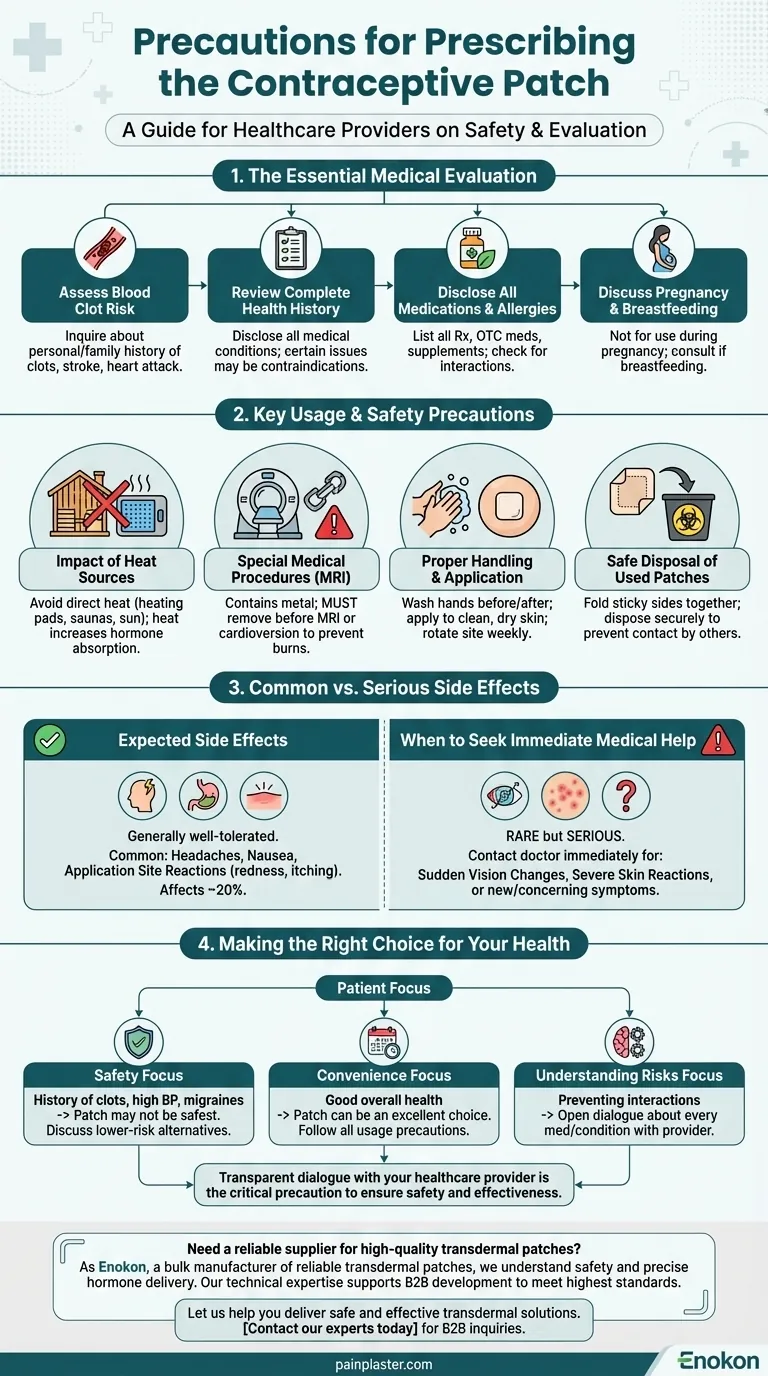
The Essential Medical Evaluation
Your healthcare provider must gather a complete picture of your health before determining if the patch is a suitable method of contraception for you. This conversation is the most critical precautionary step.
Assessing Your Risk for Blood Clots
The hormones in the contraceptive patch can increase the risk of developing blood clots. Your doctor will ask about any personal or family history of blood clots, stroke, or heart attack.
Reviewing Your Complete Health History
You must inform your doctor about all of your medical conditions. Certain health issues may be contraindications for using the patch, so full disclosure is essential for your safety.
Disclosing All Medications and Allergies
A comprehensive list of all products you use—including prescription drugs, over-the-counter medications, and supplements—is necessary. Some substances can interfere with the patch's effectiveness or cause adverse reactions.
Discussing Pregnancy and Breastfeeding
The patch should not be used during pregnancy. If you are breastfeeding, you should consult with your doctor, as the hormones can pass into breast milk.
Understanding Key Usage and Safety Precautions
Once prescribed, using the patch safely involves more than just applying it correctly. Certain environmental factors and activities require special attention to avoid complications.
The Impact of Heat Sources
You must not expose the patch to direct heat sources. This includes heating pads, electric blankets, saunas, and prolonged, direct sunlight. Heat can increase the rate at which your body absorbs the hormones, potentially leading to side effects.
Special Considerations for Medical Procedures
The patch contains metal components that can overheat and cause skin burns during certain procedures. It is critical to inform your doctors and remove the patch before undergoing an MRI or cardioversion.
Proper Handling and Application
Always wash your hands before and after handling the patch to avoid transferring hormones to your eyes or mouth. Apply the patch to a clean, dry area of skin and rotate the application site each week to prevent irritation.
Safe Disposal of Used Patches
Used patches still contain hormones that can be harmful to others, especially children and pets. Fold a used patch so the sticky sides press together, and dispose of it in a way that prevents accidental contact.
Common Side Effects vs. Serious Warnings
It's important to distinguish between common, manageable side effects and signs of a serious problem that requires immediate medical attention.
Expected Side Effects
The patch is generally well-tolerated. The most common adverse events are similar to those of oral contraceptives and include headaches, nausea, and application site reactions like redness or itching, which affect about 20% of users.
When to Seek Immediate Medical Help
While rare, serious side effects can occur. You should contact your doctor immediately if you experience any sudden vision changes, severe skin reactions, or other new and concerning symptoms.
Making the Right Choice for Your Health
This initial screening and ongoing awareness are not meant to discourage you, but to ensure you are using a contraceptive method that is both effective and safe for your body.
- If your primary focus is safety and you have a history of blood clots, high blood pressure, or certain migraines: The patch may not be your safest option, and your doctor will discuss lower-risk alternatives.
- If your primary focus is convenience and you are in good overall health: The patch can be an excellent choice, provided you disclose your full medical history and follow all usage precautions.
- If your primary focus is understanding all risks: Have an open conversation with your healthcare provider about every medication you take and every health condition you have to prevent interactions.
Ultimately, a transparent dialogue with your healthcare provider is the most critical precaution you can take to ensure your chosen contraceptive method supports your health goals.
Summary Table:
| Precaution Step | Key Considerations |
|---|---|
| Medical History Review | Personal/family history of blood clots, stroke, heart attack, high blood pressure, and migraines. |
| Medication & Allergy Check | Full disclosure of all prescription drugs, OTC medications, and supplements to prevent interactions. |
| Pregnancy & Breastfeeding Status | Confirmation of non-pregnancy; discussion of risks if breastfeeding. |
| Lifestyle & Environmental Factors | Assessment of exposure to heat sources (saunas, heating pads) and planned medical procedures (MRI). |
Need a reliable supplier for high-quality transdermal patches?
As Enokon, a bulk manufacturer of reliable transdermal patches and pain plasters, we understand the critical importance of safety and precise hormone delivery. Our technical expertise supports healthcare and pharma distributors and brands with custom R&D and development to create patches that meet the highest standards.
Let us help you deliver safe and effective transdermal solutions. Contact our experts today to discuss your needs.
Visual Guide
Related Products
- Heating Pain Relief Patches for Menstrual Cramps
- Prostate Pain Kidney Health Care Patch for Men
- Silicone Scar Sheets Patch Transdermal Drug Patch
- Lidocaine Hydrogel Pain Relief Patch for Pain Relief
- Menthol Gel Pain Relief Patch
People Also Ask
- What are the benefits of Period Pain Heat Patches? Drug-Free, On-the-Go Relief
- What are the key benefits of heating patches for elderly individuals? Relieve Pain & Improve Mobility
- What are the different types of heat patches? Find the Right Pain Relief for Your Needs
- What are the key differences between conventional heat patches and deep heat devices? Choosing the Right Pain Relief Solution
- What percentage of people with back pain use heat patches for relief? Discover the Popular Choice for Pain Management












