
Before you apply that transdermal diclofenac patch or gel, it is critical to understand that safety extends far beyond simply placing it on your skin. You must first have a comprehensive discussion with your doctor about your complete medical history, allergies, and all other medications you take. Key precautions also involve careful handling, avoiding specific daily activities, and ensuring safe disposal to protect others.
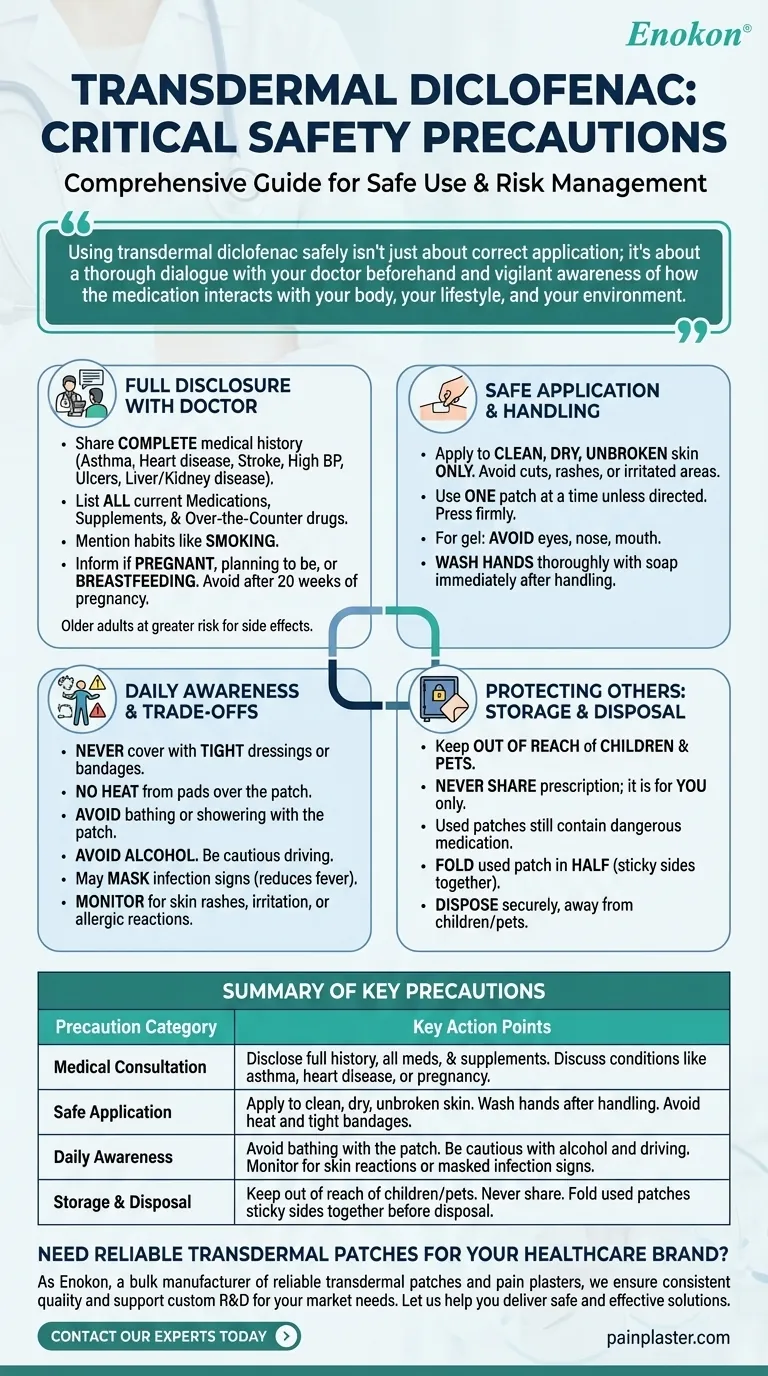
Using transdermal diclofenac safely isn't just about correct application; it's about a thorough dialogue with your doctor beforehand and vigilant awareness of how the medication interacts with your body, your lifestyle, and your environment.

The Critical First Step: Full Disclosure with Your Doctor
The most important precautions are taken before you ever open the box. Your unique health profile determines if this medication is safe for you.
Why Your Medical History Matters
You must inform your doctor of all health conditions. This is especially true for asthma, heart disease, a history of stroke, high blood pressure, stomach ulcers or bleeding, and any liver or kidney disease. These conditions can significantly increase your risk of serious side effects.
Disclosing All Medications and Supplements
Diclofenac can interact with other drugs. Provide your doctor with a complete list of all prescriptions, over-the-counter medications, and supplements you are taking to avoid harmful interactions. Also mention habits like smoking.
Special Considerations for Certain Groups
Older adults may be at a greater risk for side effects. It's crucial to inform your doctor if you are pregnant, planning to become pregnant, or breastfeeding. Diclofenac should be avoided around or after 20 weeks of pregnancy unless specifically directed by a doctor.
Safe Application and Handling Procedures
How you apply and handle the medication directly impacts its safety and effectiveness.
Preparing the Skin
Always apply the patch or gel to clean, dry, and unbroken skin. Do not apply it over cuts, scrapes, rashes, or any irritated areas.
Proper Application Technique
Use only one patch at a time unless your doctor instructs otherwise. Press it firmly to ensure it is secure. For gels, avoid getting the product in your eyes, nose, or mouth.
Post-Application Hygiene
Wash your hands thoroughly with soap and water immediately after handling the patch or gel. This prevents you from accidentally transferring the medication to sensitive areas or to other people.
Understanding the Daily Risks and Trade-offs
Once applied, the medication requires ongoing awareness to prevent complications.
The Danger of Increased Absorption
Never cover a treated area with tight dressings or bandages, and do not apply heat from a heating pad over a patch. These actions can increase the rate of drug absorption into your bloodstream, raising the risk of side effects.
Interactions with Daily Activities
Do not wear the patch while bathing or showering. You should also avoid alcohol while using this medication. Be cautious about driving until you know how it affects you.
Masking Other Symptoms
Diclofenac is an anti-inflammatory drug that can reduce fever. Be aware that this may mask the signs of an infection, potentially delaying its diagnosis and treatment.
Potential Skin Reactions
Monitor the application site for signs of a skin rash, irritation, or an allergic reaction. If you experience any severe skin issues, remove the product and contact your doctor.
Protecting Others: Safe Storage and Disposal
Your responsibility extends to ensuring this potent medication does not harm anyone else.
Preventing Accidental Exposure
Always keep diclofenac products out of reach of children and pets. A used patch still contains enough medication to be very dangerous if ingested.
Why You Should Never Share
This medication was prescribed for your specific condition and medical history. Never share your prescription with anyone else, as it could be unsafe for them.
The Correct Disposal Method
When you remove a used patch, fold it in half with the sticky sides together. This seals in the remaining medication. Dispose of it in a place where it cannot be accessed by children or pets.
Making the Right Choice for Your Goal
Your approach to using transdermal diclofenac should be guided by your personal health situation.
- If you are starting for the first time: Your most important step is a thorough discussion with your doctor about your complete health profile before the first application.
- If you have multiple health conditions or take other medications: You must be especially vigilant for potential interactions and side effects, reporting any new symptoms to your doctor immediately.
- If you live with children or pets: Your primary focus must be on secure storage and meticulous disposal to prevent a tragic accidental poisoning.
Informed and careful use is the key to managing your pain effectively while minimizing risk.
Summary Table:
| Precaution Category | Key Action Points |
|---|---|
| Medical Consultation | Disclose full medical history, all medications, and supplements. Discuss conditions like asthma, heart disease, or pregnancy. |
| Safe Application | Apply to clean, dry, unbroken skin. Wash hands after handling. Avoid heat and tight bandages over the patch. |
| Daily Awareness | Avoid bathing with the patch. Be cautious with alcohol and driving. Monitor for skin reactions or masked infection signs. |
| Storage & Disposal | Keep out of reach of children/pets. Never share. Fold used patches sticky sides together before disposal. |
Need reliable, high-quality transdermal patches for your healthcare brand or distribution network?
As Enokon, a bulk manufacturer of reliable transdermal patches and pain plasters, we understand that safety and efficacy start with a superior product. Our technical expertise ensures consistent quality and supports custom R&D for formulations that meet your specific market needs.
Let us help you deliver safe and effective pain management solutions. Contact our experts today to discuss your requirements.
Visual Guide
Related Products
- Far Infrared Heat Pain Relief Patches Transdermal Patches
- Menthol Gel Pain Relief Patch
- Icy Hot Menthol Medicine Pain Relief Patch
- Silicone Scar Sheets Patch Transdermal Drug Patch
- Mugwort Wormwood Pain Relief Patch for Neck Pain
People Also Ask
- Why is the selection of matrix materials critical when developing customized transdermal patches? Optimize Efficacy
- What are the physical impacts of external heat exposure on the performance and safety of transdermal patches? - Guide
- What role does a skin tolerance scoring system play in the safety evaluation of transdermal patches? Key Safety Metrics
- What are the clinical advantages of local transdermal delivery systems? Unlock Safer, More Effective Pain Relief Solutions
- How does high-purity far-infrared ceramic powder contribute to the efficacy of far-infrared physical therapy patches?

















