
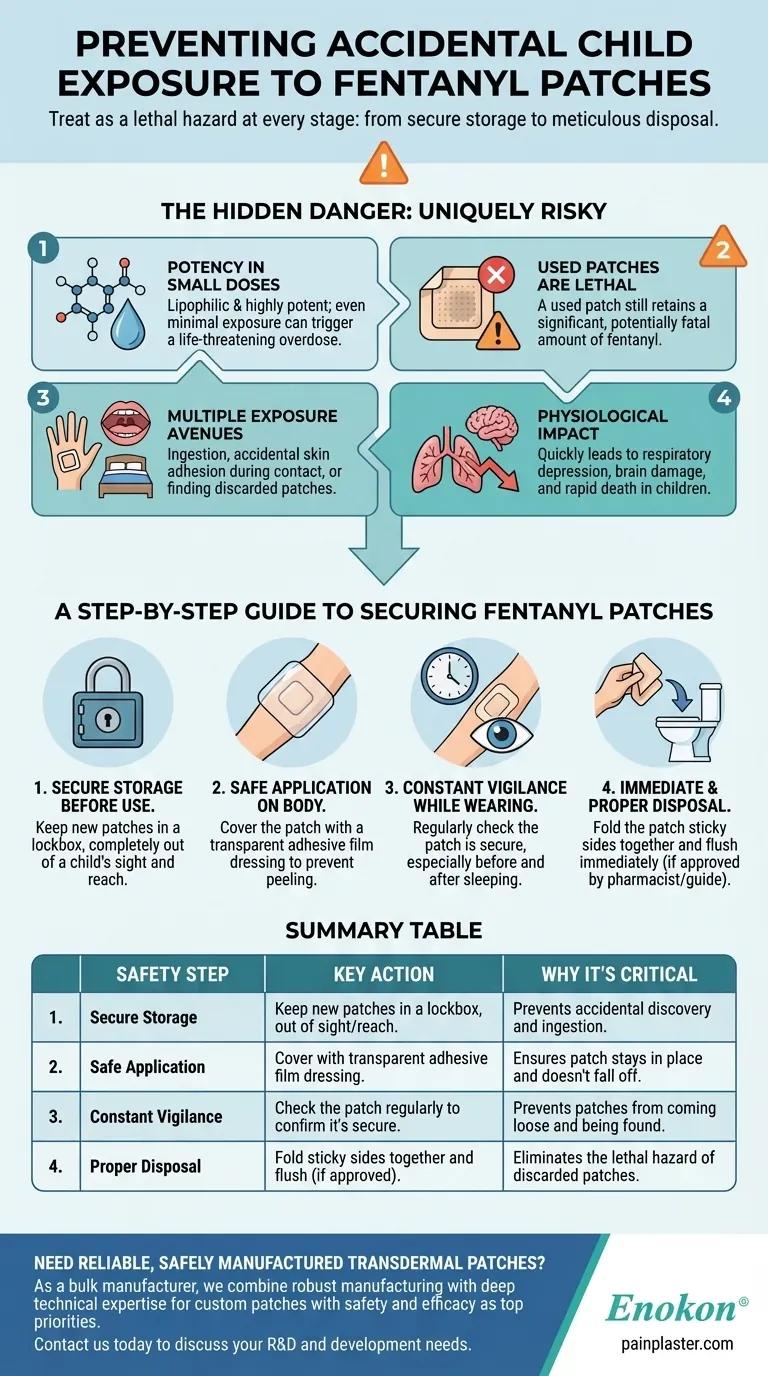
To prevent a child's accidental exposure to fentanyl patches, you must keep them in a secure location out of sight and reach, cover the patch on the skin with an adhesive film, check it regularly to ensure it has not fallen off, and immediately dispose of used patches according to safety guidelines. These measures are critical because even a used patch contains enough medication to cause a fatal overdose in a child.
The core principle for handling fentanyl patches is to treat them as a lethal hazard at every stage of their lifecycle. Both new and used patches must be actively managed—from secure lockbox storage to meticulous disposal—as even minimal, accidental contact can be fatal for a child.
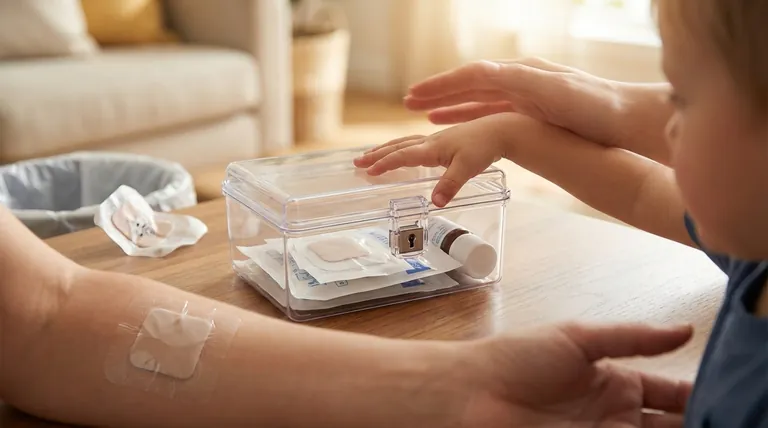
The Hidden Danger: Why Fentanyl Patches are Uniquely Risky
Fentanyl is an extraordinarily potent synthetic opioid. Understanding its specific properties is essential to appreciating the level of risk it poses, especially to children who have no tolerance for the drug.
Potency in Small Doses
Fentanyl is lipophilic, meaning it passes through the skin and into the bloodstream very effectively. This property, combined with its high potency, means that even a small amount of exposure can trigger a life-threatening overdose.
The Danger of Used Patches
A common misconception is that a used patch is safe. In reality, a patch used for its full duration still contains a significant, and potentially lethal, amount of its original fentanyl dose. Throwing a used patch in a household garbage can creates an extreme hazard.
Multiple Avenues of Exposure
Children can be exposed in several ways. They might find a new or discarded patch and put it in their mouth, or a loose patch could accidentally stick to their skin during close contact, like hugging or sleeping in the same bed.
The Physiological Impact
For a child, a fentanyl overdose quickly leads to respiratory depression. Their breathing slows dramatically, decreasing the level of oxygen in their blood, which can rapidly result in brain damage and death.
A Step-by-Step Guide to Securing Fentanyl Patches
A zero-tolerance approach to accidental exposure requires a strict, multi-step protocol covering the patch's entire journey through your home.
Step 1: Secure Storage Before Use
New patches must be kept in a secure location that is completely out of a child's sight and reach. The best practice is to use a lockbox or a locked cabinet, as a child's curiosity can overcome simple hiding spots.
Step 2: Safe Application on the Body
Once applied, the patch itself can be a risk if it peels off. To prevent this, cover the patch with a transparent adhesive film dressing or secure the edges with first-aid tape. This creates a barrier and helps keep the patch firmly in place.
Step 3: Constant Vigilance While Wearing
You must check the patch regularly throughout the day to ensure it has not loosened or fallen off. This is especially important before and after sleeping, as patches can come off in bedding where a child might later find them.
Step 4: Immediate and Proper Disposal
Never throw a used patch in the trash. The safest method of disposal is to fold the patch in half with the sticky sides together and flush it down the toilet, if your pharmacist or the medication guide confirms this is appropriate. This removes the hazard from the home immediately.
Understanding the Broader Risks and Trade-offs
While child safety is paramount, it's important to recognize other risks associated with fentanyl patches to maintain a complete safety mindset.
Risk of Heat Exposure
Do not expose the patch area to direct heat from sources like heating pads, electric blankets, or prolonged sunlight. Heat increases the rate of fentanyl absorption into the body, which can cause a dangerous or fatal overdose for the user.
Danger of Accidental Adhesion
The strong adhesive on the patch can easily stick to anyone who has prolonged physical contact with the patient. This includes partners, caregivers, and pets, all of whom are at risk of accidental exposure.
Inherent Overdose and Dependency Risk
Fentanyl patches carry a high risk of misuse, dependency, and overdose, even for the intended patient. Using more patches than prescribed, changing them too frequently, or using them with other substances like alcohol can lead to life-threatening breathing problems.
Making the Right Choice for Your Goal
Adopting the right mindset and specific routines is the only way to manage this medication safely in a household with children.
- If you are a new patient: Immediately establish a strict, unbreakable routine for storage in a lockbox, application with a protective film, and proper disposal.
- If you live with young children: Treat every fentanyl patch, both new and used, as a lethal object and ensure it is never accessible, even for a moment.
- If you are a caregiver for a patient: Your responsibility includes actively verifying these safety protocols are followed daily to protect the patient and everyone else in the home.
Meticulous adherence to every safety step is the only way to prevent a tragic accident.
Summary Table:
| Safety Step | Key Action | Why It's Critical |
|---|---|---|
| Secure Storage | Keep new patches in a lockbox, out of sight and reach. | Prevents accidental discovery and ingestion by children. |
| Safe Application | Cover the patch with a transparent adhesive film dressing. | Ensures the patch stays in place and doesn't fall off. |
| Constant Vigilance | Check the patch regularly to confirm it's secure. | Prevents patches from coming loose and being found by children. |
| Proper Disposal | Fold used patch sticky sides together and flush (if approved). | Eliminates the lethal hazard of discarded patches. |
Need a reliable, safely manufactured transdermal patch? As Enokon, a bulk manufacturer of reliable transdermal patches and pain plasters for healthcare/pharma distributors and brands, we combine robust manufacturing with deep technical expertise. We can help you develop custom patches with safety and efficacy as top priorities. Contact us today to discuss your R&D and development needs.
Visual Guide
Related Products
- Menthol Gel Pain Relief Patch
- Far Infrared Heat Pain Relief Patches Transdermal Patches
- Silicone Scar Sheets Patch Transdermal Drug Patch
- Icy Hot Menthol Medicine Pain Relief Patch
- Mugwort Wormwood Pain Relief Patch for Neck Pain
People Also Ask
- How do pain relief patches compare to other pain relief methods? Discover Targeted, Long-Lasting Relief
- How effective are pain relief patches for muscle pain? Target Localized Pain with Transdermal Delivery
- Who should consult a healthcare professional before using pain relief patches? Ensure Your Safety with Medical Advice
- What are the potential side effects of pain relief patches? A Guide to Safe Use & Key Risks
- What are some common applications of pain relief patches? Effective Relief for Muscle & Joint Pain















