
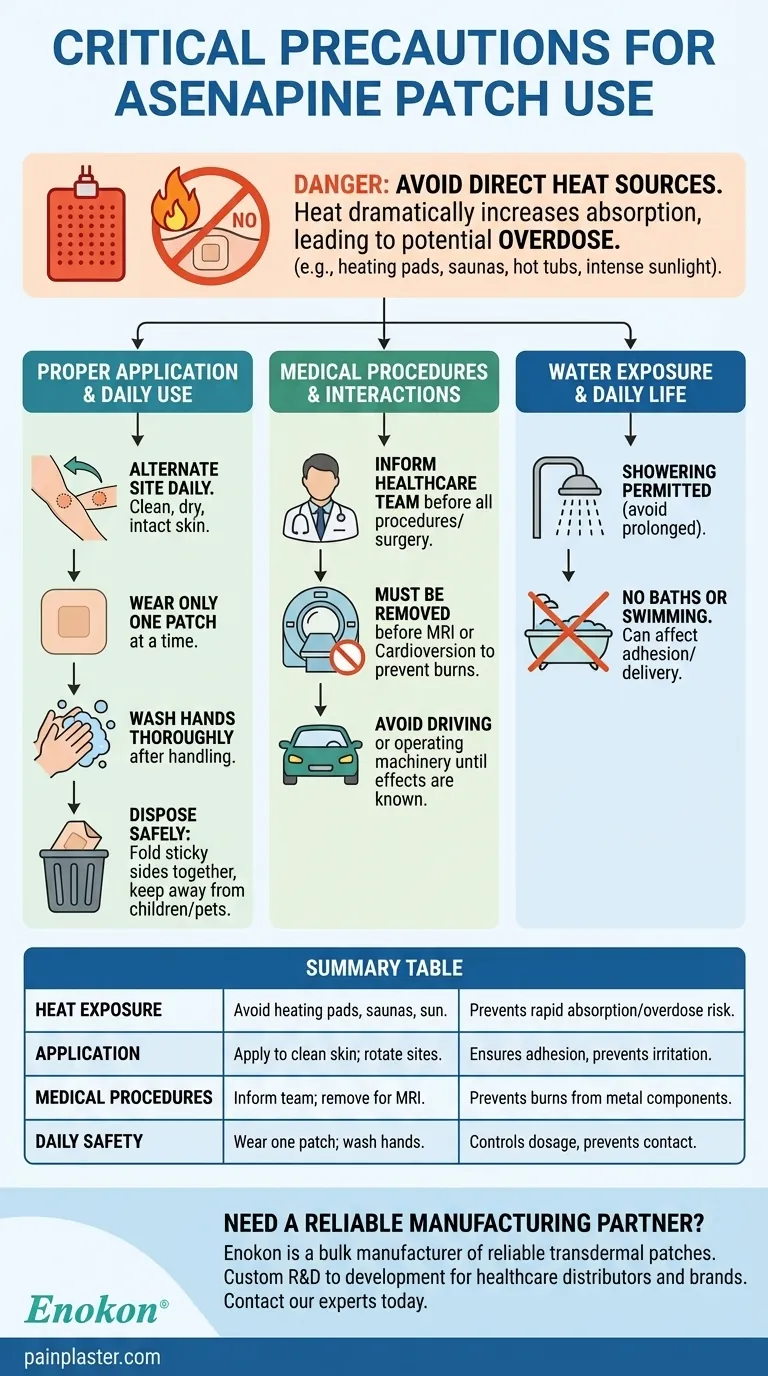
When wearing an asenapine patch, you must take specific precautions centered on avoiding heat, managing water exposure, and communicating with healthcare providers. The most critical rule is to prevent any direct heat source from coming into contact with the patch, as this can dangerously increase medication absorption and lead to an overdose.
Your primary goal is to ensure a steady, controlled release of medication. External factors, especially heat and certain medical procedures, can disrupt this process, posing significant safety risks that are easily avoided with proper awareness.
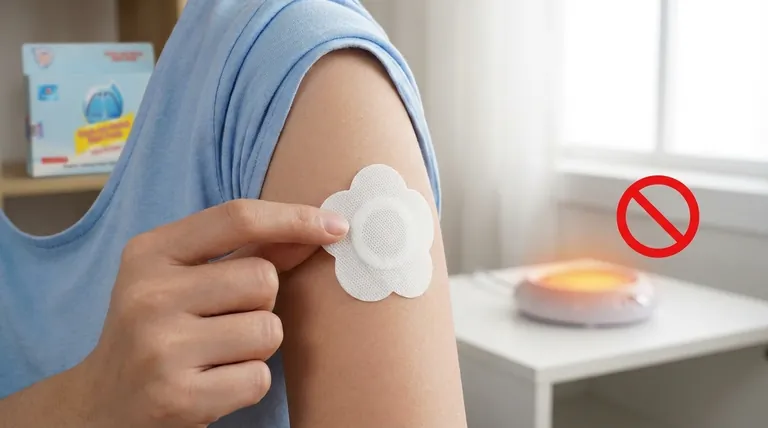
Proper Application and Daily Use
Correctly applying and managing the patch is the foundation of safe treatment. These daily habits ensure the medication works as intended without causing local irritation or unintended effects.
Choosing the Right Application Site
Always apply the patch to a clean, dry, and intact area of skin. Avoid skin that is oily, irritated, broken, or scarred.
It is crucial to alternate the application site each day to prevent skin irritation. Do not apply a new patch to the same spot you used previously.
Applying and Managing the Patch
Only wear one patch at a time unless specifically directed otherwise by your doctor.
After handling the patch, whether applying or removing it, wash your hands thoroughly with soap and water. Avoid touching your eyes, nose, or mouth after contact.
Safely Disposing of Used Patches
When you remove a used patch, fold it in half with the sticky sides together. Dispose of it in a manner that keeps it away from children and pets.
The Critical Warning: Avoiding All Heat Exposure
This is the single most important precaution. Applying heat to the patch can cause the medication to be absorbed into your body too quickly, which can be dangerous.
Why Heat is a Major Concern
The asenapine patch is designed for slow, transdermal (through the skin) absorption over 24 hours. Heat dramatically increases blood flow to the skin, which accelerates the rate of medication absorption, effectively delivering an uncontrolled, higher dose.
Common Heat Sources to Avoid
You must avoid exposing the patch area to any direct heat. This includes:
- Heating pads and electric blankets
- Saunas, hot tubs, and heated water beds
- Heat lamps and hair dryers
- Intense, direct sunlight
Water Exposure: Showers vs. Baths
Showering is permitted while wearing the patch. However, you should avoid prolonged water immersion.
Do not take baths or go swimming while the patch is on, as this can affect its adhesion and potentially alter medication delivery.
Interactions with Medical Procedures and Conditions
Your asenapine patch is a part of your medical profile. It is essential to inform all healthcare professionals about it, especially before any tests or procedures.
Informing Your Healthcare Team
Before any medical or dental procedure, including surgery, tell your doctor or surgeon that you are using an asenapine patch.
You should also inform your pharmacist of all other products you use, including prescription drugs, over-the-counter medications, and herbal supplements.
Before an MRI, CT Scan, or Cardioversion
The patch must be removed before certain procedures, particularly an MRI or cardioversion. Some patches contain metal components that can heat up and cause serious skin burns during these events.
Driving and Operating Machinery
This medication can affect your alertness and coordination. Avoid driving or operating heavy machinery until you know how the asenapine patch affects you.
How to Apply This to Your Goal
Your approach to using the asenapine patch should be guided by your immediate circumstances.
- If your primary focus is daily safety: Always avoid applying direct heat to the patch, alternate your application sites daily, and dispose of used patches properly.
- If your primary focus is preparing for a medical procedure: You must inform your entire care team—doctors, nurses, and technicians—that you are wearing the patch, as it will likely need to be removed before an MRI, CT scan, or surgery.
- If your primary focus is managing side effects: Monitor the application site for irritation, wash your hands thoroughly after handling the patch, and report any severe reactions like vision changes to your doctor immediately.
By understanding and respecting these precautions, you can ensure your treatment is both safe and effective.
Summary Table:
| Precaution Category | Key Action | Why It's Important |
|---|---|---|
| Heat Exposure | Avoid heating pads, saunas, direct sunlight. | Prevents dangerously rapid drug absorption and overdose risk. |
| Application | Apply to clean, dry skin; rotate sites daily. | Ensures proper adhesion and prevents skin irritation. |
| Medical Procedures | Inform healthcare team; remove before MRI. | Prevents burns from metal in patch during scans. |
| Daily Safety | Wear one patch; wash hands after handling. | Controls dosage and prevents accidental contact. |
Need a reliable manufacturing partner for your transdermal patches?
At Enokon, we are a bulk manufacturer of reliable transdermal patches and pain plasters for healthcare and pharmaceutical distributors and brands. Our technical expertise ensures your products are designed with safety and efficacy in mind, from custom R&D to development.
Let us help you bring high-quality, dependable transdermal solutions to market. Contact our experts today to discuss your needs.
Visual Guide
Related Products
- Menthol Gel Pain Relief Patch
- Lidocaine Hydrogel Pain Relief Patch for Pain Relief
- Capsaicin Chili Medicated Pain Relief Patches
- Asthma Cough and Pain Relief Patch for Adults and Kids
- Icy Hot Menthol Medicine Pain Relief Patch
People Also Ask
- How do pain relief patches compare to other pain relief methods? Discover Targeted, Long-Lasting Relief
- How effective are pain relief patches for muscle pain? Target Localized Pain with Transdermal Delivery
- Who should consult a healthcare professional before using pain relief patches? Ensure Your Safety with Medical Advice
- What are the different types of pain relief patches available? Find the Right Solution for Your Pain
- What are the potential side effects of pain relief patches? A Guide to Safe Use & Key Risks



















