
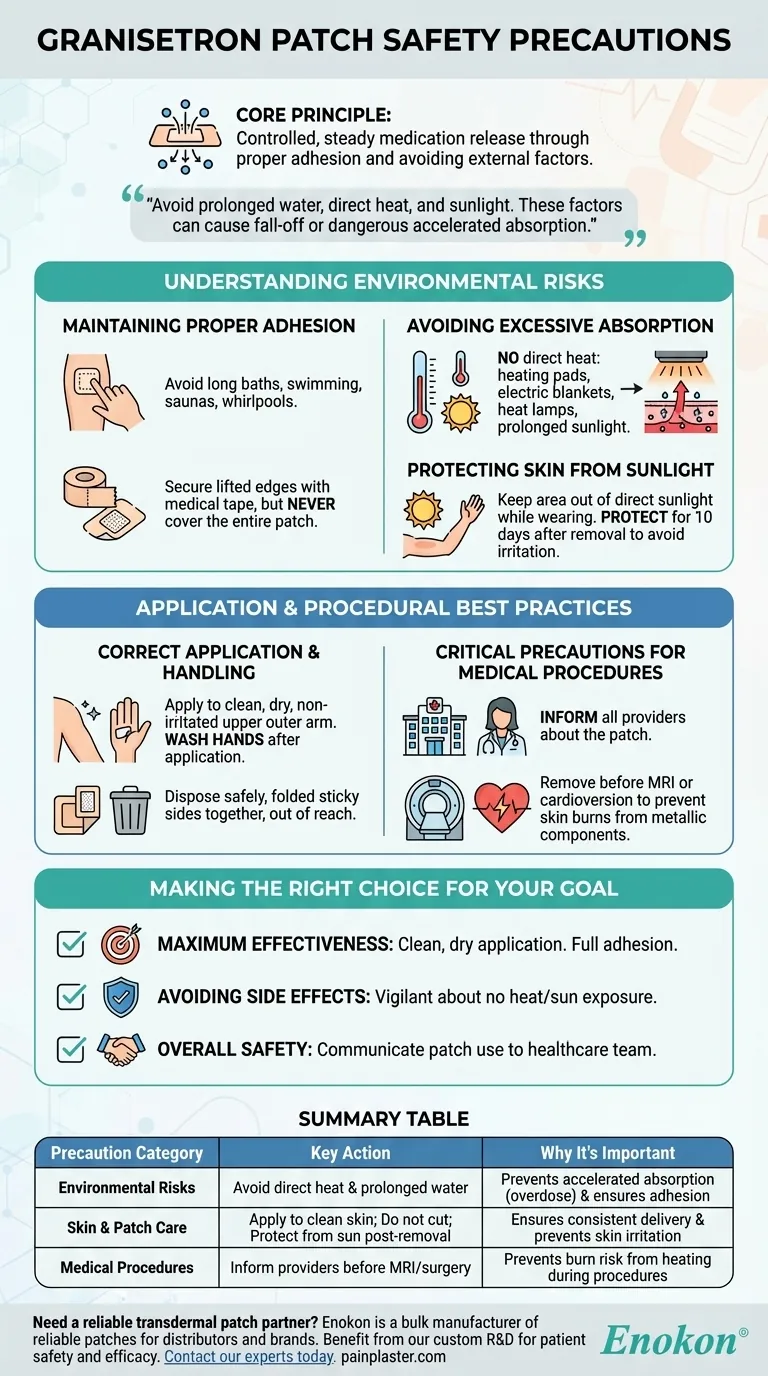
To use the granisetron patch safely, you must protect it from prolonged water exposure, direct heat, and sunlight. These factors can either cause the patch to fall off or, more dangerously, accelerate the rate at which the medication enters your bloodstream, leading to potential side effects.
The core principle of granisetron patch safety is maintaining a controlled, steady release of medication. This is achieved by ensuring proper adhesion to the skin while strictly avoiding external factors like heat and sunlight that can dangerously alter the absorption rate.

Understanding Environmental Risks
Your primary goal is to ensure the patch delivers a consistent dose over its intended lifespan. Certain environmental factors can directly undermine this.
Maintaining Proper Adhesion
A patch that doesn't stick properly cannot deliver its medication effectively. Avoid activities that compromise its adhesive.
You should avoid soaking the patch for long periods. This includes long baths, swimming, or using saunas and whirlpools.
If the edges of the patch begin to lift, you can secure them with medical adhesive tape or a surgical bandage. However, you must never cover the entire patch, as this can trap heat and affect medication delivery.
Avoiding Excessive Medication Absorption
Heat is the most significant risk factor for accidental overdose with a transdermal patch.
You must not expose the patch site to any direct heat sources. This includes heating pads, electric blankets, hot water bottles, heat lamps, or even prolonged, direct sunlight.
Heat increases blood flow to the skin, which can cause the medication in the patch to be absorbed much faster than intended.
Protecting Your Skin from Sunlight
Sunlight presents a dual risk: it is a heat source, and it can affect the skin itself.
The patch application area must be kept out of direct sunlight while you are wearing it.
Crucially, you must continue to protect the application area from sunlight for an additional 10 days after you have removed the patch. This is because medication can remain in the upper layers of your skin and its interaction with sunlight can cause irritation.
Application and Procedural Best Practices
Proper handling and awareness during medical procedures are critical for your safety.
Correct Application and Handling
Always apply the patch to a clean, dry, and non-irritated area of skin on the upper outer arm.
Never cut the patch. Apply only one patch at a time unless specifically directed by your doctor. After applying, wash your hands immediately to remove any residual medication.
When you remove a used patch, fold it in half with the sticky sides together and dispose of it safely, out of reach of children and pets.
Critical Precautions for Medical Procedures
It is vital to inform all healthcare providers that you are using a granisetron patch.
The patch may need to be removed before certain procedures, particularly an MRI or cardioversion. The metallic components in some patches can heat up during these procedures, causing serious skin burns.
Always tell your care team about the patch before any surgery, CT scan, or other medical imaging or procedure.
Making the Right Choice for Your Goal
Your priorities for using the patch will guide which precautions are most critical for you to follow.
- If your primary focus is maximum effectiveness: Ensure the patch is applied to clean, dry, non-irritated skin and that it remains fully adhered for the entire duration.
- If your primary focus is avoiding side effects: Be absolutely vigilant about keeping the patch away from all external heat sources and direct sunlight.
- If your primary focus is overall safety: Always communicate that you are using a patch to all members of your healthcare team, especially before any scheduled medical procedure.
By understanding these principles, you can confidently and safely manage your treatment.
Summary Table:
| Precaution Category | Key Action | Why It's Important |
|---|---|---|
| Environmental Risks | Avoid direct heat sources (heating pads, sun) and prolonged water exposure (swimming, baths). | Prevents accelerated drug absorption (overdose risk) and ensures patch adhesion. |
| Skin & Patch Care | Apply to clean, dry skin. Do not cut the patch. Protect skin from sun for 10 days after removal. | Ensures consistent medication delivery and prevents skin irritation. |
| Medical Procedures | Inform all healthcare providers about the patch before an MRI, surgery, or other procedures. | Prevents risk of burns from patch heating during procedures like MRI. |
Need a reliable transdermal patch partner?
At Enokon, we are a bulk manufacturer of reliable transdermal patches and pain plasters for healthcare and pharmaceutical distributors and brands. Our technical expertise ensures every patch is designed for consistent, safe drug delivery.
Benefit from our custom R&D and development services to create a patch that prioritizes patient safety and efficacy.
Contact our experts today to discuss your project requirements.
Visual Guide
Related Products
- Menthol Gel Pain Relief Patch
- Icy Hot Menthol Medicine Pain Relief Patch
- Herbal Medicated Anti Diarrhea Patch for Digestive Relief
- Asthma Cough and Pain Relief Patch for Adults and Kids
- Mugwort Wormwood Pain Relief Patch for Neck Pain
People Also Ask
- How do pain relief patches compare to other pain relief methods? Discover Targeted, Long-Lasting Relief
- How effective are pain relief patches for muscle pain? Target Localized Pain with Transdermal Delivery
- Who should consult a healthcare professional before using pain relief patches? Ensure Your Safety with Medical Advice
- What are some common applications of pain relief patches? Effective Relief for Muscle & Joint Pain
- What are pain relief patches and how do they work? Discover Non-Invasive Pain Management



















