
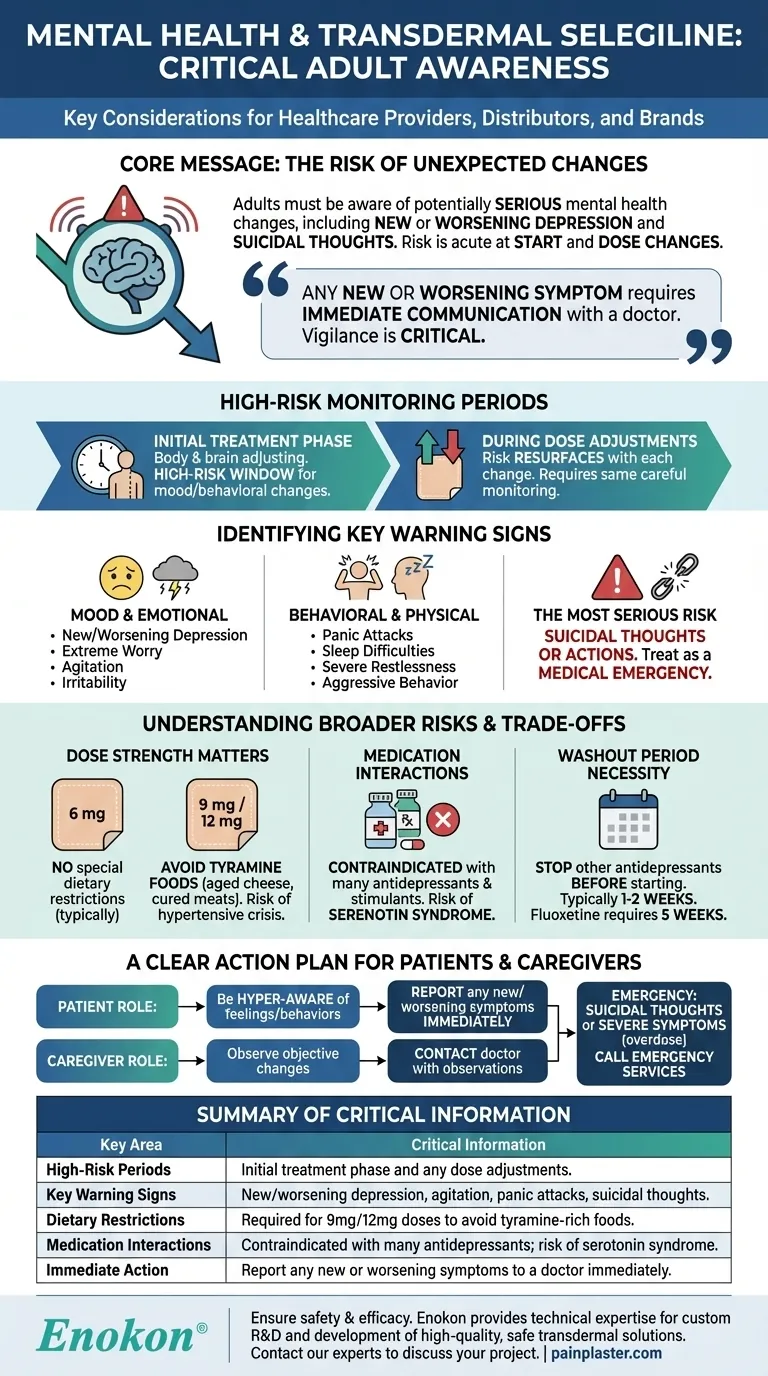
Most importantly, adults taking transdermal selegiline must be aware that it can cause unexpected and serious changes in mental health, including the emergence or worsening of depression and suicidal thoughts. This risk is not limited to any specific age group and is most acute when starting the medication or when the dosage is changed.
The central takeaway is that any new or worsening symptom—from agitation and panic attacks to severe restlessness or thoughts of self-harm—requires immediate communication with a doctor. Vigilance from patients, family, and caregivers is the most critical safety measure.
The Critical Monitoring Period: When to Be Most Vigilant
The risk of adverse mental health events is not uniform throughout treatment. It is concentrated during two key phases when the body is adapting to new levels of the medication.
The Initial Treatment Phase
When you first begin using the selegiline patch, your body and brain are adjusting to its effects. This initial period is a high-risk window for mood and behavioral changes.
During Dose Adjustments
Any time your doctor increases or decreases your dose, the risk resurfaces. Each change requires the same level of careful monitoring as the start of treatment.
Identifying Key Warning Signs
It is crucial for both the patient and their support system to recognize specific symptoms that warrant an immediate call to a healthcare provider. These changes can be sudden and severe.
Mood and Emotional Disturbances
Watch for any new or worsening depression. Other key emotional flags include extreme worry, agitation, or irritability.
Behavioral and Physical Symptoms
Be alert for the onset of panic attacks, difficulties with sleep (insomnia), or an inability to be still, known as severe restlessness. Uncharacteristic aggressive behavior is another serious warning sign.
The Most Serious Risk: Suicidal Thoughts
The most critical symptom to monitor is any thought of harming oneself. Suicidal thoughts or actions must be treated as a medical emergency.
Understanding the Trade-offs and Broader Risks
Effective treatment requires understanding not just the direct mental health effects but also the medication's interactions and necessary precautions. Ignoring these can lead to severe health crises.
The Critical Role of Dose Strength
The selegiline patch comes in different strengths, and the rules change with the dose. At 6 mg/24 hours, no special dietary restrictions are typically needed.
However, at 9 mg or 12 mg/24 hours, you must avoid foods high in tyramine (like aged cheeses, cured meats, and fermented products). This diet must be followed during treatment and for two weeks after stopping to prevent a dangerous spike in blood pressure (hypertensive crisis).
The Danger of Medication Interactions
Selegiline is contraindicated with many other medications, especially other antidepressants and stimulants. Combining them can lead to a potentially fatal condition called serotonin syndrome.
The Necessity of a "Washout Period"
Before starting selegiline, you must stop taking most other antidepressants for a specific period, typically 1-2 weeks. For a long-acting drug like fluoxetine, this "washout period" must be at least five weeks.
A Clear Action Plan for Patients and Caregivers
Proactive monitoring and clear communication are the keys to using this medication safely. Your role is to be an active partner in your healthcare.
- If you are the patient: Be hyper-aware of your own feelings and behaviors, and report any new or worsening symptoms to your doctor immediately, no matter how minor they seem.
- If you are a family member or caregiver: Your objective observations are invaluable. Watch for the behavioral and mood changes listed above and contact the doctor right away if you notice them.
- If suicidal thoughts occur or symptoms are severe: Do not wait. Call emergency services or a poison control helpline immediately. Overdose symptoms like severe headache, hallucinations, or seizures require urgent medical intervention.
Vigilant self-awareness and open communication with your healthcare provider are the most effective tools for ensuring your safety and well-being during treatment.
Summary Table:
| Key Area | Critical Information |
|---|---|
| High-Risk Periods | Initial treatment phase and any dose adjustments. |
| Key Warning Signs | New/worsening depression, agitation, panic attacks, suicidal thoughts. |
| Dietary Restrictions | Required for 9mg/12mg doses to avoid tyramine-rich foods. |
| Medication Interactions | Contraindicated with many antidepressants; risk of serotonin syndrome. |
| Immediate Action | Report any new or worsening symptoms to a doctor immediately. |
Ensure the safety and efficacy of your transdermal treatments. As Enokon, a bulk manufacturer of reliable transdermal patches and pain plasters, we provide healthcare and pharma distributors and brands with the technical expertise for custom R&D and development. Partner with us to create high-quality, safe transdermal solutions tailored to your patients' needs. Contact our experts today to discuss your project.
Visual Guide
Related Products
- Silicone Scar Sheets Patch Transdermal Drug Patch
- Menthol Gel Pain Relief Patch
- Far Infrared Heat Pain Relief Patches Transdermal Patches
- Icy Hot Menthol Medicine Pain Relief Patch
- Mugwort Wormwood Pain Relief Patch for Neck Pain
People Also Ask
- What role does a silicone-based transdermal delivery system play in Parkinson's? Enhancing Early-Stage Patient Care
- How is the long-term skin tolerance of silicone-based transdermal patches evaluated in clinical settings? R&D and Safety
- Why is a polarizing microscope used to evaluate the long-term stability of transdermal drug patches? Ensure Efficacy.
- What are common adverse effects of transdermal drug delivery? Risks & Prevention Tips
- What are the advantages of transdermal drug patches? Optimize Medication Delivery with Patches




